

Stop Talking, Start Connecting: The Guide to Authentic Public Speaking
Golden Hook & Introduction
SECTION
Nova: When you think about public speaking, what's the first image that pops into your head? For many, it's that perfectly polished, flawlessly delivered speech. But what if I told you that chasing perfection is actually the fastest way to your audience?
Atlas: Oh, I like that. That’s going to resonate with anyone who’s ever felt that intense pressure to be absolutely flawless on stage. It's almost ingrained in us, isn't it? This idea that every word, every gesture, has to be just right.
Nova: Exactly! It’s a myth we're here to bust today. We're diving into the profound insights from "Stop Talking, Start Connecting: The Guide to Authentic Public Speaking." This book makes a powerful, almost counter-intuitive argument: true impact in public speaking isn't about perfect delivery; it's about genuine connection.
Atlas: That makes me wonder, if it’s not about perfection, what it about? For those of us who are driven by impact and building lasting bonds, this feels like an essential reframe.
The Connection Imperative & "Talk Like TED"
SECTION
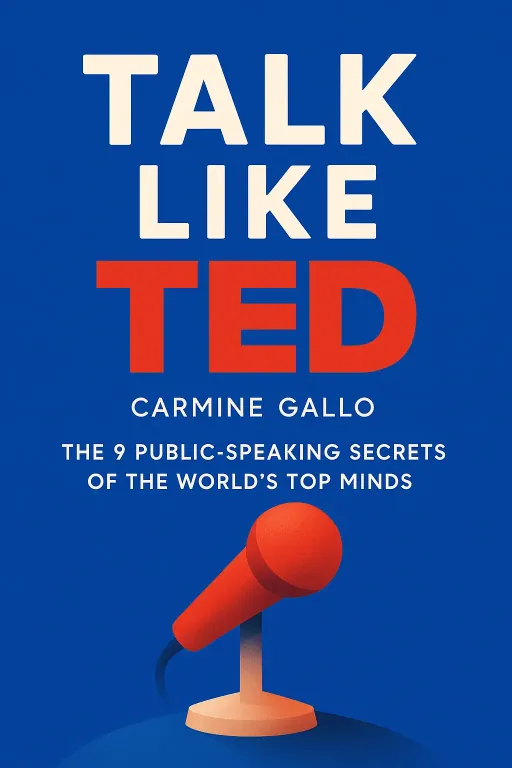
Nova: Well, the book suggests that your audience doesn't just want to hear you; they want to you. They want to connect. And one of the foundational texts it draws upon is Carmine Gallo's "Talk Like TED." Gallo spent years analyzing the most viral TED Talks, and what he found was fascinating. The speakers weren't necessarily the most eloquent or the most polished.
Atlas: Right, like how? What made them stand out then? Because I imagine a lot of our listeners, especially those who seek clarity, might still think that a highly organized, perfectly rehearsed speech is the gold standard.
Nova: What really matters is their humanity. They shared personal stories, they made eye contact, and they conveyed an undeniable passion for their subject. It was about being human, not a robot delivering a memorized script. Think of it like this: you can have a perfectly crafted, technically brilliant piece of music, but if the musician doesn't put their soul into it, it falls flat. The audience might admire the technique, but they won't it.
Atlas: That’s a great analogy. So what you’re saying is, that while clarity and organization are important—and for anyone who values a narrative-driven approach, those are key—they’re not the. The main thing is that underlying current of genuine emotion and connection. But isn't there a risk? Can being human, too vulnerable, sometimes detract from credibility or professional polish?
Nova: That’s a fair point, and it’s a balance, isn't it? The book clarifies that it’s not about being messy or unprepared. It’s about leveraging vulnerability strategically. The polish you mentioned is the frame, but the genuine connection is the masterpiece within it. A speaker who shares a personal anecdote that reveals their passion or the struggle behind their expertise builds a bridge to the audience that no amount of flawless PowerPoint slides ever could. They're inviting the audience into their world, not just lecturing from a pedestal.
Atlas: I can see how that would be powerful. It’s almost like you’re saying that the audience doesn’t want a perfect speaker; they want a relatable guide. Someone who understands their journey, or at least shares a similar 'why.'
The Power of 'Why' & Personal Storytelling with Simon Sinek
SECTION
Nova: Exactly! And that naturally leads us to the second key idea we need to talk about, which often acts as the fuel for that genuine connection: understanding and articulating your 'why.' This is where Simon Sinek's iconic "Start with Why" comes into play. Sinek's core argument, applied to speaking, is that people don't buy you do; they buy you do it.
Atlas: So you're saying that for a speaker, it's not enough to present the facts or the solutions; they need to articulate the deeper purpose or belief that drives them? I’m curious, for someone deeply driven by connection, how does sharing your 'why' actually in a presentation? Isn't it just a mission statement, or worse, self-indulgent?
Nova: Oh, it’s far more profound than a mission statement. It’s about weaving your 'why' into the fabric of your narrative. Imagine a speaker who doesn't just present data on climate change, but starts with a deeply personal story about watching their childhood beach disappear, or the moment they realized their child's future was at stake. That personal 'why' creates immediate emotional resonance. It's the story of this topic matters to, and by extension,.
Atlas: That’s a great way to put it. That kind of storytelling, rooted in purpose, would definitely captivate an audience who is looking for more than just information. It makes complex concepts accessible by grounding them in human experience. But for someone who aims for public speaking mastery and advanced storytelling, how do you make that 'why' compelling without making it sound like a therapy session on stage?
Nova: It’s about intentional vulnerability. The book emphasizes that vulnerability, when used purposefully, is a superpower on stage. It's not about oversharing, but about revealing the authentic motivation, the journey, the core belief that led you to stand before them. It transforms a presentation into an experience because the audience isn't just listening to a speech; they're connecting with a shared human purpose. It's the difference between hearing someone talk you, and feeling like they're talking you, sharing a piece of their soul.
Atlas: I totally know that feeling. That’s actually really inspiring. So, the book also gives us a tiny step to start with. How do you suggest our listeners, who are always seeking clarity and impact, can begin to put this into practice?
Synthesis & Takeaways
SECTION
Nova: The book offers a brilliant, actionable tiny step: before your next talk, write down three personal stories that illustrate your 'why.' Then, practice telling of them without notes. This isn't about memorization; it's about internalizing your story so deeply that it flows naturally.
Atlas: That makes sense. It’s a way to build momentum, as our user profile emphasizes. It pushes you to trust your voice, to realize that your unique perspective is your power, just as you've encouraged us to believe. It’s not just about what you say, but the authentic conviction behind it, powered by your personal narrative.
Nova: Absolutely. Because ultimately, public speaking isn't about performing for an audience; it's about connecting with them, heart to heart, mind to mind. Your 'why' is that bridge.
Atlas: That gives me chills. So, for all our listeners out there, remember that the most impactful messages are those delivered with genuine connection and a clear 'why.' Don't just talk; connect.
Nova: This is Aibrary. Congratulations on your growth!









