

Stop Managing, Start Cultivating: The Guide to Deepening Organizational Culture
Golden Hook & Introduction
SECTION
Nova: Alright, Atlas, quick thought experiment for you. When you hear the word "management," what’s the first image that pops into your head? Be brutally honest.
Atlas: Oh man, honestly? I picture a spreadsheet. Like, a really, really long, complicated spreadsheet with too many tabs and not enough coffee. It’s all about metrics, control, and… well, managing things that often feel like they’re trying to escape the spreadsheet.
Nova: Escaping the spreadsheet, I love that. And that's exactly why we need to talk about something far more organic, far more human, and ultimately, far more powerful. Today, we're diving into the profound idea of "Stop Managing, Start Cultivating: The Guide to Deepening Organizational Culture." It's a concept that argues true organizational success isn't just about those meticulously planned strategies or those escaping spreadsheets; it's about the invisible forces of culture.
Atlas: Invisible forces? That immediately piques my interest. As someone always looking for the 'why' behind success, and how to build purpose, I’m listening. So, where do we even begin to unpack something as intangible as 'invisible forces'?
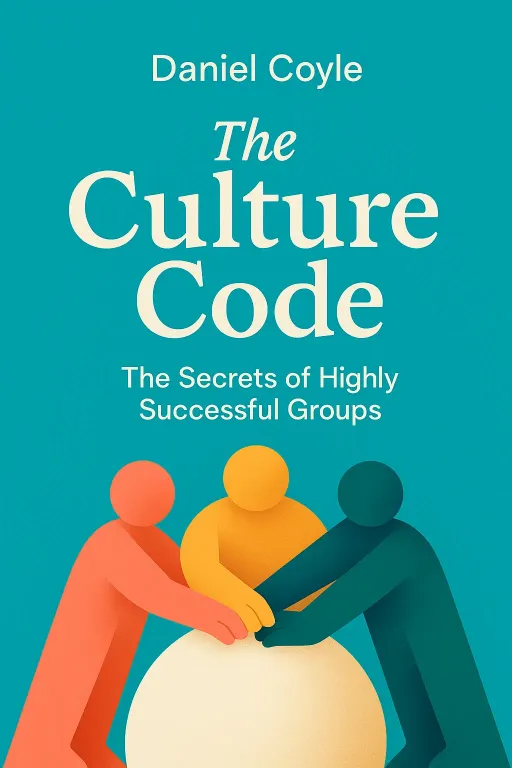
Nova: We begin with a master observer of high-performing groups, Daniel Coyle, and his incredible book, "The Culture Code." What's fascinating about Coyle is that he didn't start as a business guru. He was a sports journalist, spending years embedded with championship teams, successful tech companies, and even elite military units like the Navy SEALs. He literally watched what made them tick, what made them cohesive, not just what they made them tick. He wanted to understand the underlying dynamics, the 'code' that allowed these seemingly disparate groups to achieve extraordinary things.
Atlas: So, he’s like a cultural detective, reverse-engineering success from the field, rather than just theorizing from an ivory tower? I can definitely appreciate that kind of grounded insight. It makes you wonder, what did he actually in those high-stakes environments?
The Three Skills of Cohesive Culture: Safety, Vulnerability, and Purpose
SECTION
Nova: Precisely, Atlas. And what Coyle uncovered were three core skills, not some secret handshake, but observable behaviors that build truly cohesive groups. He boils it down to: building safety, sharing vulnerability, and establishing purpose. Think about it: psychological safety isn't just a buzzword; it's the bedrock. It's that feeling that you can make a mistake, ask a "dumb" question, or even challenge the status quo without fear of retribution.
Atlas: That's interesting. Because for a strategic architect in a fast-paced environment, the word "vulnerability" can sometimes trigger alarm bells. Isn't that seen as a weakness, especially when you're trying to project strength and confidence, to protect your team from external pressures? How does a human-centric leader balance that with, say, the intense competition and pressure to innovate responsibly?
Nova: That’s a crucial question, and it's where Coyle’s insights really shine. He shows that vulnerability, when shared authentically by leaders, actually trust, it doesn't erode it. Take Pixar, for instance. They have these "Braintrust" meetings where filmmakers share early, often rough cuts of their films and receive incredibly candid, sometimes brutal, feedback. The key is that it’s delivered in an environment of immense safety and mutual respect. Everyone knows the goal is to make the film better, not to tear down the creator. The leaders model this vulnerability by admitting their own struggles or asking for help, which then gives permission for everyone else to do the same. It creates a stronger, more resilient team, not a weaker one.
Atlas: Wow. So it’s not about being weak, it’s about creating a space where people feel safe enough to be and then collectively problem-solve. I like that. It sounds like it fosters a deeper connection than just telling people what to do. But what about purpose? How does that tie into safety and vulnerability?
Nova: Purpose is the North Star. It’s the shared belief that what you’re doing matters, that it’s bigger than any individual. Coyle observed that the most cohesive groups had an almost obsessive focus on their collective mission. They weren't just showing up for a paycheck; they were part of something meaningful. When you combine that clear, compelling purpose with the safety to experiment and the vulnerability to learn from failures, you get an unstoppable force. The Navy SEALs, for example, have an incredibly clear purpose, and their training and operational ethos are built around immense trust, which requires both safety and vulnerability among team members to execute complex, dangerous missions.
Atlas: That's a perfect example. Because if you don't trust the person next to you, especially in a high-stakes situation like that, the entire mission unravels. So, Coyle is essentially saying these aren't just 'nice-to-haves,' but fundamental building blocks for high-performance.
Nova: Exactly. They’re the invisible architecture that supports all the visible strategy. And that foundation of shared purpose naturally leads us to another titan in this space, Simon Sinek, and his groundbreaking work, "Start With Why."
Inspiring with 'Why': The Power of Purpose-Driven Leadership
SECTION
Atlas: Ah, Sinek. Now that's a name I recognize. His TED Talk is legendary. But how does his 'Start With Why' concept build upon, or perhaps complement, Coyle's three skills? Is it just about having a catchy mission statement?
Nova: That’s a great question, Atlas, and it’s a common misconception. Sinek's argument goes far deeper than a mission statement. He introduces the "Golden Circle" – three concentric rings: 'What' on the outside, 'How' in the middle, and 'Why' at the core. Most organizations communicate from the outside in: they tell you 'what' they do, then 'how' they do it. Sinek argues that truly inspiring leaders and organizations communicate from the inside out. They start with their 'why' – their purpose, their cause, their belief – before they ever get to the 'how' or the 'what.'
Atlas: Hold on, so it’s not just about a 'why,' but about with it? How does that translate into actual loyalty and motivation, especially for a future-forward innovator trying to guide responsible innovation? We're often focused on the 'what' – the cutting-edge tech, the next big product.
Nova: It creates a magnetic pull. Sinek argues that people don't buy you do; they buy you do it. Think about Apple. They didn't start by saying, "We make great computers." They started with, "Everything we do, we believe in challenging the status quo, in thinking differently." The computers are just they express that belief. This resonates deeply with the human need for meaning. For a future-forward innovator, leading with a 'why' about, say, "empowering human potential through ethical AI" or "building a more connected, equitable future" will attract talent and customers who share that belief. It's not just about the product; it's about the values embedded in the product's very existence.
Atlas: That's powerful. It’s the grand narrative I’m always seeking, the deeper purpose. So, if you articulate that 'why' clearly, you're not just selling a product or a job; you’re inviting people to join a movement. It builds a different kind of loyalty, almost tribal.
Nova: Exactly. And that's where the connection to Coyle comes in. When you have a clear 'why' at the core, it naturally informs the 'purpose' that Coyle talks about. It gives everyone a shared reason to build safety and share vulnerability, because they’re all working towards that greater belief. It stops being about individual gain and starts being about collective impact. Sinek's work has been incredibly influential, inspiring countless leaders to re-evaluate their leadership style and focus on the core beliefs that drive their organizations. It’s been widely acclaimed for providing a clear, actionable framework for inspirational leadership.
Atlas: It’s interesting how both authors orbit around this central idea of connection and trust, but from slightly different angles. Coyle gives us the behavioral blueprint for building it, and Sinek gives us the inspirational framework for articulating its fundamental reason for being.
Synthesis & Takeaways
SECTION
Nova: You've hit the nail on the head, Atlas. These books, together, provide a clear roadmap for leaders to intentionally design environments where people feel secure, valued, and deeply connected to a shared purpose. It’s about understanding that culture isn’t something that just happens; it’s something you actively cultivate, like a garden. You plant the seeds of safety and vulnerability, and you nourish them with a clear, inspiring 'why.' The return on that investment is not just better performance, but a truly thriving, resilient organization.
Atlas: Wow, that’s actually really inspiring. So, it’s about shifting our mindset from seeing people as resources to be managed, to seeing them as individuals whose connection and trust are the ultimate unlock for potential. For our listeners who are navigating complex, high-stakes environments, where do they even start with something like this?
Nova: A tiny step, as our guide suggests, could be incredibly powerful. Tomorrow, start your team meeting by sharing a personal 'why' behind a current project. Not just the 'what' or the 'how,' but why believe it matters. And then, invite others to do the same. It’s a small act of vulnerability that can begin to build that foundational safety and shared purpose.
Atlas: I love that. It’s not about a grand, sweeping overhaul, but about those small, intentional acts of connection. It makes me wonder, what deeply held beliefs are truly driving us, and how authentically are we sharing them? That’s going to resonate with anyone who cares about human values in technology or building a truly ethical organization.
Nova: Absolutely. And that continuous journey of self-discovery, of understanding your own 'why' and how it aligns with your team's, that's where true leadership growth happens.
Atlas: That’s a fantastic thought to leave our listeners with. It’s not about the destination; it’s about the continuous cultivation.
Nova: This is Aibrary. Congratulations on your growth!









