

Stop Guessing, Start Innovating: The Guide to First Principles Thinking
Golden Hook & Introduction
SECTION
Nova: Most people think innovation is about improving what's already there. What if I told you that approach is often the biggest barrier to true breakthroughs? Today, we're tearing down that idea.
Atlas: Whoa, tearing down? That sounds like a pretty bold claim, Nova. I mean, isn't incremental improvement how most progress happens? Are you really saying we should just ignore all existing knowledge and start from scratch?
Nova: Absolutely not ignore knowledge, Atlas! But we challenging the way we use it. Today, we're diving into "Stop Guessing, Start Innovating: The Guide to First Principles Thinking," a powerful framework that challenges us to look beyond incremental improvements and build from the ground up. This guide isn't just theory; it's a direct challenge to the conventional wisdom that often stifles the very breakthroughs we seek.
Atlas: Okay, I like that. A challenge to conventional wisdom. For listeners who are constantly seeking groundbreaking impact and trying to solve real-world problems, that's immediately intriguing. But what exactly are "first principles"? It sounds a bit like... philosophy class.
Nova: It is, in the best possible way!
Unpacking First Principles Thinking: The Core Concept
SECTION
Nova: First Principles Thinking is about deconstructing a problem or an idea down to its fundamental truths, stripping away any assumptions or conventional wisdom. It’s about asking: "What do I know to be absolutely true about this, and what am I just assuming?" Think of it this way: most of us cook using a recipe or a meal kit, right? You follow steps, you get a predictable outcome. That’s analogy thinking – improving on an existing solution.
Atlas: Yeah, that's me on a Tuesday night. Straight to the recipe.
Nova: Exactly! First Principles Thinking, on the other hand, is like being a chef who understands the molecular structure of ingredients, the physics of heat transfer, the chemistry of flavor combinations. You're not following a recipe; you're building a dish from the ground up, based on the absolute fundamentals.
Atlas: So you're saying we have to unlearn everything? For someone who's spent years mastering a field, whether it's applied physics or biomedical engineering, that sounds incredibly difficult, almost counter-intuitive. It feels like you're asking us to discard all our hard-won experience.
Nova: Not discard, but re-evaluate. It’s about questioning the very foundations of that experience. Take a common assumption: "Batteries are expensive." If you're an engineer designing an electric car, your first thought might be, "How can I get cheaper batteries?" That's analogy thinking. A first principles approach would ask: "What are batteries made of? What are the raw materials? What's the cost of those raw materials? What's the manufacturing process?"
Atlas: Oh, I see. So you're breaking down the rather than just accepting the. That makes sense. But isn't there a risk of reinventing the wheel every single time? Where do you draw the line between questioning everything and just being inefficient?
Nova: It’s a deliberate deconstruction, not an aimless one. It's like an architect designing a skyscraper. They don't just look at other skyscrapers and say, "Make mine a bit taller." They start with the ground, the geology, the materials, the physics of load-bearing structures. They build from the absolute fundamentals. Renovating an old house is analogy thinking; building a skyscraper from scratch is first principles.
Atlas: That’s a great analogy. It really clarifies the difference. So it's not about being ignorant, it's about being profoundly curious about the very basics.
First Principles in Action: Elon Musk's Radical Innovation
SECTION
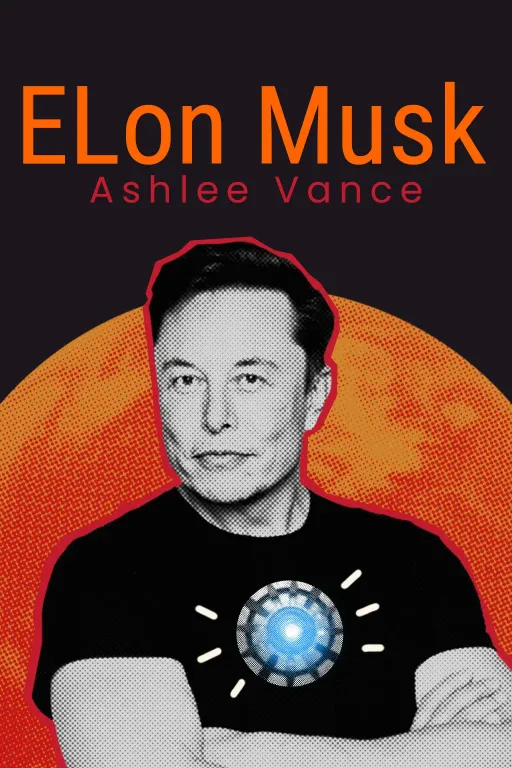
Nova: Absolutely. And speaking of building from the ground up, there's no better real-world architect of first principles than Elon Musk. His story with Tesla and SpaceX is a masterclass in this. When he looked at electric car batteries, he didn't just accept the market price of $600 per kilowatt-hour. He asked, "What are the constituent materials of a battery?"
Atlas: Okay, so he literally broke it down. Like a kid taking apart a toy to see how it works.
Nova: Precisely. He looked at the nickel, cobalt, aluminum, carbon, and polymers. He realized the raw materials cost around $80 per kilowatt-hour. The massive discrepancy wasn't in the materials themselves, but in the manufacturing process and supply chain. That insight led him to pursue vertical integration and innovative manufacturing, radically driving down battery costs. He didn't just improve existing batteries; he redefined how they were made and priced.
Atlas: Wow. That's a complete paradigm shift. For our listeners who are trying to solve real-world problems, especially in fields like Applied Physics or Biomedical Engineering, it's easy to get bogged down by existing constraints. How did he maintain that 'question everything' mindset in the face of immense pressure and established industry norms? It's one thing to have the thought, another to act on it with such conviction.
Nova: He applied the same thinking to rockets. When told rockets were prohibitively expensive, he asked, "What are rockets made of? Aluminum alloys, titanium, carbon fiber. What's the cost of these materials on the commodity market?" He found the materials cost about 2% of the total price of a rocket. The other 98% was manufacturing, assembly, and the fact that rockets were discarded after one use.
Atlas: That's insane!
Nova: It was. And that led to SpaceX's radical idea of reusable rockets. He didn't accept the assumption that rockets to be disposable. He questioned the physics and economics at the most fundamental level, and it changed space travel forever.
Atlas: That's incredible. But what about the 'human element' in this? You know, Simon Sinek talks about 'why.' Is there a 'why' behind Musk's relentless first principles application, or is it just pure logic driving him? Because for many of our listeners, the 'why' is what truly motivates them to make a difference.
The 'Why' Behind the 'What': Sinek's First Principles of Purpose
SECTION
Nova: You hit on something crucial there, Atlas. The 'why' is indeed a first principle in itself. Simon Sinek, in "Start with Why," argues that true inspiration and lasting success don't come from knowing you do or you do it, but you do it. He calls it the Golden Circle: most companies and people communicate from the outside in—What they do, then How they do it, and maybe, eventually, Why.
Atlas: Right, like, "We make great computers" then "They're well-designed" and then "We believe in challenging the status quo."
Nova: Exactly. But truly inspiring leaders and organizations, Sinek argues, communicate from the inside out: they start with their Why. Think Apple: their 'why' was "Think Different," challenging the status quo. Their 'how' was beautiful design and user experience. Their 'what' just happened to be computers. People bought into the 'why,' not just the 'what.'
Atlas: So Sinek is essentially saying that purpose is a first principle? That's fascinating. For someone driven by curiosity and making a difference, like many of our listeners, understanding 'why' could be the ultimate deconstruction before they even touch a problem. But how do you that 'why' when so many of us are just reacting to the 'what' of our daily lives and careers?
Nova: It requires introspection, which is its own form of first principles thinking. It’s about stripping away the expectations, the job titles, the perceived duties, and asking: "What truly drives me? What impact do I fundamentally want to make?" It’s questioning your deepest motivations, not just your surface-level goals. It’s the first principle of your own internal operating system.
Atlas: That’s a powerful way to look at it. It’s not just for corporations, it's for individuals too.
Synthesis & Takeaways
SECTION
Nova: So, whether it's deconstructing the cost of a rocket, understanding the core components of a problem, or discovering your fundamental purpose, First Principles Thinking is about stripping away the layers of convention and assumption to reveal the foundational truths.
Atlas: It sounds like a superpower for anyone, especially an aspiring innovator, who wants to move beyond just improving things to truly inventing the future. It’s about building a skyscraper of ideas from bedrock, not just patching up an old shed.
Nova: Exactly. It's about having the courage to ask "why not?" and "what if?" from the most basic level. And the tiny step we suggest today is to take a current problem you're facing, list all its underlying assumptions, and then question each one as if it were completely new. Don't be afraid to sound naive; that's often where breakthroughs hide.
Atlas: That's brilliant. It's not about being an expert, it's about being fundamentally curious, which I think resonates deeply with our audience who are focused explorers at heart.
Nova: Absolutely. It's a mindset that transforms challenges into opportunities for genuine innovation. It allows you to see possibilities where others only see limitations.
Atlas: So, if you're looking to make that groundbreaking impact, start by questioning everything you thought you knew. We'd love to hear what assumptions you're challenging. Share your insights with us!
Nova: This is Aibrary. Congratulations on your growth!









