

Leading with Impact: Building Your Legacy and Team
Golden Hook & Introduction
SECTION
Nova: Atlas, if I asked you to review the concept of "leadership" in exactly five words, what would you say? No pressure.
Atlas: Oh, that's a curveball right out of the gate! Five words for leadership... Hmm. "Own it, know why, inspire."
Nova: "Own it, know why, inspire." I like that. It's concise, it's punchy, and it actually perfectly encapsulates the two powerhouse books we're diving into today.
Atlas: Really? Because honestly, leadership can feel like this huge, nebulous thing. Like trying to herd cats while simultaneously building a rocket ship.
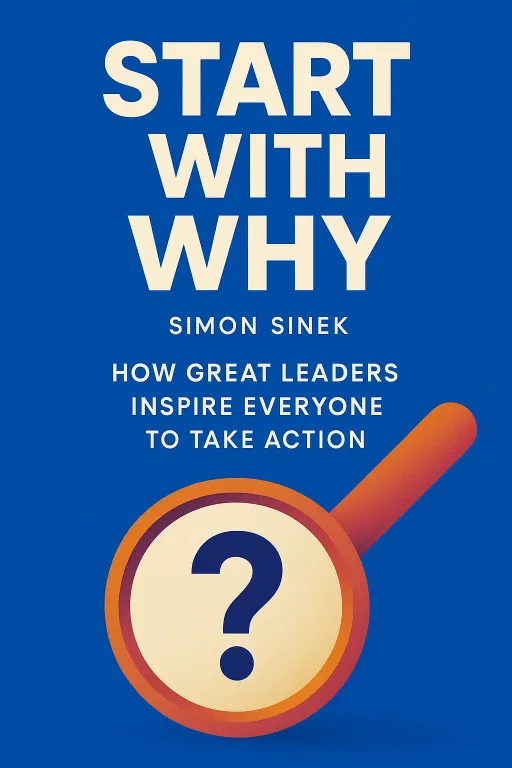
Nova: It can, but our two guides today cut through the noise. We're talking about Jocko Willink and Leif Babin's absolute game-changer, "Extreme Ownership," and then pairing it with Simon Sinek's incredibly influential "Start with Why."
Atlas: Ah, "Extreme Ownership." I know those names. Weren't Jocko and Leif legendary Navy SEALs? That pedigree alone makes you sit up and pay attention. You know they've seen leadership in the most intense, high-stakes environments.
Nova: Exactly. Their background as SEAL commanders gives "Extreme Ownership" an undeniable weight. It’s not just theory; it’s forged in combat. And then with Sinek, his work on "Start with Why" basically exploded onto the global stage after his TED Talk went viral, fundamentally shifting how many people think about purpose in business and life.
Atlas: So we're talking about the ultimate responsibility and the ultimate purpose. It sounds like two sides of a very powerful leadership coin. I'm intrigued, but also a little intimidated by "extreme ownership." It sounds... intense.
The Unwavering Principle of Extreme Ownership
SECTION
Nova: It intense, but in the most profoundly liberating way. The core tenet of "Extreme Ownership" is that leaders are 100% responsible for everything in their world. Every success, every failure, every screw-up, every missed target – it all ultimately comes back to the leader.
Atlas: Hold on. Every single thing? Even if it's clearly someone else's mistake, or an external factor completely out of your control? That sounds like a recipe for burnout, or just constantly being overwhelmed. For someone building a brand, dealing with suppliers, clients, unexpected market shifts... how can you own of that?
Nova: That's the paradigm shift. It’s not about taking the blame in a punitive sense, but taking responsibility for finding the solution. Willink and Babin share countless stories from their time in Iraq, where seemingly disparate problems – like a communications failure or a friendly fire incident – were ultimately traced back to the leader's failure to communicate clearly, train effectively, or anticipate risks.
Atlas: Can you give me a really vivid example? Because my brain immediately goes to, "My assistant forgot to order the new product line, so I can't take ownership of."
Nova: Okay, imagine this: a platoon of soldiers is ambushed. Casualties are high. The initial reaction might be to blame the enemy's superior position, faulty intelligence, or a soldier's individual mistake. But a leader practicing extreme ownership doesn't stop there. They ask: "Did I communicate the mission clearly enough? Did I ensure my team had all the necessary intelligence? Did I train them adequately for this type of scenario? Did I inspect what I expected?"
Atlas: So it's less about "who messed up?" and more about "what could have done differently to prevent this outcome?"
Nova: Exactly. It completely eradicates the blame game. When a leader truly owns it, their team sees that they're not looking for scapegoats. They're looking for solutions and ways to improve the system. This fosters incredible trust and empowerment because everyone knows the leader has their back and is focused on collective success, not individual fault.
Atlas: That’s actually really inspiring. I can see how that shifts the dynamic. Instead of a team pointing fingers, they're all looking at how they can collectively improve. But what about the "decisive calls" and "fostering discipline" part? How does extreme ownership translate into those day-to-day actions for, say, an entrepreneur with a small team?
Nova: Let's say you're launching a new service. A decisive call might be setting a clear, non-negotiable standard for quality or customer experience, even if it means initially limiting your capacity. Fostering discipline isn't about being a drill sergeant; it's about consistently upholding those standards, providing clear feedback, and ensuring everyone understands the "why" behind every procedure. If a team member consistently misses a deadline, the extreme owner looks inward: "Did I provide clear instructions? Was the deadline realistic? Did I equip them with the right tools or training? Have I addressed this consistently?"
Atlas: That makes me wonder, isn't there a line between ownership and martyrdom? Like, always taking the fall, even when it's genuinely not your fault, could lead to a leader being walked all over, or just constantly feeling like a failure.
Nova: That's a great point, and it’s a common misconception. Extreme ownership isn't about self-flagellation or letting people off the hook for their individual responsibilities. It's about recognizing that as the leader, the buck with you. If a team member fails, the leader's job is to figure out that failure occurred and how can adjust the environment, training, or communication to prevent it from happening again. It’s about building a system where success is inevitable and failure is a learning opportunity, not a personal indictment. It’s about empowering, not burdening.
Igniting Action: The Power of Your "Why"
SECTION
Nova: And once you embrace that level of ownership, Atlas, you then need to know you're owning it. That's where Simon Sinek's "Start with Why" comes in. He argues that truly great leaders and organizations don't just communicate they do or they do it. They start with.
Atlas: So, it’s not just about selling a great product or service, but selling the reason behind it? For someone building a brand, is this about more than just a tagline? How do you actually your "why" in the first place?
Nova: Absolutely, it's far beyond a tagline. Your "why" is your purpose, your cause, your belief – it's the fundamental reason your organization exists. Sinek uses the concept of the Golden Circle: most companies communicate from the outside in, but inspiring leaders communicate from the inside out. Think about Apple. They don't just sell computers; they sell challenging the status quo, thinking differently. The "why" creates a connection that transcends features and benefits.
Atlas: I can see that. It's like they're selling an identity, not just a device. But how does an entrepreneur, say, a barber building a bespoke grooming brand, find their deep "why"? Is it just "I love cutting hair"?
Nova: It's rarely just "I love cutting hair." That's the "what." The "why" might be: "I believe in empowering individuals through self-care and confidence." Or "I want to create a space where people feel seen, heard, and leave feeling their absolute best." It's about reflecting on the deeper impact you want to make, the problem you're truly solving beyond the surface-level service. It's about what you believe.
Atlas: That’s a powerful distinction. So, it resonates with the "Brand Storytelling" aspect from our user profile. It’s about connecting deeper with clients, beyond just the transaction. But how does a "why" empower a, not just clients? For someone looking to inspire their team and build a legacy, how does this play out internally?
Nova: Internally, a clear "why" provides a compass. When everyone on the team understands and believes in the core purpose – whether it's empowering clients, fostering community, or championing craftsmanship – it unifies their efforts. Decisions become easier because you can ask: "Does this align with our 'why'?" It builds loyalty, not just to the paycheck, but to the mission. It gives people a reason to come to work beyond just completing tasks.
Atlas: I mean, that sounds ideal. But isn't it easier, and more practical, to just focus on the "what" and "how"? The "why" feels a bit... abstract, sometimes, especially when you're just trying to keep the lights on and manage day-to-day operations.
Nova: It can feel abstract initially, but that's precisely why it's so powerful. Focusing on the "what" and "how" might get you short-term results, but it doesn't build lasting loyalty or resilience. When challenges hit – and they always do – it's the shared "why" that keeps a team motivated and united. It's what allows a business to adapt and innovate, because the core purpose remains even if the "what" or "how" needs to change. It's the difference between building a business and building a legacy.
Synthesis & Takeaways
SECTION
Nova: So, bringing these two powerful ideas together, Atlas, we see that true leadership isn't just about directing. It's about embodying absolute accountability through extreme ownership, and then articulating a compelling vision by starting with your "why." These two principles aren't separate; they're intrinsically linked.
Atlas: It's like extreme ownership provides the solid, unwavering foundation, the internal integrity, and starting with why provides the inspirational direction, the magnetic pull for everyone involved. Without ownership, your 'why' is just a nice idea. Without a 'why,' your ownership lacks ultimate purpose.
Nova: Exactly! It's the synergy. When a leader takes 100% responsibility for everything – the good, the bad, and the ugly – it builds trust and creates an environment where a shared "why" can truly flourish. And when that "why" is clear, it gives everyone, from the leader to the newest team member, a profound sense of purpose and direction. This isn't just about building a successful business; it's about building something that deeply resonates, that empowers people, and ultimately, leaves a lasting legacy.
Atlas: That's actually really profound. It turns the idea of leadership from a burden into a powerful tool for impact. For our listeners who are entrepreneurs, or really anyone looking to make a bigger impact, what's one concrete step they can take today to start weaving these two ideas together?
Nova: Start small, but start deep. Over the next week, pick one area in your work or business where you feel things aren't quite going right. Instead of looking for external reasons or who to blame, practice extreme ownership: ask yourself, "What could have done differently to influence a better outcome?" And then, connected to that, ask, "What's the deeper purpose, my 'why,' behind even this specific task or challenge?" Just that simple shift in perspective can be transformative.
Atlas: That's a great, actionable challenge. It really forces you to look inward and understand your own impact and motivations.
Nova: It does. And the insights you gain from that reflection are invaluable.
Atlas: Well, this has been an incredibly insightful dive into what it truly means to lead with impact. Thank you, Nova.
Nova: My pleasure, Atlas. And thank you to all our listeners for joining us.
Atlas: If these ideas resonated with you, or if you've practiced extreme ownership or discovered your 'why,' we'd love to hear your stories and insights. Share them with us on social media!
Nova: This is Aibrary. Congratulations on your growth!









