

Crafting an Unstoppable Culture: Beyond Perks to Purpose
Golden Hook & Introduction
SECTION
Nova: Atlas, before we dive into today's topic, I have a quick challenge for you. Give me a five-word review of 'company culture.' No overthinking, just your gut reaction.
Atlas: Oh, man, five words? Okay... "Often misunderstood, rarely unstoppable."
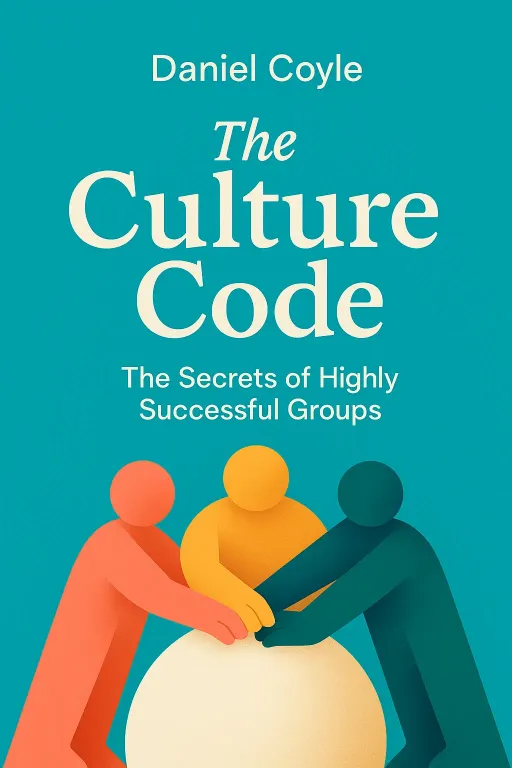
Nova: Ha! "Rarely unstoppable"—I love that. And that actually sets us up perfectly for today's deep dive into "Crafting an Unstoppable Culture: Beyond Perks to Purpose." We’re pulling insights from two phenomenal books: Daniel Coyle’s "The Culture Code" and Simon Sinek’s enduring classic, "Start with Why."
Atlas: Two absolute powerhouses. Coyle, with his almost anthropological approach, studying everything from Navy SEALs to Pixar, really gave us a blueprint. And Sinek? He fundamentally shifted how we think about leadership and motivation with that simple, powerful question.
Nova: Absolutely. Coyle’s genius was in dissecting the of high-performing groups, showing us that culture isn't some mystical, accidental thing. And Sinek's work, which has resonated with millions globally, provided the foundational insight that purpose isn't just a nice-to-have, it’s the core engine. Together, they paint a picture of culture as something you with intentionality, not just something that happens by chance.
The Foundations of an Unstoppable Culture: Beyond Perks to Purpose
SECTION
Atlas: Okay, so "engineered with intentionality"—that sounds intriguing for anyone trying to build something truly new, a disruptor, an architect. But Nova, for so many, 'culture' still conjures images of ping-pong tables and free snacks. Where do Coyle and Sinek tell us we’re getting it wrong?
Nova: Well, that's precisely where we start. Coyle argues that the blueprint for belonging, for a truly thriving culture, comes down to three things: building psychological safety, sharing vulnerability, and establishing profound purpose. It’s not about the perks; it’s about the underlying human connection.
Atlas: Hold on, psychological safety and vulnerability? In, say, a high-growth startup environment where everything feels high-stakes, isn't that just a recipe for people being comfortable, maybe even slowing things down, or worse, being perceived as weak?
Nova: That’s a common misconception, Atlas, and it’s actually the opposite. Coyle found that psychological safety isn't about being 'nice' all the time. It's about creating an environment where people feel secure enough to take risks, to make mistakes, to speak up with bad news or crazy ideas, without fear of punishment or humiliation. Think of a software development team where an engineer is too afraid to flag a potential bug early because they fear being blamed. That lack of safety can be catastrophic down the line.
Atlas: So, it's not about coddling, it's about enabling honest feedback and rapid learning. I can see how that would be critical for innovation. But vulnerability? That still feels like a tough sell for a leader trying to project strength and confidence.
Nova: It does, doesn't it? But Coyle's research shows that shared vulnerability is the for trust. When leaders, or even team members, admit a mistake, ask for help, or share a personal struggle – not oversharing, but strategically vulnerable – it sends a powerful signal: "It's okay to be imperfect here. We're in this together." He observed this in environments as diverse as top-tier consulting firms and championship sports teams. This isn't about emotional breakdowns; it’s about opening a crack for genuine connection, which then allows for higher performance.
Atlas: That’s a great way to put it – "opening a crack for genuine connection." I imagine a lot of our listeners, the visionaries and architects, are constantly challenging norms. If they can’t admit when they're unsure or need help, that creates silos, not collaboration.
Nova: Exactly. And this leads directly to Sinek’s "Start with Why." Vulnerability and safety create the fertile ground, but purpose provides the direction. Sinek famously argues that truly inspiring organizations, whether it's Apple or the civil rights movement, communicate from the inside out. They articulate they do what they do, not just or. That 'why' becomes the rallying cry, the shared belief system that aligns everyone, even when things get tough.
Atlas: So it's not just a mission statement on a wall; it's a deeply felt, almost visceral reason for being that people connect with. That makes me wonder, how does a leader actually that level of purpose and shared vulnerability?
Leading with Intent: Operationalizing Purpose and Modeling Values
SECTION
Nova: That's the million-dollar question, Atlas, and it moves us from understanding culture is to you intentionally build it. My take is that a thriving culture isn't accidental; it's engineered with intentionality. It's about translating that 'why' from an abstract concept into daily actions.
Atlas: Okay, so for someone who’s building a product, scaling a team, making data-driven decisions – how do you make the 'why' tangible? How do you prevent it from just becoming corporate jargon?
Nova: One tiny, yet incredibly powerful step, is to schedule a 'Why' workshop with your core team. Not a brainstorming session for new features, but a focused, facilitated conversation to collectively articulate the company's foundational purpose. It’s about asking: "Why do we exist beyond making money? What problem do we solve? What impact do we want to make?" Then, crucially, linking that 'why' to how it translates into daily actions and decisions.
Atlas: That’s a practical step. But for a visionary, an innovator, there’s always the temptation to delegate. "Someone else can handle the 'why' workshop, I need to focus on the Go-to-Market strategy."
Nova: And that's where the "Deep Question" comes in: How can you, as the leader, consistently model the cultural values you wish to embed, making them tangible rather than just aspirational statements? Because if the leader isn't living the 'why,' it's just words. Consider a tech founder I know who preached radical transparency. He didn't just talk about it; he shared monthly financial statements, discussed difficult client feedback in all-hands meetings, and even admitted when he’d made a strategic misstep, explaining his rationale. That modeling created a culture where everyone felt empowered to be transparent, driving faster problem-solving.
Atlas: Wow, that’s actually really inspiring. It’s about leading by example, not just by decree. For someone building a resilient team, that kind of authenticity builds trust far more effectively than any perk. It’s about building a culture where people to be, not just where they to be. So, in essence, the leader is the chief culture architect, shaping the environment through their own behavior.
Nova: Exactly. Your actions, your priorities, your responses to challenges—they all communicate far more powerfully than any mission statement. If you say innovation is key but punish risk-takers, you're modeling a culture of fear, not innovation. If you say customer focus is paramount but constantly cut corners, your team will internalize that disconnect.
Synthesis & Takeaways
SECTION
Atlas: So, to bring it all together, it sounds like building an unstoppable culture isn’t about chasing the latest trend or offering the most extravagant perks. It’s about deep, intentional work on psychological safety, shared vulnerability, and a profoundly articulated 'why.'
Nova: Precisely. It’s about recognizing that culture is a strategic asset, as critical as any product roadmap or market strategy. It’s the collective intelligence, the shared belief system that dictates how people interact, innovate, and overcome challenges. And the most successful cultures are deliberately cultivated, not merely inherited or left to chance.
Atlas: And for the leaders, the visionaries and disruptors listening, it means looking inward first. Articulating that 'why' and then consistently modeling it, making those values tangible in every daily interaction. It's the ultimate act of leadership.
Nova: Absolutely. Start with that 'Why' workshop, and then commit to living those values every single day. That's how you build something truly unstoppable.
Atlas: That’s a powerful call to action. Thanks, Nova.
Nova: My pleasure, Atlas.
Nova: This is Aibrary. Congratulations on your growth!









