

Beyond the Product: Building a Brand That Resonates Deeply.
Golden Hook & Introduction
SECTION
Nova: Alright Atlas, today we're diving into something every business, every creator, every… well, every human trying to connect needs to understand: Building a Brand That Resonates Deeply. Give me your five-word review of this topic. No pressure, just witty brilliance.
Atlas: Oh, Nova, five words, huh? Hmm… "Soulful connection beats soulless sales."
Nova: Ooh, I love that! "Soulful connection beats soulless sales." Right to the heart of it. Because so many businesses, so many ventures, they just feel… interchangeable. Like a sea of similar offerings, all shouting the same thing.
Atlas: Exactly. And you see it everywhere, right? The struggle to stand out, to feel like your work actually matters beyond just the bottom line. It’s a common pain point for anyone trying to make a meaningful impact.
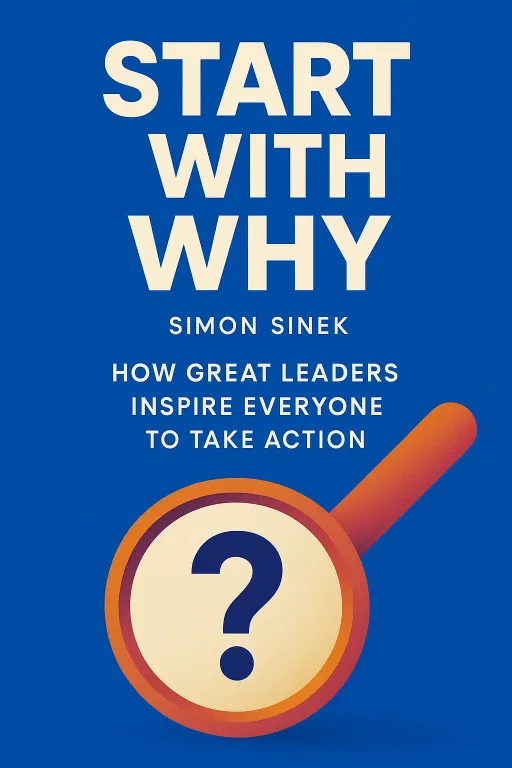
Nova: It absolutely is. And that feeling often stems from a lack of emotional connection with their audience. Which is why today, we're pulling insights from two absolute titans in the field: Simon Sinek's seminal "Start with Why" and Seth Godin's transformative "Tribes."
Atlas: Both powerful, both essential. I mean, Sinek’s work, rooted in his background as an ethnographic researcher, really shifted the conversation, especially after his viral TED Talk. He didn't just tell us to do, he showed us to think differently. And Godin, always the marketing visionary, he challenges conventional thinking at every turn. He really predicted this shift from mass marketing to niche communities long before many caught on.
Nova: Absolutely. And what these two visionary thinkers illuminate, separately but powerfully together, is that true resonance for a brand, a business, or even an individual, comes not from you do, but from something far deeper.
Atlas: So, we're talking about escaping the sea of sameness, right? Getting to that core truth?
The 'Why' Beyond the 'What'
SECTION
Nova: Precisely. Let's start with Sinek. His core argument, famously, is that people don't buy what you do, they buy why you do it. He shows how articulating your core purpose inspires loyalty and action. Think about Apple.
Atlas: Apple, the quintessential example. Everyone talks about their sleek design, their intuitive interface. The 'what' is undeniable.
Nova: Exactly. But if Apple only sold computers and phones, they'd be just another tech company. Their 'why' isn't just to make great products. Their 'why,' from the very beginning, was to challenge the status quo, to empower individuals to think differently, to create. They believed in putting tools for creativity and rebellion in people's hands.
Atlas: So, the product itself became a manifestation of that deeper belief.
Nova: Yes! Their messaging wasn't, "Buy our fast computer." It was, "Here's a tool for the rebels, the creatives, the ones who want to change the world." That 'why' resonated with a specific type of person who saw themselves in that mission. It built an emotional connection far beyond mere specs or features.
Atlas: But isn't there a risk that this 'why' just becomes corporate jargon, especially for a large tech company? How do they keep it authentic? For a strategic integrator, someone trying to weave genuine purpose into a complex organization, that authenticity is key.
Nova: That’s a brilliant point, Atlas. The authenticity is everything. If your 'why' is just a slogan on a wall that doesn't align with your actions, your culture, your products, then yes, it falls flat. It becomes hollow. Think about companies that try to jump on a social cause bandwagon without genuinely living those values. Customers see right through it. Authenticity means consistency across every touchpoint. It’s a genuine belief, not just a marketing ploy.
Atlas: Okay, so it’s about embodiment. But for someone trying to integrate this into a complex system, how do they start identifying their core purpose beyond just making money? That’s often the default answer.
Nova: That's the healing moment Sinek invites us into, actually. He pushes us to ask: What genuine problem are you solving? What positive impact do you truly want to make? It's not about the profit, it's about the problem you're passionate about solving, the vision you're committed to bringing to life. For Apple, it was making powerful technology accessible, not just to engineers, but to artists and everyday people. For a tech company, it might be democratizing access to information, or building tools that genuinely enhance human connection, not just monetize attention. It's often found in the origin story, the founder's initial spark of frustration or inspiration.
Building Tribes: Community as the Ultimate Brand Asset
SECTION
Nova: And once you have that clear 'why,' that genuine purpose, something truly remarkable starts to happen. It naturally attracts people who share those values. Which brings us beautifully to Seth Godin and "Tribes."
Atlas: Ah, the community aspect. Godin’s concept of a tribe is so powerful because it taps into a fundamental human need: belonging.
Nova: Absolutely. Godin argues that leaders don't just sell products; they connect people around shared interests and values. It's about building a community around your brand, not just selling a product. Think about Harley-Davidson. They don't just sell motorcycles.
Atlas: They sell a lifestyle, a feeling of freedom, rebellion, camaraderie. You see those groups of riders, the jackets, the events… it’s far more than just transportation.
Nova: Exactly! Their 'why' isn't just about manufacturing bikes; it's about enabling a certain kind of adventurous, independent spirit. And that 'why' attracts a tribe. Harley-Davidson fosters this with events, clubs, even their own mythology. Riders aren't just customers; they're members of a fiercely loyal community, bound by shared passion, shared rituals, shared identity. They’re a living example of how a brand can become a focal point for a true tribe.
Atlas: That makes perfect sense for a brand with such a strong, almost iconic physical product. But what about ethical tech companies or service-based businesses, especially for someone who identifies as an ethical technologist or relationship architect? How do they build a genuine tribe without it feeling manufactured or exclusive?
Nova: That’s a critical question. The beauty of Godin’s insight is that tribes aren't necessarily about a physical product. They're about shared values and ideas. Look at open-source software communities. Their 'why' is often about collaboration, transparency, and democratizing technology. They build incredibly strong tribes around code, shared knowledge, and a common mission. Or ethical consumer movements, where people band together around sustainable practices or fair trade. The product might be a coffee bean, but the tribe forms around the shared value of a better world.
Atlas: So the 'why' is the magnet, and the 'tribe' is the community that forms around it. But how does building this tribe translate into tangible relationship building, especially in a digital age? Is it just online forums, or something deeper?
Nova: It’s definitely deeper. It’s about creating spaces, both digital and physical, where people can connect with each other, not just with the brand. It’s about facilitating conversations, empowering members to lead, and giving them a voice. It’s about shared experiences – whether that’s a user conference for a software company, a local meet-up for ethical shoppers, or online challenges for a fitness brand. It's about feeling like you're part of something bigger than yourself, something you contribute to. That's true relationship building.
Healing Moment, Synthesis & Takeaways
SECTION
Nova: This brings us back to that healing moment from the book content we touched on earlier, Atlas. Take a moment to reflect on the core 'why' behind your business, your project, your personal mission. What genuine problem are you solving, or what positive impact do you truly want to make?
Atlas: This isn't just a marketing exercise, is it? It feels like a fundamental question for anyone seeking mastery or meaningful impact. It’s about aligning your deepest purpose with your outward actions, which is a quest for mastery in itself. For a relationship architect, it’s about building genuine connections from that place of purpose.
Nova: Absolutely. Because when you identify that 'why,' and you live it authentically, you stop competing on features or price. You start connecting on a profoundly human level. That connection then becomes the foundation for a loyal, passionate community – your tribe – who aren't just customers, but advocates and collaborators.
Atlas: So, the real work isn't just on the product, it's on ourselves first, to uncover that authentic 'why.' And then, it's on the community we cultivate around that purpose. It's about being the kind of leader who inspires, not just sells. It's about impacting society, not just the market.
Nova: That's the power of moving "Beyond the Product" to build a brand that resonates deeply. It’s about meaning, connection, and ultimately, impact.
Atlas: Powerful stuff, Nova. Really makes you rethink how you approach everything.
Nova: Indeed. This is Aibrary. Congratulations on your growth!









