Authentic Leadership: Inspiring and Empowering Your Movement
Golden Hook & Introduction
SECTION
Nova: You know, Atlas, I often wonder if we've got leadership all wrong. We spend so much energy perfecting the 'what' and the 'how' – the strategies, the products, the processes. But what if the most powerful question a leader can ask, the one that truly builds movements, isn't about or at all?
Atlas: Oh, I like that! You're saying we're so busy building the intricate architecture of our vision, we might be missing the very foundation that makes it stand? So, what the most powerful question then, if not the 'what' or 'how'? Because honestly, for anyone trying to define a clear roadmap and get everyone on board, the 'what' and 'how' feel pretty essential.
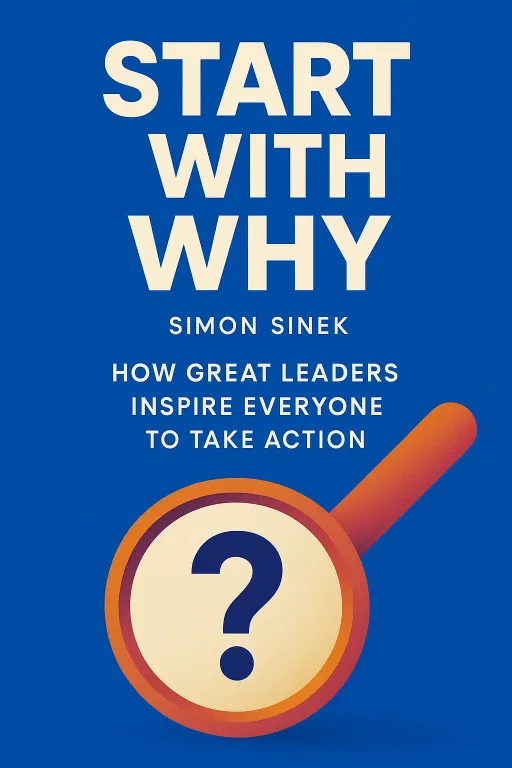
Nova: They are essential, absolutely. But they're not. The most powerful question, according to a brilliant mind we're diving into today, is simply: We’re talking about the profound insights of Simon Sinek, specifically from his groundbreaking books "Start with Why" and "Leaders Eat Last." Sinek, with his unique background as an ethnographer, really cracked the code on what truly motivates people, not just to buy a product, but to believe in a cause. His TED Talk on 'Start with Why' became one of the most-watched of all time because it resonated so deeply with this fundamental human need.
Atlas: Wow, one of the most-watched TED Talks ever. That's serious impact. You know, for a visionary trying to build a movement, not just a product, that 'why' question feels incredibly relevant. It’s about more than just tasks; it’s about purpose.
The Magnetic Power of 'Starting with Why'
SECTION
Nova: Exactly! Sinek introduces this concept called "The Golden Circle." Most organizations and leaders communicate from the outside-in: they tell you they do, then they do it, and maybe, eventually, they do it. But truly inspirational leaders, they communicate from the inside-out. They start with their 'why' – their purpose, their cause, their belief. Then they explain they fulfill that why, and finally, they actually do.
Atlas: Hold on, so you're saying it's not enough to have a brilliant 'what' or a super efficient 'how'? People need to understand the 'why' first? But for leaders trying to define a clear roadmap and hit specific targets, isn't there a risk that focusing on the 'why' becomes too abstract, too philosophical? How do you even your 'why' if you're already deep in the weeds of the 'what'?
Nova: That’s a fantastic question, and it gets to the heart of Sinek's genius. He argues that our brains are wired this way. The outermost part of our brain, the neocortex, is responsible for rational thought, language, and processing the 'what'. But the limbic system, deeper inside, controls feelings, trust, and loyalty – and it has no capacity for language. It's where the 'why' resonates. So when you communicate your 'why', you're speaking directly to the part of the brain that drives behavior and decision-making, not just the part that processes facts.
Atlas: So basically, you're tapping into something far more primal than just logic. That makes me wonder, can you give an example of a company or leader who nailed this 'start with why' approach, and what the tangible outcome was? Because for a leader driven by impact, results matter.
Nova: Absolutely. The classic example Sinek uses is Apple. For years, their competitors were saying, "We make great computers. They're beautifully designed, simple to use, and user-friendly. Want to buy one?" That's outside-in. Apple, however, communicated from the inside-out: "Everything we do, we believe in challenging the status quo. We believe in thinking differently. The way we challenge the status quo is by making our products beautifully designed, simple to use, and user-friendly. We just happen to make great computers. Want to buy one?"
Atlas: Wow. That's a completely different pitch. It's not about the product anymore; it's about a belief.
Nova: Exactly. The is challenging the status quo. The is beautiful design and user-friendliness. The is a computer. And because they started with that 'why', people didn't just buy a computer; they bought into a philosophy. This is why Apple has such fierce brand loyalty. People don't just buy their products; they feel like they're part of a movement. They identify with the 'why'. The cause was revolutionary at the time, inspiring a generation to think differently about technology. The process was meticulous design and intuitive user experience, making powerful tech accessible. The outcome? Not just computers, but a global community of loyal users who felt understood and empowered by their tools.
Atlas: That's powerful. It’s like they created a sense of belonging simply by articulating their core belief. For a leader looking to build a movement, not just a product, that’s gold. It makes the 'how' and 'what' so much more meaningful. But it still feels like a big leap for someone who's spent their whole career optimizing the 'what'. How does a leader, who’s used to focusing on measurable outcomes, pivot to uncover and articulate that deeper 'why'? It's not always obvious, right?
Nova: It's definitely not always obvious, and it takes deep introspection. It’s about reflecting on what truly drives you, what problem you fundamentally believe you're solving, beyond just the commercial aspect. It's the core belief that would still exist even if your current product or service disappeared. It often comes from a place of passion, a deep-seated conviction. For a leader, it’s about asking: what impact do I truly want to have on the world, on my team, on my customers, that transcends profit margins? What's the change I want to see?
Atlas: That makes sense. It's about connecting with that intrinsic motivation, which then becomes the north star for everything else. It really does sound like it helps define that clear roadmap.
Forging a 'Circle of Safety' for Unstoppable Teams
SECTION
Nova: And that naturally leads us to the second key idea from Sinek, which often acts as the fertile ground where that 'why' can truly blossom: the concept of the "Circle of Safety" from "Leaders Eat Last." Once you have a compelling 'why', you need an environment where people feel safe enough to pursue it, to take risks, to innovate, and to trust each other.
Atlas: A 'Circle of Safety.' That sounds incredibly appealing, especially for someone who values connection and wants strong teams. But wait, in a high-stakes, fast-paced environment, where everyone is driven by impact and there's pressure for product-market fit, isn't some level of internal competition, some healthy friction, actually good? How do you balance that with creating a 'Circle of Safety' where everyone feels protected? Doesn't too much safety lead to complacency?
Nova: That's a crucial distinction, Atlas. Sinek isn't advocating for a lack of challenge or accountability. Quite the opposite. The 'Circle of Safety' means leaders are responsible for protecting their people the organization – the market volatility, the competition, the external pressures. Inside the circle, people should feel safe to be vulnerable, to admit mistakes, to ask for help, to experiment, and even to challenge ideas without fear of retribution or humiliation. The 'friction' should be about ideas, not about personal attacks or job security.
Atlas: So, it's about shifting the battleground from internal to external. It's us against the market, not us against each other. That's a powerful reframing. Can you give an example of how a leader effectively creates this 'Circle of Safety' in practice? Because for listeners thinking about their own teams, this is where the rubber meets the road.
Nova: Absolutely. Think about leaders who, in times of crisis, make personal sacrifices for their team. Sinek tells the story of Bob Chapman, CEO of Barry-Wehmiller, a manufacturing company. During the 2008 recession, instead of laying off employees, Chapman implemented a furlough program where everyone, from the CEO down, took four weeks of unpaid leave. They spread the pain evenly, ensuring no one lost their job. The result? Not only did they avoid layoffs, but the employees' trust and loyalty skyrocketed. They felt protected, valued, and knew their leaders genuinely cared. This created an unbreakable bond, a true 'Circle of Safety'. The cause was keeping their people whole; the process was shared sacrifice; the outcome was unprecedented loyalty and a stronger, more resilient company.
Atlas: Wow, that’s actually really inspiring. That gives me chills. So it’s about demonstrating, through actions, that the people the circle are the most valuable asset. It’s about vulnerability from the top, and a willingness to put your people first. And I imagine that fosters a culture where active listening thrives, because everyone feels heard and respected.
Nova: Precisely. It’s the leader's responsibility to create that environment. When leaders consistently put their people first, when they show empathy and take responsibility, people naturally trust each other. And when there's trust, there's cooperation, innovation, and resilience. It unleashes their full creative potential because they're not spending energy protecting themselves from internal threats. They're focused entirely on the external challenges, aligning with the leader's 'why'.
Atlas: That makes so much sense. For a leader who's driven by impact and wants to empower their team, creating that psychological safety is paramount. It's not just a nice-to-have; it's a strategic imperative for building strong teams and achieving stakeholder alignment. It seems like this also ties into the idea of embracing the journey and learning from every iteration; if people feel safe, they're more likely to take calculated risks and learn from failures without fear.
Synthesis & Takeaways
SECTION
Nova: Absolutely, Atlas. When you combine these two principles – clearly articulating your 'why' and then building a 'Circle of Safety' – you're not just managing an organization; you're cultivating an authentic movement. The 'why' gives everyone a shared purpose, a reason to wake up and be deeply invested. The 'Circle of Safety' ensures they have the trust and psychological security to bring their whole selves to that purpose, to innovate, to collaborate, and to truly thrive. It’s the difference between a group of individuals working for a paycheck and a cohesive team passionately pursuing a shared vision.
Atlas: That’s a really profound way to put it. It’s about building something that's bigger than any single person, and that can withstand external pressures because the internal bonds are so strong. For a visionary who wants to define a clear roadmap and build a movement, this isn't just theory; it's the playbook for creating lasting impact and truly empowering a team. It makes me realize that leadership isn't just about strategy; it's fundamentally about human connection and trust.
Nova: Exactly. It's about leading from the heart, forging the future. And it starts with that tiny step: clearly articulating your 'why' for your current project or team goal, and then sharing it. And then, asking yourself every day: how can I consistently create that 'Circle of Safety' for my team? How can I ensure every single member feels valued, heard, and protected, so they can unleash their full, incredible potential? The journey of authentic leadership isn't always perfect, but every iteration, every moment of active listening, every act of trust-building, makes the movement stronger.
Atlas: That's a powerful challenge for every leader out there. It’s about embracing that journey of continuous growth. What a thought-provoking discussion.
Nova: Indeed. This is Aibrary. Congratulations on your growth!