

Mastering Modern Productivity
Golden Hook & Introduction
SECTION
Nova: Alright, Atlas, quick question: What's the most outdated piece of management advice you still hear people clinging to, even in 2024?
Atlas: Oh, that's easy. "If I can't see them, they're not working." As if proximity magically generates productivity. It's the corporate equivalent of believing the Earth is flat!
Nova: Exactly! It’s that lingering ghost of command-and-control, isn't it? That deep-seated belief that unless you’re physically present, breathing down someone’s neck, nothing actually gets done.
Atlas: Honestly, that sounds like a recipe for burnout and resentment, not actual work. It makes me wonder, how many brilliant ideas are stifled because someone’s manager is more focused on screen time than actual output?
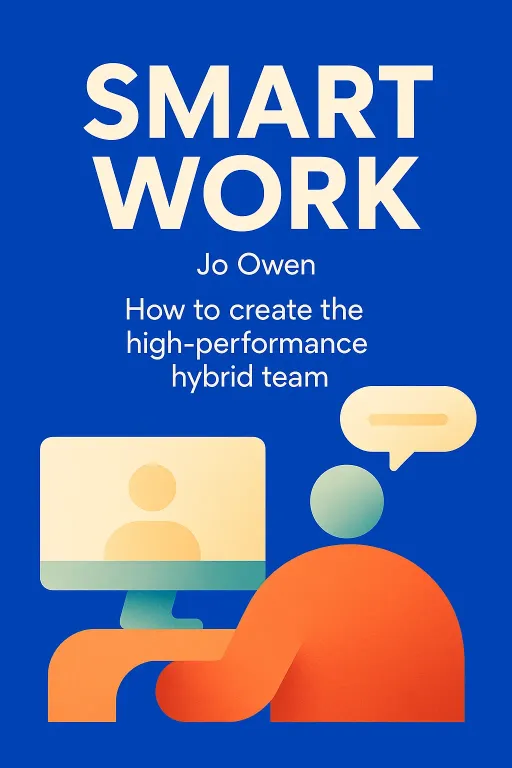
Nova: A lot, I'd wager. And that's precisely why we're diving into a book today that completely dismantles that old paradigm and offers a revolutionary blueprint for the modern age. We're talking about 'Smart Work' by Jo.
Atlas: Jo. Just Jo? I like the minimalist approach. It implies a no-nonsense, get-to-the-point kind of wisdom.
Nova: Absolutely. The author, Jo, has spent years navigating the complexities of organizational behavior and leadership, particularly as the world shifted dramatically into hybrid and remote models. This book isn't just theory; it's a pragmatic response to the chaos and inefficiency many businesses experienced when they suddenly couldn't rely on traditional oversight. Jo’s motivation was clear: to provide leaders and teams with actionable strategies to not just survive, but truly thrive, in these new work realities.
Atlas: That makes sense. It feels like a lot of companies just stumbled into remote work during the pandemic and are now trying to patch things up with old tools. So, this book is essentially a modern survival guide for the corporate jungle?
Nova: More than survival, Atlas. It's about mastering the landscape. It challenges us to rethink what productivity truly means and how leadership needs to evolve when your team isn't all under one roof, or even in the same time zone. It's about moving from simply managing tasks to truly leading people.
The Paradigm Shift & Why Old Rules Fail
SECTION
Nova: And that brings us to our first deep dive: the seismic shift happening in the world of work, and why those old rules you just mentioned are absolutely failing us.
Atlas: Yeah, I can definitely relate to that. I imagine a lot of our listeners are nodding along, thinking about their own workplaces. What's the core problem Jo identifies with the old "command-and-control" model in this new environment?
Nova: Well, it’s fundamentally built on a lack of trust and an assumption that people need constant supervision. In an office setting, that might manifest as managers physically walking around, checking in, seeing who's at their desk. When you go hybrid or remote, that physical oversight vanishes.
Atlas: So you're saying, suddenly, managers who relied on "seeing" productivity are completely lost when they can't physically see their team?
Nova: Precisely. Imagine Sarah, a mid-level manager we read about in the book. Before, she'd manage her team by constantly checking their screens, asking for impromptu updates, and having them physically present in meetings. When her company went remote, she felt a profound loss of control. She started scheduling back-to-back virtual meetings, demanding daily detailed reports, and even checking online statuses every hour.
Atlas: Oh man, that sounds exhausting for everyone involved. For Sarah, and especially for her team.
Nova: It was. Her team, already grappling with the challenges of working from home – juggling childcare, dealing with unreliable internet – felt completely micromanaged. They became less productive, not more, because they were spending so much time they were working, rather than actually the work. Their motivation plummeted, and innovation stalled.
Atlas: That makes me wonder, what are the hidden costs of this "trust deficit" you mentioned? Beyond just lower productivity, what's really at stake for teams and companies?
Nova: The costs are enormous, Atlas. Beyond the obvious drop in output and morale, you see increased employee turnover, a decline in psychological safety within teams, and a complete stifling of creativity. When people feel watched and distrusted, they stop taking risks, they stop sharing innovative ideas, and they just do the bare minimum to avoid reprimand. It creates a culture of fear instead of a culture of empowerment.
Atlas: That’s actually really insightful. It's not just about losing productivity, it's about losing the for growth and innovation. So, the old model isn't just inefficient; it's actively detrimental to the very things a modern business needs to thrive.
Nova: Exactly. Jo argues that sticking to command-and-control in a hybrid world is like trying to navigate a spaceship with a horse and buggy. It's simply not fit for purpose. We're asking people to perform complex, creative tasks in flexible environments, yet we're still trying to manage them with rigid, outdated rules designed for factory floors. The fundamental problem is that it prioritizes over, and over.
Atlas: I can see how that would be a major pain point for anyone trying to lead a team right now. If the old ways are obsolete, what's the alternative? How do we build trust and accountability when we can't physically see everyone?
Nova: That's the million-dollar question, isn't it? And that's where Jo introduces something incredibly powerful: the RAMP framework. It’s the answer to your question, a systematic way to build that trust and sustain peak performance.
Deconstructing the RAMP Framework
SECTION
Nova: So, if command-and-control is a relic, what's the blueprint for this new era? That's where Jo's RAMP framework comes in. R. A. M. P. stands for Relationships, Autonomy, Motivation, and Process.
Atlas: RAMP. I like that. It sounds like something that helps you get over obstacles. Can you break down the first one, Relationships? Is it just about being friendly, or is there more to it?
Nova: It's so much more than just being friendly. Jo emphasizes that in a hybrid environment, relationships need to be. Those casual watercooler chats or hallway hellos don't happen organically. You have to design opportunities for connection.
Atlas: Like how? Can you give an example?
Nova: Think of a remote software development team that was struggling with miscommunication and a lack of cohesion. They realized they were only interacting about tasks. Following RAMP, their manager introduced a "virtual coffee break" twice a week – entirely optional, no work talk allowed. They also started a "Wins and Learnings" channel where people shared personal achievements or what they learned from a mistake, fostering vulnerability.
Atlas: So it's about creating spaces for genuine human connection, even virtually, that build the bedrock of trust.
Nova: Exactly. It cultivates psychological safety, making people feel comfortable sharing ideas, asking for help, and even admitting mistakes. Next is A for Autonomy. This is about empowering individuals, defining outcomes, not just tasks.
Atlas: How do you give Autonomy without chaos? I mean, if everyone's just doing their own thing, doesn't that lead to a mess?
Nova: That’s a common misconception. True autonomy isn't a free-for-all. It's about clarity of and, then giving people the freedom to decide they achieve them. Consider a marketing team. Instead of the manager dictating "create five social media posts about X by Friday," the RAMP approach says, "Our goal is to increase brand engagement by 15% this quarter. How do you propose we achieve that, and what resources do you need?"
Atlas: I see. So, it's about shifting from a task-master to a goal-setter, and trusting the team to figure out the best path. That sounds like it would lead to a lot more ownership and innovation.
Nova: It absolutely does. People are far more invested when they have a say in their work. Which brings us to M: Motivation. Jo argues that sustained motivation comes from connecting work to purpose, not just paychecks.
Atlas: But what if someone just isn't "motivated" by purpose? Some people just want to do their job and go home, right?
Nova: That’s a fair point, but Jo suggests that everyone has a desire for meaning, even if it's not immediately obvious. The leader's role is to help individuals see how their specific contributions connect to the larger vision, the customer impact, or the company's values.
Atlas: Can you give an example of how a manager helps someone connect to that purpose?
Nova: Think of a customer service representative who felt their job was repetitive. Their manager started sharing positive customer feedback more regularly, highlighting specific instances where the rep's actions directly solved a problem or made someone's day. They also invited a product team member to explain how customer feedback directly influenced new features. Suddenly, the rep saw their role as crucial feedback loop, not just answering calls.
Atlas: Wow, that’s actually really inspiring. It’s about making the impact tangible. And finally, P for Process. What's a "bad" process look like, and how does RAMP fix it?
Nova: A bad process is anything that creates friction, wastes time, or hinders collaboration. Think endless, unproductive meetings, confusing communication channels, or redundant approval steps. Jo advocates for optimizing workflows and establishing clear, efficient communication channels.
Atlas: Right, like those meetings that could have been an email, or those email chains that go on forever.
Nova: Precisely. A team we discussed was drowning in "meeting fatigue." They applied RAMP by first defining the of each meeting – information sharing, decision-making, brainstorming. Then, they set strict time limits, assigned clear facilitators, and ensured actionable outcomes. For information sharing, they shifted to asynchronous updates. The result was fewer, shorter, and far more productive meetings.
Atlas: That’s a perfect example. So, RAMP isn't just about individual elements; it's about how they all work together to create a cohesive, high-performing environment. Relationships build trust, which enables autonomy, which fuels motivation, all supported by efficient processes.
Synthesis & Takeaways
SECTION
Nova: You've got it, Atlas. The genius of Jo's RAMP framework is in its holistic nature. It's not just a checklist; it's a fundamental shift in how we conceive of work and leadership. It moves us away from the outdated notion that productivity is solely about controlling output, to understanding that it's deeply rooted in human connection, empowerment, purpose, and efficient systems.
Atlas: It really redefines what "smart" work means. It's about building resilient, high-performing teams by investing in people, not just processes. It's about leading with trust, not just authority.
Nova: Exactly. The book ultimately reveals that the most effective way to foster accountability and peak performance in modern work isn't through tighter controls, but through deeper trust and more meaningful engagement. It's about designing work environments where people to excel, rather than feeling forced to.
Atlas: That’s such a hopeful way to look at it, especially for anyone feeling overwhelmed by the demands of modern work. It makes me wonder, what's one immediate step a listener could take to start applying the RAMP framework in their own work or team, even if they're not a manager?
Nova: That’s a fantastic question to leave our listeners with. Even without formal authority, you can start by intentionally building stronger relationships, seeking more autonomy in how you approach your tasks, clarifying your personal motivation, and advocating for more streamlined processes. Every small step contributes to a smarter work environment.
Atlas: Fantastic. It really gives you a sense of agency, no matter your role.
Nova: This is Aibrary. Congratulations on your growth!









