

The Human Element of Digital Evolution
Golden Hook & Introduction
SECTION
Nova: We've all seen companies throw millions at the latest, shiny tech solution, only to watch it gather digital dust, failing to deliver on its grand promises. What if I told you the problem wasn't the software, the algorithm, or even the cloud infrastructure, but something far more fundamental: the very DNA of the organization itself?
Atlas: Oh, I like that. The organizational DNA. That's a powerful image, Nova. Because for anyone analyzing business models or trying to build efficient systems, the temptation is always to look for the next big tool. But you’re saying we might be looking in the wrong place entirely?
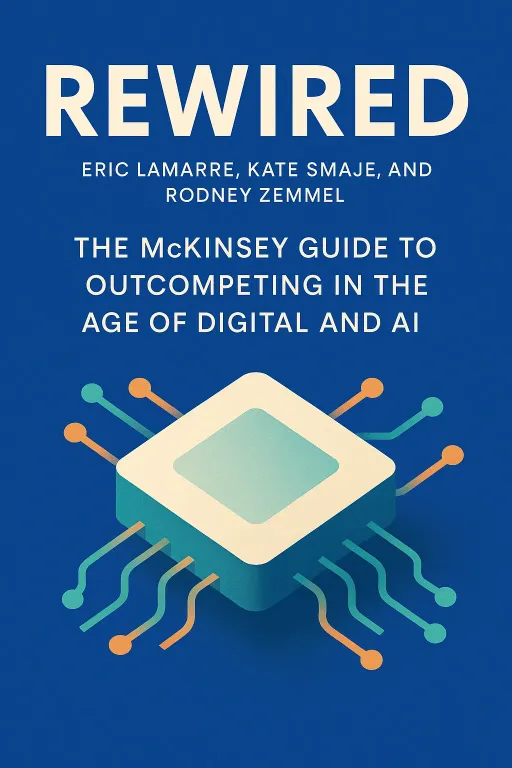
Nova: Precisely, Atlas. And today, we’re dissecting that very idea, drawing insights from two pivotal works that, when combined, offer a profound roadmap for genuine digital evolution. First, "Rewired" by Eric Lamarre, Kate Smaje, and Rodney Zemmel, a book widely lauded in global consulting circles for fundamentally shifting the paradigm on digital strategy. It’s basically the go-to guide for leaders who realized their tech investments were underperforming.
Atlas: Right, I've heard it referenced in discussions about market entry strategies. It gained traction because it spoke to a real pain point, didn't it? Companies feeling like they were constantly chasing their tails with new tech.
Nova: Absolutely. It challenged the prevailing "tech-first" mentality that dominated boardrooms for years. And then, we'll turn to Carl Benedikt Frey's critically acclaimed "The Technology Trap," a profound historical analysis that garnered significant attention from economists and futurists alike, helping us understand the true, often hidden, costs and adaptations required for progress. Together, they paint a compelling picture of why the human element is not just a factor, but defining factor in the success or failure of digital evolution.
Atlas: So, the core of our podcast today is really an exploration of why the human element is not just a factor, but defining factor in the success or failure of digital evolution. It sounds like we're moving beyond the superficial and really digging into the essence of what makes digital transformation stick.
The 'Rewiring' Imperative
SECTION
Nova: We absolutely are. Let's start with "Rewired." The authors argue that successful digital transformations require a fundamental change in a company's, rather than just installing new software. Think about it: your DNA defines who you are, how you function, how your cells interact. In a company, that’s your culture, your processes, your decision-making hierarchies, your incentives.
Atlas: Okay, 'DNA' – that sounds incredibly fundamental. For someone trying to build efficient systems and optimize operations, this isn't just a tweak; it's a complete overhaul. But how do you even begin to something so deeply ingrained? Is it a top-down mandate, or does it bubble up from the ground? And what's the tangible cost of doing this?
Nova: That's the million-dollar question, isn't it? It's often both, but it to start with leadership understanding this isn't an IT project. Imagine a large, established manufacturing company. Let's call them "Old Steel Corp." They decided to implement AI-driven predictive maintenance across their factory floors. They bought the best sensors, the most advanced analytics platforms.
Atlas: Sounds like a textbook digital investment.
Nova: On paper, yes. But they skipped the DNA rewiring. Factory floor workers weren't properly trained on the new systems; they saw the tech as a threat to their jobs, not a tool to empower them. Middle management, comfortable with old reporting structures, resisted new workflows that decentralized decision-making. And the incentive structures remained tied to old production quotas, not to efficiency gains from predictive maintenance.
Atlas: So, the tech was there, but the weren't ready, or willing, to use it effectively.
Nova: Exactly. The AI flagged potential machine failures, but without integrated human processes to act on those alerts quickly, the insights were ignored. Maintenance teams continued reactive repairs. Outcome? The tech failed to deliver, waste actually due to confusion, and morale plummeted. The costly software gathered digital dust.
Atlas: Wow. So it wasn't a tech problem; it was a human and organizational alignment problem. That resonates deeply with anyone focused on scalable success. You can't scale a broken process just by digitizing it.
Nova: You've hit the nail on the head. The authors of "Rewired" emphasize that you must first identify the core processes and human behaviors that need to change to support the new digital capabilities. It's about seeing tech as an for human potential, not a replacement for thoughtful organizational design. It's a continuous, iterative learning process.
Atlas: That's a powerful distinction. So, it's not just 'what tech do we buy,' but 'what kind of organization do we to truly leverage this tech?' Can you give me an example of a company that get it right? One that actually rewound their DNA first?
Nova: Absolutely. Consider a global logistics firm, let’s call them "SwiftFlow." Instead of just buying new tracking software to optimize routes, they started by completely redesigning their entire supply chain team structure. They empowered local logistics managers to make real-time decisions, created cross-functional 'digital champions' within teams, and trained everyone not just on how to the new tech, but on these new ways of working were beneficial.
Atlas: So they tackled the human and cultural shifts first.
Nova: Precisely. When the new, advanced tracking and optimization software finally rolled out, it wasn't a foreign imposition. It augmented already optimized human processes and empowered teams that were already prepared for change. The result was seamless integration, massive efficiency gains, and a workforce that felt engaged and valued, not threatened.
Atlas: That makes so much sense. It’s like building a high-performance engine for a car, but first, you have to design the car to handle that engine’s power. You can’t just drop it into a rickety chassis and expect it to fly.
Navigating the 'Technology Trap'
SECTION
Nova: Exactly! And that leads us perfectly into Carl Benedikt Frey's work, because even when you try to become that organization, there's an inherent friction, a 'trap' that many fall into. Frey, with his deep historical lens, highlights that the long-term gains of technology often come only after periods of significant organizational friction and considerable workforce adaptation.
Atlas: Wait, so even if we we need to rewire, there's still this inevitable dip, this struggle? For strategists focused on scalable success, how do you mitigate that 'trap'? How do you build resilient teams when friction is almost guaranteed? Is it just about weathering the storm, or can you design for it?
Nova: It’s definitely not just about weathering the storm, though some storm is inevitable. Frey's book, lauded for its historical depth, points out that this isn't a new phenomenon. Think about the Industrial Revolution. While it brought immense long-term prosperity, it also caused decades of social upheaval, job displacement, and the rise of movements like the Luddites who actively resisted new machinery because it threatened their livelihoods. That was a huge "technology trap" in its own right.
Atlas: So the human cost of progress. That sounds rough, but it makes sense. People naturally resist change, especially when it feels like a threat.
Nova: Exactly. Let's consider a modern example: an accounting firm automating routine tasks with Robotic Process Automation, or RPA. Initially, there was widespread fear of job loss among staff, resistance from employees who felt their contributions were being devalued, and errors due to rushed implementation without proper human oversight. The 'trap' here was the expectation of immediate, seamless benefits, overlooking the human aspect of adaptation.
Atlas: Oh, I've been there. I've seen that kind of resistance. So, it's not just the tech, it's the and the to it. It’s about being a visionary who anticipates the human journey, not just the technological destination.
Nova: Absolutely. Frey's insights, which sparked considerable debate among economists, underscore that simply buying the tech doesn't mean you'll instantly reap the rewards. There's a valley of adaptation you have to cross. The key is acknowledging that friction is part of the journey. It's about strategic communication, investing heavily in re-skilling and up-skilling your workforce, and creating psychological safety so people feel they can adapt without fear of immediate obsolescence.
Atlas: That gives me chills. It’s about viewing adaptation as a critical investment, not an afterthought. So, what would a firm that this trap effectively look like?
Nova: Imagine a large healthcare provider implementing a new, comprehensive digital patient record system. Instead of just rolling it out, they involved nurses, doctors, and administrative staff in the design process from day one. They ran extensive pilot programs in smaller departments, gathered feedback, and iteratively refined the system. They offered continuous, personalized training, and crucially, they celebrated early adopters and created internal champions.
Atlas: So, they didn't just implement tech; they cultivated a culture of continuous learning and adaptation around it.
Nova: Precisely. The initial dip in productivity and morale was shorter and less severe because the human element was central to their adaptation strategy. The staff felt ownership, understood the "why," and saw their roles evolving, not disappearing. They knew there would be friction, but they were equipped and supported to push through it.
Atlas: That's actually really inspiring. It means even when the "trap" is inevitable, it doesn't have to be a catastrophe. It can be a managed transition.
Synthesis & Takeaways
SECTION
Nova: It absolutely can. When you bring these two perspectives together – "Rewired" telling us to change in our organizational DNA, and "The Technology Trap" preparing us for challenging that change will be – you get a complete picture. Digital transformation is a continuous journey of human learning and adaptation. The technology is just the tool; the human-centric change is the engine.
Atlas: It comes down to this: for anyone driving growth, building efficient systems, or innovating business models, the smartest move isn't just buying the shiny new software. It's investing in the mindset, the skills, and the structures of the people who will actually it. It’s about designing for the human journey, not just the tech deployment.
Nova: And recognizing that every step forward, even the frictional ones, counts as iterative learning. It’s the ultimate growth mindset applied to the entire organization.
Atlas: So, for our listeners, before you sign off on that next big tech investment, schedule that 30 minutes of deep work. Not on the tech specs, but on the human specs: how will your team's DNA need to evolve? How will you manage the inevitable friction? That’s where sustainable growth truly begins.
Nova: This is Aibrary. Congratulations on your growth!









