High-Resolution Leadership Development
Golden Hook & Introduction
SECTION
Nova: What if the feedback you typically dread isn't just a report card on your past performance, but the most underutilized superpower in your leadership arsenal, a crystal ball for strategic advantage?
Atlas: A superpower? Wow. Most days, feedback feels more like kryptonite, Nova. Especially when you're trying to build efficient systems, it can feel like another layer of complexity rather than clarity.
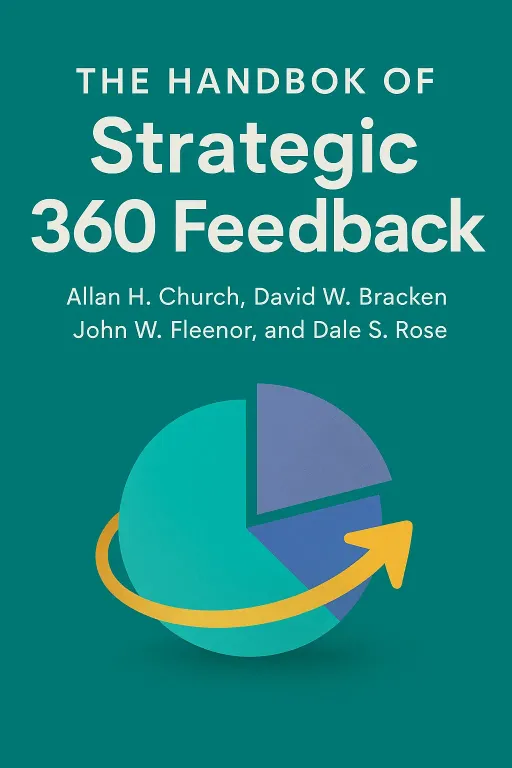
Nova: I hear you, Atlas. But today, we’re challenging that perception by diving into some truly illuminating work. We’re starting with "The Handbook of Strategic 360 Feedback" by Allan H. Church, David W. Bracken, John W. Fleenor, and Dale S. Rose. This isn't your average HR manual; it's a comprehensive, research-backed guide that shifts our understanding of feedback from mere assessment to active, strategic development.
Atlas: So, it's about turning that often-dreaded annual review into something that actually helps a strategist build for the future? I'm intrigued. How does it move beyond just telling me what I did wrong, or right, and start shaping where I'm going?
The Strategic Power of 360 Feedback
SECTION
Nova: Exactly. The core insight from Church, Bracken, Fleenor, and Rose is that 360 feedback isn't just about individual development; it’s a strategic tool. When you align multi-rater feedback with specific organizational strategies, you transform it into a powerful engine for performance growth. Imagine you're a tech company, let's call them "InnovateX," known for groundbreaking products but plagued by slow development cycles. Their leaders are technically brilliant, but their cross-functional communication is a mess.
Atlas: Oh, I know that story. For a builder, those communication bottlenecks are system killers. You can have the best individual components, but if they don't integrate smoothly, the whole structure suffers.
Nova: Precisely. InnovateX’s HR team, using principles from the Handbook, didn't just ask for generic feedback. They designed their 360 process specifically around behaviors critical for faster product development: collaboration across silos, proactive risk identification, and empowering junior team leads. The feedback wasn't about whether a manager was "nice"; it was about whether their actions or product velocity.
Atlas: That makes sense. So you're saying they tied the feedback directly to their strategic goals. But how do you prevent that from becoming a witch hunt, especially in a high-pressure, results-driven environment? For a growth-oriented strategist, results are paramount, and sometimes direct feedback can feel like it's undermining team cohesion.
Nova: That’s a critical point, and the authors address it head-on. The key is in the and the. InnovateX positioned the feedback not as a judgment, but as data points for collective system improvement. They trained leaders to interpret the feedback as insights into, not personal failings. For example, if multiple reports indicated a team lead was "hoarding information," the discussion wasn't "you're bad at sharing," but "how can we redesign our information flow so that critical data reaches everyone who needs it, faster?"
Atlas: I see. It becomes a diagnostic tool for the system, rather than just a performance review for an individual. That's a huge shift. It moves from individual accountability to collective responsibility for a strategic outcome. A builder can actually use that to refine processes.
Nova: And the outcomes were striking. By focusing the feedback on strategic behaviors, InnovateX saw a 15% reduction in product development time within a year. Leaders began actively coaching their teams on specific cross-functional collaboration techniques, because the feedback clearly showed that was the bottleneck. It transformed feedback from a bureaucratic exercise into a living, evolving data stream that directly fueled their strategic objectives. It helped them build more resilient organizational structures.
Atlas: Wow, that’s actually really inspiring. It’s about making reflection a launchpad, not just a landing strip. It's not just about what you did, but what you do.
Real-Time Leadership: Mastering the 'MOVE' in High Pressure
SECTION
Nova: Speaking of what you do, that brings us perfectly to our next big idea, which often acts as a critical counterpoint to the reflective nature of 360 feedback. We're talking about "Real-Time Leadership" by David Noble and Carol Kauffman. Kauffman, for those unfamiliar, is a highly respected executive coach, often associated with Harvard Medical School, bringing a deep psychological and practical rigor to her work.
Atlas: So, if 360 feedback helps you map the terrain, how does "Real-Time Leadership" help you navigate it when the ground is shifting beneath your feet? For a strategist navigating market entry or a visionary building new business models, market shifts are constant, and the pressure is immense.
Nova: Exactly. Noble and Kauffman introduce the 'MOVE' framework, a brilliant tool to help executives pause and select the optimal leadership stance during those high-pressure market shifts. 'MOVE' stands for four key steps: Mindset, Observe, Vibe, and Execute. It's about intentionality in the face of chaos.
Atlas: Okay, so 'Pause' is the first step. But wait, for someone building a business, or leading a team through rapid market changes, the idea of 'pausing' sounds like a death sentence. Doesn't the market wait for no one? How do you reconcile thoughtful pausing with the need for immediate, decisive action?
Nova: That's the brilliance of it, Atlas. The 'pause' isn't inaction; it's a deliberate, often brief, moment of conscious awareness. Think of a financial services firm, "Quantum Investments," facing a sudden, unexpected market downturn. Panic is setting in, and there's immense pressure to react. A leader might instinctively jump to drastic cost-cutting.
Atlas: Which can often lead to overcorrection, demoralized teams, and missed opportunities when the market recovers. For someone focused on financial acumen, impulsive decisions can have devastating long-term impacts.
Nova: Precisely. The CEO of Quantum Investments, having trained in the 'MOVE' framework, instead took a conscious 'pause.' First, 'Mindset': she recognized her own anxiety and intentionally shifted to a calm, strategic posture. Then, she 'Observed': not just the market data, but also the emotional state of her executive team. Were they fearful? Overly aggressive? She noticed a subtle undercurrent of panic. Next, 'Vibe': she chose a leadership stance that was transparent about the challenges but resolute and hopeful about their ability to adapt. She didn't sugarcoat, but she projected a calm confidence.
Atlas: That’s fascinating. So, it's about regulating your own emotional state and then consciously influencing the 'vibe' of your team. How does that translate into 'Execute'?
Nova: The 'Execute' step then becomes far more effective. Instead of a knee-jerk reaction, the CEO could calmly articulate a revised, more agile strategy, emphasizing short-term stability while preparing for future opportunities. Her team, seeing her measured response and clear vision, felt more regulated and confident themselves. This led to faster, more coordinated decision-making, because the initial emotional turbulence had been managed. They executed a pivot that saved them from deeper losses and positioned them for a quicker recovery, all because of that intentional 'pause' and 'vibe' management.
Atlas: That makes me wonder, how do you teach emotional regulation to leaders who are often wired for constant action and quick fixes? It sounds like a soft skill, but your example shows it has hard financial and strategic consequences.
Nova: It’s absolutely a hard skill, disguised as a soft one. The 'MOVE' framework provides that structure. It’s not about suppressing emotions, but them. For a visionary, it means consciously choosing a stance that inspires confidence and clarity even when the future is uncertain. It’s about building the internal system to respond optimally, rather than react impulsively.
Synthesis & Takeaways
SECTION
Nova: So, what we've explored today are two sides of the same coin: how strategic feedback gives you the deep insights to understand your leadership landscape, and how real-time leadership equips you with the agility to navigate it, especially when the stakes are highest.
Atlas: That’s a powerful connection. It's about using reflection to inform action, making sure that every step forward is intentional, not just reactive. For a strategist, builder, or visionary, it’s about designing not just the business, but the for sustainable growth.
Nova: Absolutely. The core takeaway from both these works is that reflection without action is a missed opportunity. Your next feedback cycle, whether it's a formal 360 or just an informal check-in, isn't just about reviewing the past. It’s a chance to identify one specific 'MOVE' tactic—a particular mindset shift, an observation skill, a chosen vibe—that you can apply to improve your team's decision-making speed and emotional regulation during complex transformations.
Atlas: That’s a compelling call to action. It’s about taking those deep insights and immediately translating them into a tangible, high-resolution leadership move. It’s about making your leadership as agile and intelligent as the market demands.
Nova: Indeed. It's about constantly evolving, using every piece of information to refine your leadership stance and build a more resilient, responsive organization.
Atlas: Thank you for joining us today. We hope this conversation sparks your critical thinking and encourages you to rethink how you approach leadership development.
Nova: We'd love to hear how you apply the 'MOVE' framework or strategic feedback in your own leadership journey. Share your insights with us!
Nova: This is Aibrary. Congratulations on your growth!