

Unlocking Team Dynamics: Psychology for Leaders
Golden Hook & Introduction
SECTION
Nova: Most leaders think being 'nice' is the path to a harmonious team, but what if I told you that trying too hard to be nice is actually the fastest way to ruin your team's performance, stifle innovation, and ultimately, make everyone miserable?
Atlas: Oh, I love that. That goes against so much conventional wisdom. So many people equate good leadership with being universally agreeable.
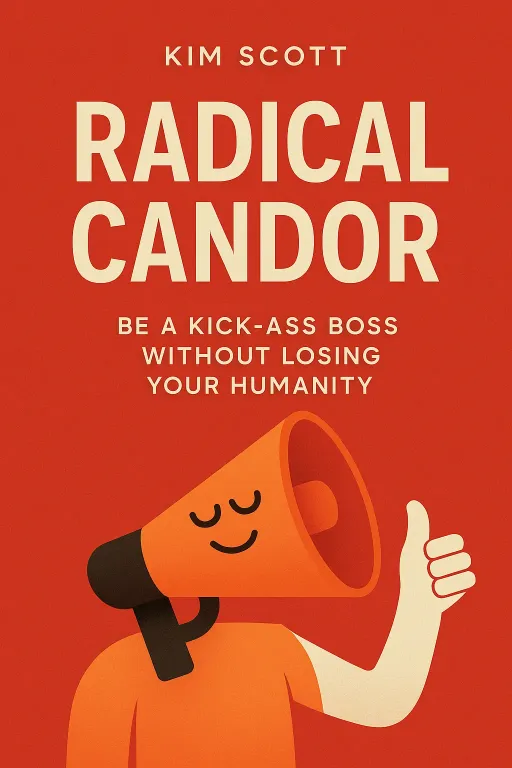
Nova: Exactly! It’s a common trap. We shy away from tough conversations, sugarcoat feedback, or avoid conflict, all in the name of being 'nice.' But that often creates a much worse problem. And that's where we find the brilliance of Kim Scott's work in "Radical Candor."
Atlas: Kim Scott… isn’t she the one with the incredible background in tech?
Nova: She is! Kim Scott isn't just an author; she's a seasoned leader who cut her teeth leading high-performing teams at places like Google, where she managed AdSense and YouTube teams, and even taught at Apple University. She’s seen firsthand what works and what absolutely doesn’t in some of the most innovative and demanding environments on the planet. Her insights are forged in the crucible of real-world, high-stakes leadership.
Atlas: That’s a powerful pedigree. For any leader looking to build for the future and truly optimize their teams, that kind of practical experience is invaluable. It’s not just theory; it’s battle-tested. So, what’s the core idea that’s so radical about her candor?
The Art of Radical Candor: Challenging Directly, Caring Personally
SECTION
Nova: The core idea of Radical Candor is elegant in its simplicity, yet incredibly hard to execute. It’s about doing two things simultaneously: caring personally challenging directly. Most people veer into one extreme or the other, or worse, neither.
Atlas: Wait, hold on. For strategic leaders who are often focused on results, how do you genuinely without sacrificing direct feedback? Isn't 'challenging directly' just a fancy way of saying be aggressive, especially for leaders who want to foster team harmony?
Nova: That’s the critical distinction, Atlas. It's not about being aggressive; it's about being clear, honest, and coming from a place of genuine care. Scott illustrates this with four quadrants. If you challenge directly care personally, that’s Radical Candor. It’s what you do when you tell a colleague their fly is down — you care about their potential embarrassment, so you tell them directly and quickly.
Atlas: So it’s about avoiding awkwardness for the other person by being upfront, not avoiding it for yourself.
Nova: Exactly. Now, if you challenge directly but care personally, that’s Obnoxious Aggression. Think of the jerk boss who tears people down publicly. Then there’s Ruinous Empathy, which is where most well-intentioned leaders get stuck. You care personally, but you challenge directly. You avoid giving tough feedback because you don't want to hurt feelings, but in doing so, you actually harm the person's growth and the team's performance.
Atlas: Oh, I know that feeling. It’s like, you see someone making a mistake, and you think, "Oh, they'll figure it out," or "I don't want to demotivate them," but then it just gets worse. That sounds rough.
Nova: It’s incredibly common. Scott gives a powerful example from her own career. She once had an employee, let's call her Bob, who was incredibly likable, great personality, but his work quality was just not up to par. For months, Kim avoided giving him direct feedback, thinking she was being kind. She'd compliment his enthusiasm, his effort, and then subtly try to move him to different tasks, hoping he’d find a better fit.
Atlas: So, the classic "move him sideways" approach, hoping the problem solves itself.
Nova: Precisely. But Bob wasn't getting better, and the team was suffering. Finally, her own boss called her out for what he termed "ruinous empathy." He told her, "You're not doing Bob any favors by not telling him the truth. You're actually hurting him." It was a wake-up call for her. She realized her 'niceness' was actually cruel.
Atlas: That’s actually really inspiring. It’s a tough lesson, but it makes so much sense. So, what did she do? How did she shift from ruinous empathy to radical candor with Bob, without it becoming obnoxious aggression?
Nova: She sat Bob down and was brutally honest. She told him directly that his performance wasn't meeting expectations, that his attention to detail was lacking, and that it was impacting the team. But she did it with genuine care, emphasizing that she believed in his potential and wanted to help him succeed, even if that meant finding a different role where his strengths could shine. She offered support, coaching, and a clear path forward.
Atlas: That’s a fascinating pivot. That makes me wonder, how does a leader actually this in a team meeting without it devolving into awkwardness or resentment? What does that look like day-to-day for someone trying to optimize their team?
Nova: It starts with building trust, not fear. It means actively soliciting feedback as a leader, demonstrating that you can take it. It’s about making feedback a natural, ongoing conversation, not a dreaded annual event. It’s about praising in public and criticizing in private, always focusing on the specific behavior, not the person. And it means being relentlessly clear. No passive aggression, no hints, just direct, kind truth.
Unlocking Intrinsic Motivation & Navigating Cognitive Biases
SECTION
Nova: And this idea of transparent, honest feedback actually paves the way for something even deeper: understanding what truly motivates our teams. It’s not just about what we say, but people do what they do. This brings us to Daniel Pink's groundbreaking work in "Drive."
Atlas: Ah, "Drive." I've been thinking about that one. It challenges the whole "carrot and stick" approach to motivation, right?
Nova: Exactly. Pink's central argument, backed by decades of research, is that for knowledge workers, for anyone doing complex, creative, or conceptual work, traditional external motivators—like bigger bonuses or harsher penalties—are often ineffective and can even be detrimental. Instead, what truly drives us are three intrinsic needs: Autonomy, Mastery, and Purpose.
Atlas: That sounds great in theory, but for leaders in structured environments, how much can you really give? And how do you foster and when daily tasks can feel… well, mundane? Isn't there a risk that focusing on intrinsic motivation makes us ignore fair compensation?
Nova: Not at all. Pink isn't saying money doesn't matter; it's foundational. People need to be paid fairly. But once that baseline is met, more money doesn't necessarily lead to more engagement or better performance for complex tasks. Think of it this way: autonomy isn't about chaos; it's about control over work gets done, it gets done, and even you work with. Google famously had its "20% time" initiative, where engineers could spend a fifth of their work week on any project they wanted. That was radical autonomy.
Atlas: Right, like that’s where Gmail came from. Okay, that’s a perfect example. So, how do you foster mastery and purpose?
Nova: Mastery is the desire to get better at something that matters. It’s the endless pursuit of improvement. Leaders foster this by providing challenging work, continuous learning opportunities, and clear pathways for skill development. Purpose is the urge to do what we do in the service of something larger than ourselves. Leaders ignite purpose by clearly articulating the 'why' behind the work, connecting daily tasks to the team's mission and the company's impact. A leader in a manufacturing plant might simply see a widget, but a purpose-driven leader helps their team see how that widget improves lives, or contributes to sustainable energy, for example.
Atlas: That’s a great way to put it. Connecting the tactical to the transcendental. But even with the best intentions, our brains can get in the way, right? This is where Daniel Kahneman’s "Thinking, Fast and Slow" comes in.
Nova: Absolutely. Kahneman, a Nobel laureate in economics, delves into the two systems that drive our thinking. System 1 is our fast, intuitive, emotional brain—it makes snap judgments. System 2 is our slow, deliberate, logical brain—it requires effort. Much of the time, System 1 is running the show, and while efficient, it's also prone to a host of cognitive biases that silently sabotage our decisions and team interactions.
Atlas: So basically you’re saying our brains are wired for shortcuts, and those shortcuts aren't always accurate. That explains a lot of bad meetings I've been in!
Nova: Exactly! Take confirmation bias, for example. System 1 loves to find information that confirms what we already believe, making us ignore contradictory evidence. A leader might have a strong opinion about a new strategy, and unconsciously, their System 1 will filter for data that supports it, and they’ll interpret team members' hesitations as resistance rather than valid concerns.
Atlas: So, if our brains are wired for these shortcuts, how can a leader, especially a strategic one, actively mitigate these biases in critical team decisions? How do we build systems to catch ourselves and our teams?
Nova: It’s incredibly difficult, but awareness is the first step. Leaders need to cultivate a culture where challenging assumptions is encouraged, not penalized. Techniques like 'pre-mortems' – imagining a project has failed and working backward to identify why – can force System 2 thinking. Encouraging diverse perspectives, actively seeking out dissenting opinions, and even assigning a 'devil's advocate' role in discussions can help. It's about designing processes that force us to slow down and engage System 2, rather than just letting System 1 run wild.
Synthesis & Takeaways
SECTION
Nova: Ultimately, whether it’s giving candid feedback, designing motivating work, or making sound decisions, it all comes back to understanding the human operating system. It’s about leading with deep empathy and keen psychological insight, recognizing the complex interplay of emotions, motivations, and cognitive biases that shapes every team member.
Atlas: For leaders who want to build for the future and optimize their teams, this isn't just 'soft skills'; it’s foundational architecture for sustained impact. It’s the difference between a team that just performs and a team that thrives.
Nova: And it brings us back to that profound question: How can you integrate radical candor into your next team meeting to both support and challenge your colleagues effectively, fostering an environment where intrinsic motivation thrives?
Atlas: And more importantly, how can understanding our own biases help us create that environment more genuinely, ensuring we're not just we're being effective, but truly?
Nova: What one small step can you take this week to practice radical candor, or to consciously challenge a bias in a team decision? The impact could be transformative.
Atlas: This is Aibrary. Congratulations on your growth!









