The 'Talent' Trap: Why You Need to Engineer Learning for Real Growth.
Golden Hook & Introduction
SECTION
Nova: Here's a thought experiment for all you strategic leaders out there: what if the very thing you're chasing – 'talent' – is actually holding your team back?
Atlas: Whoa, that's a bold statement, Nova. I imagine a lot of our listeners, especially those building innovative teams, are constantly on the hunt for the next big talent. Are you saying we're doing it wrong?
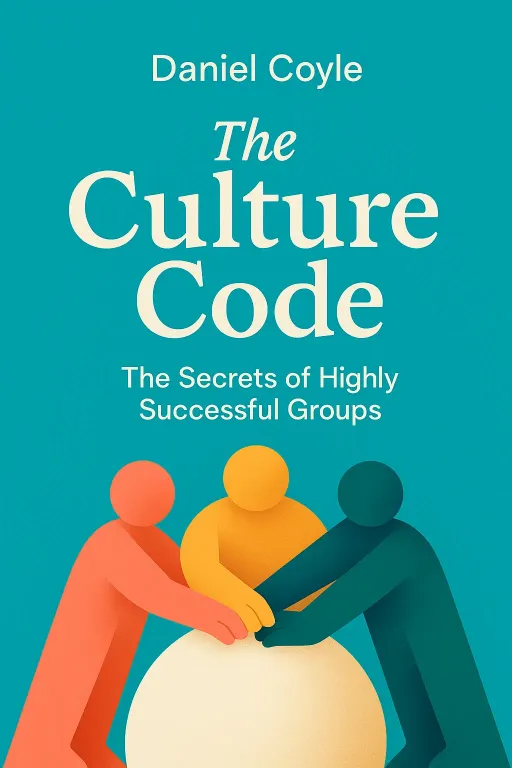
Nova: Not wrong, Atlas, but perhaps incomplete. Today, we're diving into a crucial insight that challenges the conventional wisdom around high performance, an idea we're calling "The 'Talent' Trap: Why You Need to Engineer Learning for Real Growth." It’s an idea deeply informed by groundbreaking works like Daniel Coyle's "The Culture Code" and Kim Scott's "Radical Candor." Both of these books have profoundly influenced how we understand team dynamics and what truly drives success, moving beyond the simple notion of individual brilliance.
Atlas: That's a fascinating reframe. For leaders who are passionate about scaling their organizations and inspiring innovation, the idea of a "talent trap" must feel pretty counterintuitive. How do these books, especially Coyle's and Scott's, inform this perspective?
Nova: They both highlight that sustainable, elite performance isn't just about a collection of individually talented people. It's about the they operate within, the that enables or stifles their growth. These authors, through extensive research and real-world examples, show us that you can have all the "stars" in the world, but if the environment isn't engineered for learning and connection, that potential often remains untapped.
Atlas: So, it's less about finding a unicorn, and more about building a unicorn-making machine?
Nova: Exactly! It's about understanding that a robust, learning-oriented culture is the engine that transforms individual potential into collective, high-level performance.
The 'Talent' Trap: Why Innate Ability Isn't Enough
SECTION
Atlas: Okay, so let's unpack this "talent trap" idea, because it really challenges a core assumption. I imagine many leaders believe that if they just hire the smartest, most skilled people, the rest will naturally follow. What's the specific pitfall here?
Nova: The pitfall is mistaking innate talent for sustainable performance. It's the belief that if you just recruit enough "A-players," your team will automatically be high-performing. The truth is, individual brilliance, while valuable, often doesn't scale or translate into collective success without intentional design. It's like having a bunch of incredible solo musicians but no conductor, no sheet music, and no shared understanding of the symphony they're supposed to create. They might make beautiful individual sounds, but it won't be a cohesive masterpiece.
Atlas: That makes sense. I can definitely see how a collection of brilliant minds could still struggle if they're not aligned. But wait, are you saying that hiring top talent isn't important at all? Surely, having brilliant people on your team gives you an advantage?
Nova: Oh, having gifted individuals is absolutely important. The point is that it’s not. The trap is on that innate talent and neglecting the environment. Think of a hypothetical tech startup. They've raised a ton of capital, and their strategy is to poach the "best of the best" from established companies. They hire a team of individual rockstar developers, each a genius in their own right, with impressive resumes and accolades.
Atlas: Sounds like a dream team on paper.
Nova: On paper, yes. But despite their individual brilliance, they struggle. There’s a quiet competition, a hesitation to share half-baked ideas because everyone is used to being the smartest person in the room. Feedback is either sugar-coated or delivered with a sharp edge, because no one wants to admit they might not have all the answers. Deadlines are missed because brilliant minds are working in silos, optimizing their own code but not integrating effectively. The collective output is less than the sum of its parts. The wasn't designed to leverage their strengths collectively, and their individual 'talent' became a barrier to true team performance.
Atlas: Wow. So, the very thing they thought would guarantee success – that collection of individual stars – actually created friction and slowed them down. That's a powerful example. It makes me wonder, for leaders who are constantly trying to foster innovation, how do you even begin to differentiate between genuine potential that can be grown, and this illusion of innate, fixed talent?
Nova: That's precisely where the insights from "The Culture Code" and "Radical Candor" become so critical. They provide the blueprint for actively that growth, rather than just hoping for it.
Engineering a Learning Culture: The Blueprint for Growth
SECTION
Nova: So, if chasing individual 'talent' as the sole solution is a trap, what's the actual blueprint for creating high-performing teams, for truly engineering growth? Daniel Coyle, in "The Culture Code," breaks it down to three core skills: building safety, sharing vulnerability, and establishing purpose. These aren't soft skills; they are the foundational elements that foster an environment where learning and performance genuinely thrive.
Atlas: Building safety, sharing vulnerability, and establishing purpose. They sound like ideal states, Nova, but for a leader in a high-pressure, fast-moving environment, how do you build safety? What's the first tangible step beyond just saying "be safe"?
Nova: It starts with signaling. Safety is built through consistent, small actions. It's the leader who admits a mistake, who asks for help, who actively listens without judgment, and who ensures that when someone raises a concern, it's met with curiosity, not defensiveness. Coyle gives examples of teams where leaders openly discussed failures as learning opportunities, creating a space where people felt comfortable taking risks and, crucially, admitting when things didn't go as planned. It's about demonstrating that making an error doesn't mean you're incompetent; it means you're trying.
Atlas: Okay, so it’s about creating a psychological space where people aren't afraid to fail or to speak up. That makes me think of Kim Scott's "Radical Candor." How does that fit into engineering this learning culture? Because "challenging directly" can sometimes feel like the opposite of "building safety."
Nova: That's a brilliant connection, Atlas, and it highlights the nuance. Scott argues for a leadership approach that combines caring personally with challenging directly. It's not one or the other; it's both. Caring personally means you genuinely invest in your team members' success and well-being. Challenging directly means you're willing to give honest, even uncomfortable, feedback because you care enough to help them grow. This creates a feedback-rich environment that is absolutely essential for deliberate practice and growth.
Atlas: So, it's about making it safe to fail, and safe to speak up, even when speaking up is uncomfortable for the person giving or receiving feedback? How does a leader balance "challenging directly" without sliding into "obnoxious aggression," which I imagine would quickly erode safety?
Nova: That's the tightrope walk. Obnoxious aggression is challenging without caring personally. Ruinous empathy, on the other hand, is caring personally but failing to challenge directly, which is equally damaging because it stifles growth. Scott illustrates this with a common scenario: a manager who has a genuinely nice, well-meaning direct report, but that report's performance is consistently subpar. The manager, out of a desire to be kind, avoids giving critical feedback. They care personally, but they don't challenge directly.
Atlas: And the result?
Nova: The result is that the employee continues to underperform, misses out on opportunities to develop, and eventually, the team's overall output suffers. The manager thinks they're being kind, but they're actually being ruinously empathetic, inadvertently hurting both the individual and the team. A radically candid approach would involve the manager caring enough to have that difficult, direct conversation, offering specific, actionable feedback, and then supporting the employee in their development. It's like a skilled coach who pushes their athletes hard, not because they dislike them, but because they believe in their potential and want them to achieve greatness.
Atlas: That's a perfect analogy. It’s about being a coach, not just a cheerleader or a critic. So, Nova's take on this is that a robust, learning-oriented culture is the true engine for high-level performance. It’s about building the system, not just finding the parts.
Nova: Precisely. It's about recognizing that leadership isn't just about managing tasks; it's about engineering an environment where people can thrive, learn, and contribute their best, consistently.
Synthesis & Takeaways
SECTION
Nova: So, bringing it all together, Atlas, we’ve moved from the idea that chasing individual ‘talent’ can be a trap, to understanding that true, sustainable, high-level performance comes from intentionally engineering a culture of continuous learning. It's about leaders actively building safety, fostering vulnerability, creating purpose, and practicing radical candor.
Atlas: That's a profound shift in perspective. For leaders who are driven by impact, who connect technology and people, and who seek to accelerate innovation and growth, this isn't just about hiring smarter. It's about smarter by designing the very environment where human potential can truly flourish. It’s about creating an ecosystem of growth.
Nova: Absolutely. It transforms the leader from a talent scout into an architect of growth. It’s about building systems that make everyone better, not just hoping a few stars will carry the team.
Atlas: So, for our listeners, what's a tiny, tangible step they can take to start engineering this kind of learning culture within their own teams?
Nova: Here’s your tiny step, leaders: Observe your next team interaction. Identify one moment where you could explicitly build safety or share vulnerability to foster deeper connection and learning. It could be admitting a small mistake you made, asking for honest feedback on your own performance, or genuinely listening to a team member's concern without immediately jumping to solutions.
Atlas: That's a powerful and accessible starting point. Just one moment to intentionally shift the dynamic towards safety and vulnerability. It's not about grand gestures, but consistent, small actions that compound over time.
Nova: Exactly. Those small shifts are the bedrock of a truly high-performing, learning-oriented culture.
Atlas: Incredible insights today, Nova. This really challenges how we think about building teams and leading for growth.
Nova: My pleasure, Atlas. Always a privilege to explore these ideas with you.
Nova: This is Aibrary. Congratulations on your growth!