The Strategic Silence: Why Listening to Your Team is Your Superpower.
Golden Hook & Introduction
SECTION
Nova: What if the very thing you believe makes you a strong leader—that unwavering conviction that you must have all the answers—is actually your biggest weakness, silently eroding the very foundation of your team's success?
Atlas: Whoa, Nova. That's a bold claim right out of the gate. I mean, for anyone trying to build something lasting, trying to drive progress, isn't having the answers, or at least the appearance of them, kind of the job description? It feels counterintuitive.
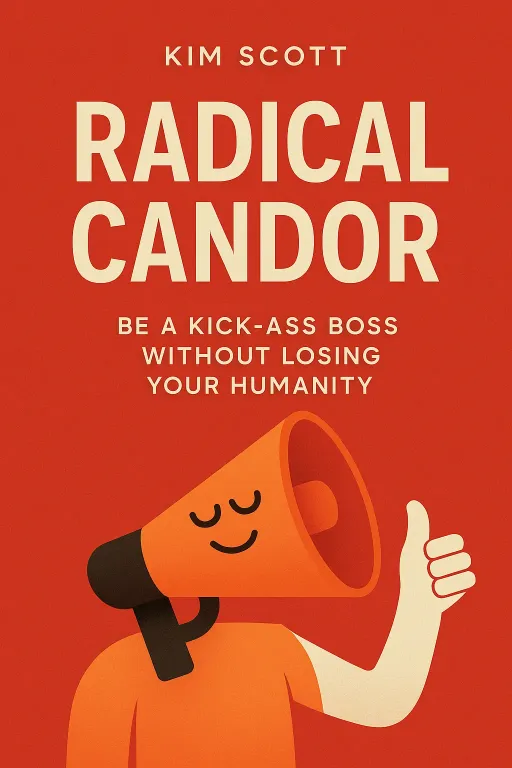
Nova: Absolutely, Atlas! And that's exactly the "blind spot" we're dissecting today. We often fall into the trap of believing that leadership equates to omniscience, but that mindset, ironically, prevents true cohesion and innovation. Today, we're diving into the strategic silence – the profound power of listening to your team, drawing incredible insights from thought leaders who've reshaped our understanding of team dynamics, like Kim Scott and Patrick Lencioni.
Atlas: So, you're telling me that my relentless pursuit of clarity and my desire to connect all the dots, if applied too rigidly, could actually be a barrier to strengthening team bonds? That's quite a thought. I'm driven by immediate impact, so if this is holding us back, I need to know why and how to fix it.
The Leader's Blind Spot: The Myth of Omniscience
SECTION
Nova: Precisely. Let's start with this leadership blind spot. Imagine a CEO, let's call her Eleanor. Eleanor is brilliant, a true architect of strategy. But she has this deep-seated belief that to maintain authority and respect, she must always present herself as the one with the perfect solution. Every problem, every challenge, she feels she has to solve it herself, or at least have the final, unchallenged word.
Atlas: I can see that. It's a common pressure, right? The buck stops with the leader. But how does that become a?
Nova: Well, in Eleanor's case, it meant her team learned quickly that their input, while politely heard, rarely swayed her. They'd bring ideas, but she'd subtly, or not so subtly, steer them back to her own pre-formed conclusions. Over time, her team stopped bringing their best ideas. They stopped challenging her assumptions, even when they saw potential pitfalls. They became executioners of her vision, not co-creators. The silence in the room wasn't respect; it was resignation. She thought she was building a strong, decisive team, but she was actually fostering a culture of compliance.
Atlas: Oh, I see. So, her need to have all the answers wasn’t just about her ego; it was about a perceived duty to be infallible. And the cost was the very innovation and engagement she probably wanted from her smart people. But isn't showing vulnerability—admitting you don't know something or making a mistake—often seen as a weakness in many high-stakes environments? For someone trying to build something lasting, that feels like a risky move.
Nova: It absolutely feels risky, Atlas, and that's the core of the blind spot. But here's the profound truth: acknowledging vulnerability isn't weakness; it's the bedrock of trust. When Eleanor, in a moment of genuine frustration, finally admitted to her team, "I don't know the best way forward on this market entry strategy, and I need your collective genius," something shifted. It was uncomfortable for her, but it was liberating for them. That single act of genuine vulnerability built more trust in that moment than years of projecting infallibility ever could. It transformed that compliance into genuine collaboration.
The Trust Shift: Radical Candor and Vulnerability-Based Trust
SECTION
Nova: And this brings us perfectly to the antidote to that blind spot: the profound shift towards truly building trust, not through knowing everything, but through strategic silence and courageous communication. This is where thinkers like Kim Scott with "Radical Candor" and Patrick Lencioni with "The Five Dysfunctions of a Team" offer such powerful frameworks.
Atlas: Okay, so how do we move from that blind spot—that fear of not knowing everything—to this place of trust and open communication? How does a leader, especially one driven by results, actually cultivating radical candor and vulnerability without it feeling forced or performative?
Nova: That's the million-dollar question, and it's simpler than we often make it. Kim Scott's "Radical Candor" isn't about being brutally honest; it's about caring personally challenging directly. Think of it like a truly good friend. They care about you deeply, so they're willing to tell you the difficult truth you need to hear, even if it's uncomfortable. It's not a blunt instrument; it's a careful surgeon's scalpel, used with precision and care.
Atlas: I like that analogy. So, it's not just about speaking your mind, but doing it from a place of genuine investment in the other person's success. But what about the receiving end? What if you're the leader, and you're getting that "radical candor" back?
Nova: That's where Patrick Lencioni's work on "The Five Dysfunctions of a Team" comes in. He identifies the absence of trust as the foundational dysfunction. If team members don't trust each other, they won't engage in healthy conflict, they won't commit, they won't hold each other accountable, and they won't focus on collective results. Overcoming this requires vulnerability. It's about a leader, like our hypothetical 'Vulnerable Visionary' from before, actively soliciting feedback, admitting when they're wrong, and creating a safe space where dissent is not just tolerated but encouraged.
Atlas: Okay, so it’s a two-way street. The leader has to model it. Imagine a leader who, instead of shutting down an idea, says, "That's an interesting perspective. Tell me more about your reasoning, even if it challenges my initial thought." Or, "I made a mistake in that decision last quarter, and here's what I learned." That would fundamentally change how people interact, wouldn't it? It sounds like it cultivates a culture where honest feedback is both given and received with care.
Nova: Exactly! It transforms a group of individuals into a truly cohesive, high-performing team. Consider this: "The Vulnerable Visionary" leader, instead of just giving directives, starts every major project meeting by asking, "What potential pitfalls are we overlooking? What are we assuming that might be wrong?" And crucially, they to the answers, even the uncomfortable ones. They don't just ask; they actively demonstrate that they value the input by adapting their plans based on what they hear. This isn't about being indecisive; it's about making decisions because you’ve leveraged the collective intelligence.
Atlas: That's a powerful shift. It moves from a leader being a single point of failure or success to being the conductor of an orchestra, where every instrument's voice is valued. It feels like it would deepen user engagement, not just for customers, but for the team members themselves, making them feel truly invested.
Synthesis & Takeaways
SECTION
Nova: It absolutely does, Atlas. The profound insight here is that the true superpower of a leader isn't their ability to generate all the answers, but their courage to embrace strategic silence, to truly listen, and to model vulnerability. That's how you move from merely managing a group to cultivating a high-performing culture where deep trust and innovation flourish. It's about building something lasting, not just through your vision, but through the collective vision you empower.
Atlas: This is huge for anyone who's always pushing for progress and trying to build strong, effective teams. It’s about understanding that strength comes from integration, not isolation. So, for all our listeners out there, let's leave them with this: what is one difficult truth you need to share, or hear, to strengthen trust on your team? Think about that this week.
Nova: This is Aibrary.
Atlas: Congratulations on your growth!