

The Invisible Threads: How Psychological Safety Unlocks Team Brilliance.
Golden Hook & Introduction
SECTION
Nova: What if the biggest threat to your team's brilliance isn't external competition, or a lack of resources, but the quiet, insidious fear lurking within your own meeting rooms?
Atlas: Oh, you're saying the monster isn't under the bed, Nova, it's sitting at the conference table, silently approving bad ideas? That's a chilling thought for any leader.
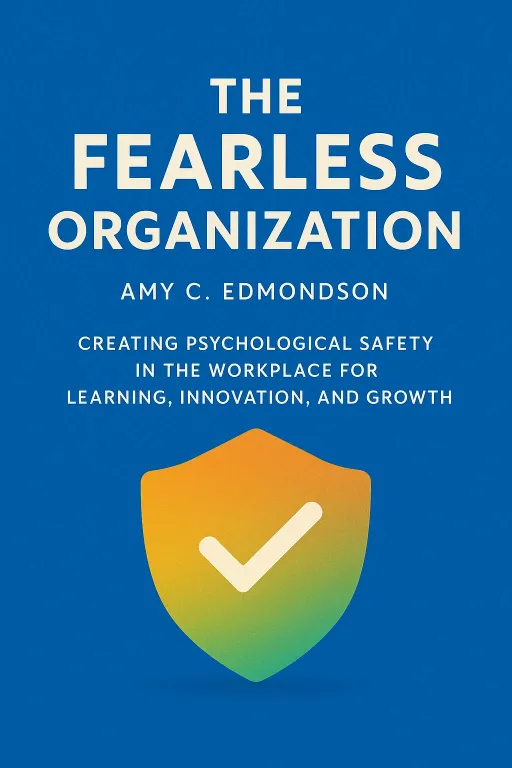
Nova: Exactly, Atlas. And that's the profound insight at the heart of our discussion today, drawing heavily from Amy Edmondson's seminal work, "The Fearless Organization," and Kim Scott's equally impactful "Radical Candor." Edmondson, a brilliant Harvard Business School professor, didn't just write about psychological safety; she literally coined and popularized the term through her groundbreaking research. She observed how high-performing teams weren't necessarily those with the fewest mistakes, but those most willing to openly discuss them, learn from them, and move forward.
Atlas: That's a powerful distinction. I imagine a lot of our listeners, especially those building and leading teams, are constantly striving for efficiency and innovation. So, it's not about being perfect, it's about creating an environment where it's safe to admit you're not, and then grow.
Nova: Precisely. For too long, the default in many organizations has been a kind of fear-based compliance, where people keep quiet to avoid blame or embarrassment. But that silence, as Edmondson reveals, is a hidden tax on collective intelligence.
Atlas: Right. And for someone who’s always looking at the big picture, trying to get everyone aligned for collective success, that hidden tax sounds like a major strategic leak.
The Silent Saboteur: How Fear-Based Environments Stifle Team Brilliance
SECTION
Nova: It absolutely is. Let's delve into what Edmondson calls "The Blind Spot." Many leaders, often with the best intentions, unintentionally cultivate environments where team members are genuinely afraid to speak up. Think about it: challenging the boss's idea, admitting a mistake, or even suggesting a different approach can feel like career suicide in certain cultures.
Atlas: I can definitely relate to that. For our listeners managing high-pressure teams, the stakes feel incredibly high. So, what does that fear actually cost? What's the real-world impact when people hold back?
Nova: Let me paint a picture. Imagine a cutting-edge software development team, tasked with building a complex new feature for a critical product launch. The project manager, a brilliant but intensely results-driven individual, presents a tight timeline and a somewhat aggressive technical approach. During the initial design review, a junior developer, Sarah, spots a potential flaw in the architecture. She's new to the team, and the project manager has a reputation for being impatient with challenges to his vision. Sarah hesitates. She feels a knot in her stomach, picturing the manager's raised eyebrow, the subtle sigh. She thinks, "Is it worth the risk? Maybe I'm wrong. Someone else will catch it."
Atlas: Oh, I know that feeling. That internal debate where the fear of interpersonal risk outweighs the professional obligation to speak up. It’s like a quiet, internal sabotage.
Nova: Exactly! So, Sarah stays silent. The project moves forward. Weeks later, deep into development, the team hits a major roadblock directly related to that architectural flaw Sarah had noticed. Debugging becomes a nightmare. Deadlines are blown. Stress skyrockets. The project manager is furious, demanding to know how this was missed. Sarah, now riddled with guilt, still can't bring herself to confess her earlier observation. The cost? Not just lost time and money, but damaged morale, eroded trust, and a pervasive sense that mistakes are to be hidden, not learned from.
Atlas: Wow, that’s kind of heartbreaking. It’s a classic example of how a culture of silence doesn't just block innovation, it actively creates problems that could have been avoided. It sounds like the intention might be to drive efficiency, but the outcome is the opposite – a massive drag on performance and collective intelligence.
Nova: Absolutely. That project manager wasn't a villain; he just hadn't created a safe space for dissent. The silence became a hidden cost, stifling innovation and problem-solving. This is the "blind spot" Edmondson talks about: the unintended consequence of leadership behaviors that prioritize compliance over candor.
Atlas: So, if that's the problem, the silent saboteur, what's the antidote for a team trying to innovate and achieve ambitious targets? How do you flip that script from fear to empowerment?
Unlocking Potential: Psychological Safety and the Art of Fearless Feedback
SECTION
Nova: That's where the shift comes in, Atlas. The antidote is psychological safety, which Amy Edmondson defines as "a shared belief held by members of a team that the team is safe for interpersonal risk-taking." It's not about being nice or lowering standards. It’s about creating an environment where people feel comfortable enough to speak their minds, ask "dumb" questions, admit errors, and challenge ideas without fear of punishment or humiliation.
Atlas: Okay, so it’s about making it safe to be human, with all our imperfections and insights. But how does a leader, someone who needs to be hands-on and strategic, actually that kind of environment? It sounds great in theory, but the practical application can be tricky.
Nova: That's where Kim Scott's "Radical Candor" offers a brilliant, actionable framework. Scott, who gained immense experience at Google and Apple, saw firsthand how crucial direct, honest feedback was. Her core idea is to "Care Personally" while also "Challenge Directly." Imagine a two-by-two matrix: if you care personally but don't challenge, that's "Ruinous Empathy"—you're too nice to give necessary feedback. If you challenge directly but don't care personally, that's "Obnoxious Aggression"—it just feels mean.
Atlas: Oh, I immediately see how that plays out in team dynamics. It’s like trying to navigate a minefield of politeness or outright hostility. So, the sweet spot is caring challenging?
Nova: Precisely! That top-right quadrant, Radical Candor, is where psychological safety thrives. It means you're invested in your team members as people, so you feel comfortable giving them tough feedback because you genuinely want them to grow. And conversely, they feel safe enough to receive it because they trust your intentions.
Atlas: Can you give an example of how this might look in practice? Because for a leader, giving tough feedback without causing someone to shut down is a consistent challenge.
Nova: Absolutely. Think about a marketing team developing a new campaign. The creative director, Sarah, has poured her heart into a concept she believes is groundbreaking. Her colleague, David, sees a fundamental flaw in its market appeal, believing it targets the wrong demographic. In a fear-based environment, David might just nod and say, "Looks great!" leading to a failed campaign. But in a radically candid team, David approaches Sarah directly. He might start by saying, "Sarah, I know how much work you've put into this, and I really admire your vision and passion." That's caring personally. Then he'd follow with, "However, looking at our target demographic's recent engagement data, I'm concerned this approach might miss the mark entirely. Can we walk through the data together and brainstorm some pivots?" That's challenging directly.
Atlas: That makes perfect sense. The "care personally" part builds the trust, creating the psychological safety, so the "challenge directly" can actually land and be productive, rather than just offensive. It sounds like it’s about mutual respect for growth.
Nova: Exactly. The outcome for that marketing team? Sarah, though initially surprised, appreciates David's honesty. They refine the campaign, incorporating his insights, and it ends up being a massive success. This isn't just about avoiding failure; it's about unlocking a team's full potential for honest communication and collective intelligence. It shifts the dynamic from fear-based compliance to a culture of courageous honesty and continuous improvement.
Atlas: That's actually really inspiring. It means that building an empathetic leadership style, which is something many leaders are striving for, actually goes hand-in-hand with achieving strategic targets and fostering innovation. It’s not a soft skill; it’s a hard requirement for high performance.
Synthesis & Takeaways
SECTION
Nova: It truly is. What Edmondson and Scott illuminate for us is that the "invisible threads" of psychological safety aren't just a nice-to-have; they are the fundamental fabric upon which true team brilliance is woven. It’s the difference between a team where ideas die in silence and one where they flourish through courageous conversation.
Atlas: That's a profound distinction, Nova. It really makes you reflect. For any leader listening, reflect on your team's last major decision. Were all perspectives genuinely heard, or did some hold back? What invaluable insights might have been missed in that silence?
Nova: A powerful question, Atlas. Because fostering psychological safety isn't just about managing people; it's about building a foundation for innovation, resilience, and sustained collective success. It's the ultimate trust-building exercise that pays dividends in every aspect of a team's performance.
Atlas: And it’s a continuous journey, not a destination. Small, consistent efforts to care personally and challenge directly can fundamentally shift a team's culture.
Nova: Absolutely. This is Aibrary. Congratulations on your growth!









