Stop Chasing, Start Attracting: The Guide to Building a Magnetic Culture
Golden Hook & Introduction
SECTION
Nova: Alright Atlas, quick game. If you had to review the concept of "workplace culture" in exactly five words, what would they be? Go!
Atlas: Ugh. Necessary, messy, misunderstood, misused, ultimate-weapon.
Nova: "Ultimate weapon." I love that. A little cynical, a little strategic. And you're not wrong. Today, we're diving into a book that echoes that sentiment precisely: "Stop Chasing, Start Attracting: The Guide to Building a Magnetic Culture." This isn't your average fluffy HR manual; it's a modern, practitioner-focused guide that synthesizes leading research into actionable strategies, often praised for its directness in a field usually bogged down by vague advice.
Atlas: That's a bold claim, because for so many leaders, culture feels like this nebulous, 'nice-to-have' thing you only get to once the 'real work' is done. It's like the dessert after the main course. But the book immediately hits you with what it calls "The Cold Fact."
The Repelling Force of Weak Culture
SECTION
Nova: And that cold fact is brutal in its simplicity: building a high-performing team isn’t just about hiring the best; it’s about creating an environment where that talent doesn't just survive, but. A weak culture doesn't just underperform; it actively top performers. It stifles innovation. It's not a soft issue, Atlas; it's your ultimate recruiting tool, or your biggest liability.
Atlas: Wow, "biggest liability." That’s a strong statement. But how does that manifest? For a strategic builder, for someone who's really trying to build an ecosystem and foster growth, how does a weak culture actually cost them? Is this just about people leaving?
Nova: Oh, it's so much more than just turnover. Imagine a cutting-edge tech startup. They've got a brilliant product, great funding, hot market. But the culture? It’s cutthroat. Blame-oriented. People work insane hours, but there's no recognition, no psychological safety to fail. Their lead engineer, a true innovator, burns out and leaves. Not for a bigger salary, but for a smaller, less glamorous company known for its collaborative spirit and respect. The startup doesn't just lose a person; they lose institutional knowledge, their morale dips, and innovation—the very thing they're built on—stalls. The cost isn't just replacing a salary; it's the future they could have built.
Atlas: That hits home. It’s like trying to build a skyscraper on a foundation of quicksand. You can have the best architects, the best materials, but if the ground beneath it is unstable, it’s all going to crumble. So, if a weak culture is this destructive force, what’s the antidote? How do you even begin to diagnose it, and then, how do you build something magnetic?
Building a Magnetic Culture: Safety, Vulnerability, and Purpose
SECTION
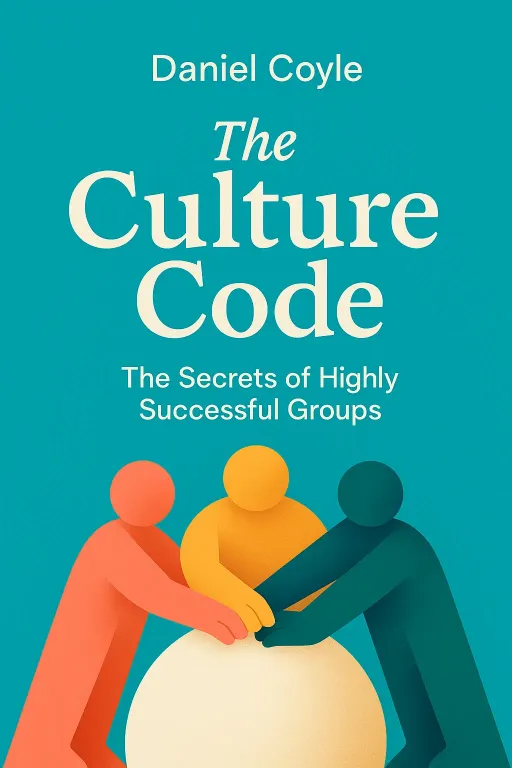
Nova: Exactly. If weak culture is the problem, the solution, according to "Stop Chasing, Start Attracting," is highly intentional culture building. And a massive piece of that puzzle comes from "The Culture Code" by Daniel Coyle. Coyle identifies three foundational skills of highly cohesive, high-performing groups, the kind of groups that talent towards: building safety, sharing vulnerability, and establishing purpose.
Atlas: "Psychological safety" and "vulnerability" sound like buzzwords that get thrown around a lot in leadership circles. For someone who values deep understanding and sustainable success, how do these translate into actual, tangible strategic advantages? Is this just about being "nice" to people, or is there something harder-edged, something more fundamental at play?
Nova: It's absolutely not about being "nice" in a superficial way. It's about creating an environment where people feel safe enough to take risks, to make mistakes, to speak up without fear of being shamed or punished. Think of it like this: if you're a high-performing athlete, you need to trust your team implicitly. You need to know that if you miss a shot, they’re still going to pass you the ball, and they've got your back on defense. That's safety. And vulnerability? That's admitting you need help, that you don't have all the answers.
Nova: Consider Pixar during its golden age. Ed Catmull, one of the founders, deliberately built systems like the "Braintrust." This was a group of directors and creatives who would meet regularly to critique films that were still very much in progress – sometimes just storyboards, sometimes rough animation. These critiques were brutal, direct, and honest. But here’s the key: they were always delivered from a place of shared purpose – making the best possible film – and within a framework of absolute psychological safety. People felt safe enough to show half-baked ideas and get candid feedback, knowing it was for the good of the film, not to diminish them. That vulnerability, that shared purpose, led to groundbreaking animation. It wasn't about being fluffy; it was about enabling radical honesty for radical innovation.
Atlas: That’s a powerful distinction. It’s not about avoiding conflict; it’s about creating a framework where conflict can be productive and lead to better outcomes. It sounds like psychological safety is the bedrock, vulnerability is the glue, and purpose is the direction. But even with that foundation, how do you actually in a way that fosters this kind of trust and growth? Because feedback, even when well-intended, can often miss the mark or even backfire.
Radical Candor: The Art of Caring Personally and Challenging Directly
SECTION
Nova: You've hit on the perfect segue, Atlas. Because once you have that safety and vulnerability, how do you actually within it to truly attract and retain the best? That's where "Stop Chasing, Start Attracting" pulls in insights from Kim Scott's "Radical Candor." Scott argues for a leadership style that masterfully combines two seemingly opposing forces: caring personally and challenging directly.
Atlas: Radical Candor. It’s one of those terms that can sound a lot like "just be blunt and call it candor." So, what's the actual difference between "challenging directly" and just being, well, an obnoxious jerk? And how do you genuinely while still giving someone tough feedback, especially if you're trying to attract and keep top talent who might expect a certain level of deference?
Nova: That's the nuance, and it's everything. Scott illustrates it with a simple but profound framework. Imagine two axes: one for "caring personally" and one for "challenging directly." Obnoxious Aggression is when you challenge directly but don't care personally – that's the jerk. Manipulative Insincerity is when you don't care and don't challenge – that’s the passive-aggressive boss. Ruinous Empathy is when you care personally but refuse to challenge directly – you're so worried about hurting feelings that you let someone fail.
Nova: Radical Candor lives in that sweet spot where you about the person and their success, you challenge them directly. It’s a tightrope walk, but it's fundamentally about intent. Scott tells a story about her early career when her boss, Sheryl Sandberg, told her she sounded like "um" every third word. It was direct, uncomfortable feedback, but Scott knew Sandberg cared about her career growth. That trust made the feedback land, and it helped her become a more effective communicator. It builds trust, paradoxically, because people know where they stand and that their leader is invested in their growth, not just their performance metrics.
Atlas: So, it’s not about being harsh; it’s about being clear and constructive because you believe in their potential. It sounds like it cultivates a culture of continuous improvement, where feedback isn’t a judgment, but a gift. That’s a powerful idea for any growth seeker trying to build an adaptable, innovative team. So, what’s the "tiny step" a leader can take this week to start practicing this?
Synthesis & Takeaways
SECTION
Nova: Exactly. What "Stop Chasing, Start Attracting" ultimately argues, by drawing on the deep insights of Coyle and Scott, is that culture isn't a perk; it's the operating system for talent. It's the silent, powerful force that either propels you forward, attracting the best and unleashing their full potential, or holds you back, repelling innovation and talent.
Atlas: It sounds like we're not just building teams, we're building psychological ecosystems where people can truly thrive. It’s about being incredibly intentional, not just reactive, about the environment you’re cultivating.
Nova: Precisely. And for our listeners, the Tiny Step this week is simple but profound: identify just one team interaction where you can practice either sharing vulnerability or providing candid, caring feedback. Start small. Build that trust. Because that small step can start to shift the entire ecosystem.
Atlas: Because the biggest magnet for top talent isn't just a big salary; it's a culture that makes people feel safe, challenged, and deeply purposeful.
Nova: This is Aibrary. Congratulations on your growth!