Scaling Leadership & Empowering Teams: The Delegation Masterclass
Golden Hook & Introduction
SECTION
Nova: Atlas, rapid-fire word association. Ready?
Atlas: Oh, I'm always ready, Nova. Hit me.
Nova: Entrepreneur.
Atlas: Chaos.
Nova: Control.
Atlas: Illusion.
Nova: Freedom.
Atlas: Leverage.
Nova: Wow, "leverage" for freedom. That’s a deep cut, and it actually brings us perfectly to today’s topic: scaling leadership and empowering teams, specifically through the masterclass of delegation.
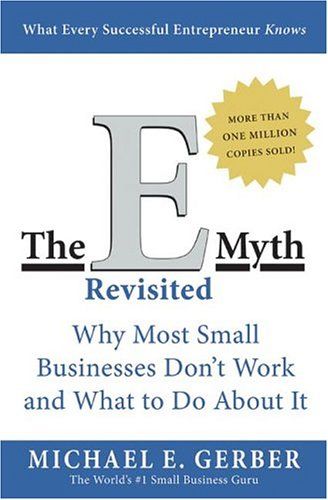
Atlas: I love that. Because for so many, those words—entrepreneur, control, freedom—they often feel like a constant tug-of-war, especially when you're trying to build something truly disruptive. Today, we're diving into how to win that war, drawing heavily from some foundational texts. We’re particularly going to unpack insights from Michael E. Gerber's seminal work, "The E-Myth Revisited." Gerber, with his decades of consulting with countless small business owners, saw firsthand how brilliant technicians often become accidental entrepreneurs and then get trapped in their own creations.
Nova: Absolutely, and we’ll also be looking at powerful ideas from Liz Wiseman’s "Multipliers" and Kim Scott’s "Radical Candor" to round out this ecosystem of empowerment. It’s not just about getting tasks off your plate. It’s about a profound shift.
The Paradigm Shift: From Task-Doer to Impact Multiplier
SECTION
Atlas: So, that first word association—chaos for entrepreneur—really resonates with me. There’s this idea that as a founder, you have to be the one doing all the things, wearing all the hats. It feels like a badge of honor sometimes, doesn't it?
Nova: It absolutely does. And that's exactly where Gerber's "E-Myth" comes in. He illustrates this beautifully with the story of Sarah, a brilliant baker. She bakes the best pies in town, everyone loves them, so she opens a bakery. Suddenly, she's not just baking; she's managing inventory, dealing with suppliers, handling customer service, doing payroll, and still trying to bake every single pie herself.
Atlas: Oh, I know that feeling. It's the classic founder trap. You're so good at the core thing, you assume you have to doing the core thing, even when the business demands you do something else entirely.
Nova: Exactly. Sarah is still a technician, but she's wearing an entrepreneur's hat. And the business can only scale as much as Sarah can physically bake. The breakthrough, Gerber argues, comes when you stop thinking like a technician and start thinking like an entrepreneur. This means designing systems, not just performing tasks. It’s about building a business that can run without being the bottleneck for every single operation.
Atlas: So, it’s not about just dumping tasks you don’t like onto someone else. It's a strategic act of leadership. But isn’t there a certain pride in being the best at doing everything yourself? For a disruptor, sometimes the chaos the creation, right? The hands-on, the direct involvement, that's where the magic happens.
Nova: That’s a great way to put it, and it’s a very common resistance. But what happens is, when you're doing everything, you become what Liz Wiseman, in "Multipliers," calls a 'Diminisher.' You might be brilliant, but by holding onto every task, you're unintentionally stifling the intelligence and capabilities of those around you. You're not multiplying your impact; you're capsizing it.
Atlas: Oh, I like that – capsizing your impact. So, it’s like being a brilliant soloist, but you're trying to conduct the entire orchestra from your own instrument. You’re limiting the symphony to just your one melody.
Nova: Precisely! The true shift in mindset is recognizing that your greatest contribution as a leader isn't in the work, but in your team to do their best work. It's about designing the systems, setting the vision, and then stepping back to let the collective genius flourish. For someone who craves innovation, this sounds like freeing up mental bandwidth for the big ideas, rather than just routine, right?
Atlas: Absolutely. It's about moving from being the single point of failure to being the architect of success for an entire team. That's where the real disruptive power lies.
Building the Ecosystem of Empowerment: Systems, Candor, and Growth
SECTION
Nova: Unlocking that bandwidth brings us to the 'how.' It’s about building an ecosystem of empowerment. So, Atlas, let's talk about the 'Tiny Step' from our content: identifying one recurring task you currently do that could be systemized and delegated.
Atlas: Okay, that sounds concrete. I imagine for many, that feels daunting. Like, what if the system breaks? What if the person messes up? How do you keep it innovative and not just turn people into cogs?
Nova: That's a valid concern, and it’s where the other pieces of the puzzle come in. Let's take that hiring example. A founder might personally interview every single candidate for a junior role, spending hours on every application. The 'Tiny Step' would be to map out that process: what are the key questions, what are the red flags, what's the desired outcome? Then, you create a checklist or a simple framework.
Atlas: So, instead of doing every interview, you empower a team member to conduct the initial screening using your proven system.
Nova: Exactly. Now, that doesn't mean you just hand them the checklist and walk away. This is where Kim Scott's "Radical Candor" becomes absolutely critical. Delegation isn't just about assigning a task; it's about coaching through the process. Imagine that team member conducts their first few screenings, and they miss a key detail, or they're too quick to dismiss someone.
Atlas: Instead of just taking the task back, or worse, letting them keep making the same mistake, you have to give them feedback. But giving feedback can be tricky, especially when you're trying to move fast.
Nova: It can be, but "Radical Candor" provides a framework: care personally, challenge directly. It means you care enough about that person's growth and the team's success to tell them when they're off track, clearly and constructively. Instead of saying, "You did that wrong," you might say, "I noticed in the last few interviews, we missed asking about their experience with X. That's crucial for this role, and I want to make sure you're set up for success in finding the best candidates."
Atlas: Ah, so accidentally acting as a 'Diminisher' isn't just about micromanaging, it's also about withholding the kind of specific, actionable feedback that actually helps someone grow into the delegated role. It’s about letting them flounder because you’re too busy or too uncomfortable to challenge directly.
Nova: Precisely! Effective delegation, then, isn't just about offloading; it's an investment in your team's development. It builds their capabilities, allows them to own more, and frees you up to focus on the truly strategic, disruptive initiatives that only you, as the visionary, can tackle. This sounds like it demands a high level of trust. How do you cultivate that, especially when you're moving fast and trying to disrupt?
Atlas: That’s the beauty of it. Trust isn't just given; it's built through clarity, through systems, and through that radical candor. When people know what's expected, have the tools, and receive honest, caring feedback, they grow. And as they grow, your trust in them naturally deepens. It becomes a virtuous cycle of empowerment.
Synthesis & Takeaways
SECTION
Nova: So, what we're really talking about today is a profound shift in how we view leadership. It’s moving from a scarcity mindset—the idea that only can do it, that there aren't enough resources or capable people—to an abundance mindset. The belief that my team, empowered by clear systems and radical candor, can achieve exponentially more than I ever could alone.
Atlas: That’s a powerful reframe. For our listeners who are visionaries, who are driven by impact and want to build movements, this isn't just about getting more done. It's about designing a future where their vision can outlive their direct involvement. It’s about building a legacy of empowerment that scales far beyond their individual capacity.
Nova: Absolutely. It’s the ultimate act of strategic storytelling, not just articulating your vision, but embodying it through an empowered team. So, consider this: What's one area in your leadership where you're still acting as the 'technician' instead of the 'entrepreneur'? What system could you build, or what specific, radically candid feedback could you give, to truly multiply your impact this week?
Atlas: That’s a question that could change everything. It’s not just about tasks, it’s about transformation.
Nova: This is Aibrary. Congratulations on your growth!