

Mastering the Art of High-Stakes Leadership Communication
Golden Hook & Introduction
SECTION
Nova: Most people think that being a great leader means being the nicest person in the room. They believe that if they just keep things pleasant, avoid conflict, and keep the team happy, productivity will naturally follow.
Atlas: That sounds like a dream. But honestly, every time I have tried to be the nice guy, I end up with a team that is confused, underperforming, and secretly frustrated because they have no idea where they actually stand.
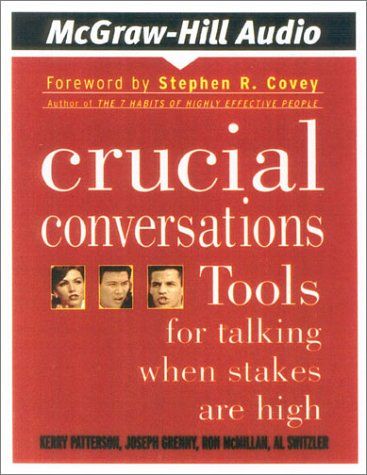
Nova: That is the trap. The myth of the nice boss is one of the most dangerous obstacles to actual leadership. Today, we are going to dismantle that myth and look at the real mechanics of high-stakes communication. We are diving into two heavy hitters of the leadership world: Crucial Conversations by Joseph Grenny and his co-authors, and Radical Candor by Kim Scott.
Atlas: I have heard those titles thrown around in every board room and strategy meeting for the last decade. It feels like they are the foundational texts for anyone trying to actually get things done without losing their mind in the process.
Nova: They absolutely are. Crucial Conversations emerged from years of social science research on what separates top performers from the rest, particularly in high-stakes moments. And Kim Scott, who spent years leading teams at tech giants like Google and Apple, wrote Radical Candor to solve the exact problem you just mentioned: the disconnect between being a decent human being and being a demanding boss.
Atlas: It is the ultimate balancing act. We are going to break down how to actually execute this, right? Because reading a book is one thing, but sitting across from a team member who is missing deadlines is a completely different reality.
Nova: Exactly. We are skipping the theory and getting straight into the operational blueprints.
The Anatomy of a High-Stakes Conversation
SECTION
Atlas: Let’s start with the moment the temperature rises. That is where I struggle. Everything is fine, and then suddenly, the conversation shifts. Someone gets defensive, or I start pulling my punches. Grenny and his team talk about the concept of safety. What does that actually mean in a corporate setting?
Nova: It means that the moment people feel unsafe, they stop listening. You can have the most brilliant, data-backed, logical argument in the world, but if the person across from you feels threatened, their brain literally shuts down the part responsible for complex problem-solving. They go into fight-or-flight mode.
Atlas: Oh, I know that look. It is that glazed-over expression or the sudden crossing of arms. It is like talking to a brick wall.
Nova: That is the physical manifestation of a lack of safety. Grenny’s framework argues that you have to prioritize safety above the content of the conversation. You cannot get to the content until you have established mutual respect and a shared purpose.
Atlas: I can see the logic, but how do you do that without sounding like a therapist? If I am in a high-stakes environment—say, a project is about to implode—I do not have time to sit there and make sure everyone feels warm and fuzzy.
Nova: That is the misconception. You are not trying to be a therapist; you are trying to be an engineer of the conversation. You do not need to make them feel warm and fuzzy; you need to make them feel safe enough to be honest. You do this by establishing mutual purpose. You have to explicitly state, "Look, I care about this project, and I know you do too. My goal here is not to blame you, but to figure out how we can hit our deadline."
Atlas: That makes sense. It is about aligning the incentives. You are essentially saying, "We are on the same team, and we are both looking at the same problem."
Nova: Exactly. When you frame it that way, you remove the "me versus you" dynamic. You change the conversation from an attack to a collaborative problem-solving session.
Atlas: I have been in situations where I tried that, and the other person just doubled down. They think I am manipulating them with corporate speak. How do you handle that?
Nova: That is where the second component comes in: Mutual Respect. If you do not truly respect the other person, they will smell it. You cannot fake that. If you are having a conversation and you secretly think the person is incompetent, they will pick up on your body language and tone within seconds. You have to find the common humanity, even if you are frustrated with their performance.
Atlas: So, it is about the internal state as much as the external words. You have to actually believe they have something to offer, or the safety is just a veneer.
Nova: Precisely. If you are holding contempt, the conversation is doomed before it starts. You have to reset your mindset to see them as a person who is struggling, rather than a person who is failing. That shift allows you to be firm on the issue while being soft on the person.
The 2x2 Matrix of Candor
SECTION
Atlas: Okay, I am with you on the safety component. But let’s move to the other side of the coin. Once the environment is safe, how do I actually drop the hammer? Because that is where I often fail. I am either too soft because I want to be liked, or I am too aggressive because I am stressed. Kim Scott’s Radical Candor framework seems to address this directly.
Nova: Kim Scott’s 2x2 matrix is brilliant because it is so simple. On one axis, you have "Care Personally," and on the other, you have "Challenge Directly." If you have high challenge but low care, that is what she calls Obnoxious Aggression. That is the boss who screams, micromanages, and destroys morale.
Atlas: I have worked for that person. It is effective in the short term for getting tasks done, but it creates a culture of fear where no one speaks up.
Nova: Exactly. And the opposite is also dangerous. If you have high care but low challenge, you fall into Ruinous Empathy. That is when you are so afraid of hurting someone's feelings that you do not give them the feedback they desperately need to grow. You are effectively sabotaging their career because you are prioritizing your own comfort over their development.
Atlas: That hits home. I have definitely been guilty of that. I tell myself I am being kind, but really, I am just being selfish because I don't want to deal with the awkwardness of a difficult conversation.
Nova: We all do it. It is human nature. We want to be liked. But Radical Candor is that sweet spot: you care enough to build a relationship, but you challenge enough to ensure they are actually reaching their potential.
Atlas: So, how do you operationalize this? If I have a team member who is consistently missing the mark, how do I move from Ruinous Empathy into Radical Candor?
Nova: You start by asking for feedback first. It levels the playing field. You say, "I want to be better at supporting you, what is one thing I could do differently?" That builds the "Care Personally" bank account. Once that trust is established, the "Challenge Directly" part becomes easier because they know you are not attacking them; you are advocating for them.
Atlas: I like that. It is a deposit-and-withdrawal system. You make deposits into the relationship through care, which gives you the currency to make a withdrawal—the hard feedback—when you need it.
Nova: That is the perfect analogy. And the challenge itself needs to be specific. Do not say, "You need to be more proactive." That is vague and useless. Say, "In the meeting yesterday, when you didn't bring the data for the quarterly report, it caused us to miss the decision window. Here is why that matters for the team."
Atlas: That is actionable. It is not an attack on their character; it is a clear link between their action and the outcome.
Nova: And that is the key. You are focusing on the work, not the person. When you challenge directly, you are not saying "You are lazy." You are saying, "This specific behavior is having this specific impact." It is an objective observation, not a subjective judgment.
Synthesis and Application
SECTION
Atlas: It feels like these two frameworks—Crucial Conversations and Radical Candor—are actually two sides of the same coin. You need the safety from the first to enable the honesty of the second.
Nova: You hit the nail on the head. You cannot have Radical Candor without the safety mechanisms of a Crucial Conversation. If you try to challenge directly without first establishing safety, you are just being obnoxious. And if you have safety but never challenge, you are just being ruinously empathetic.
Atlas: So, let’s bring this back to the "Deep Question" we started with. For anyone listening who has a pending conversation with a team member—maybe it is a performance review, or a corrective conversation about a missed goal—how do they structure that feedback?
Nova: Start with the "Why." Before you even open your mouth, ask yourself: "Do I actually care about this person's growth?" If the answer is no, stop. You are not ready to have the conversation. If the answer is yes, then structure it with that intent.
Atlas: I would add that you should also structure the conversation to be collaborative. Instead of going in with a script, go in with a hypothesis. Say, "I have noticed this pattern, and it concerns me because I want you to succeed in this role. Help me understand what is going on from your perspective."
Nova: That is perfect. It invites them into the problem-solving process. It is not "I am the boss telling you what you did wrong." It is "We are two professionals looking at a gap in performance and trying to bridge it."
Atlas: What if they get defensive anyway? Because, let’s be honest, even with the best intentions, people often react emotionally.
Nova: Then you pause. You do not push through the defensiveness. You acknowledge it. You say, "I can see that this is a difficult topic, and I want to make sure we are both comfortable. Let’s take a breath, or if you need to, we can step away and come back to this in an hour." You are the guardian of the safety in that room. You have to be the one who keeps their cool.
Atlas: That takes a lot of discipline. It is so much easier to just get angry or get defensive back.
Nova: It is. But that is the work. That is what separates the operators from the leaders. You are managing the emotional temperature of the room so that the actual work can get done.
Atlas: I think the most powerful takeaway here is that clarity is kindness. We often think that being vague is being kind, but it is actually the opposite. Being clear about the performance gap is the most respectful thing you can do for someone because it gives them the information they need to improve.
Nova: Exactly. If you care about them, you owe them the truth. If you don't give them the truth, you are effectively telling them that they are not capable of handling it or growing from it. That is the ultimate insult.
Atlas: I love that shift in perspective. It turns the "difficult conversation" into an act of leadership and care, rather than a chore to be avoided.
Nova: And that is how you build a high-performance culture. It is not about being nice; it is about being real, being safe, and being clear.
Atlas: I think I have my game plan for my next one-on-one. Focus on the safety, establish the shared purpose, and then provide the clear, direct feedback.
Nova: You will be surprised at how much better those conversations go when you follow that blueprint. It changes the dynamic entirely.
Atlas: This has been a great breakdown. It feels like we have moved from the abstract "be a good leader" advice to something I can actually execute tomorrow morning.
Nova: That is the goal. Remember, leadership is not a trait; it is a practice. Every conversation is a chance to refine that practice.
Atlas: And it starts with the next one. Thank you for walking through this with me.
Nova: My pleasure. This is Aibrary. Congratulations on your growth!









