Mastering High-Stakes Professional Dialogue
Golden Hook & Introduction
SECTION
Nova: Have you ever been in a meeting where the tension was so thick you could cut it with a knife, yet everyone was nodding in polite agreement?
Atlas: Oh, I know that room. It is the sound of silence that is actually screaming. It is the exact moment when the truth dies because everyone is too afraid to be the one to kill the polite consensus.
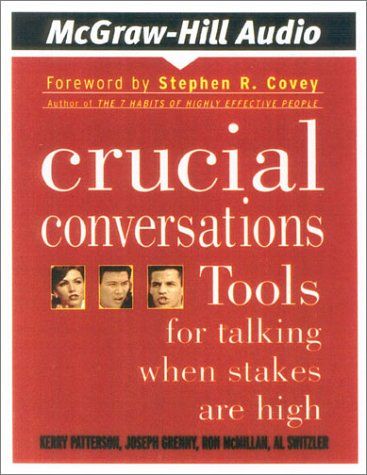
Nova: Exactly. That is the moment where high-stakes professional dialogue goes to die. And honestly, it happens in boardrooms, in creative studios, and even in casual one-on-ones. Today, we are looking at how to fix that. We are decoding the art of high-stakes communication by blending two heavy-hitting frameworks: Crucial Conversations by Kerry Patterson, Joseph Grenny, Ron McMillan, and Al Switzler, and the Radical Candor approach popularized by Kim Scott.
Atlas: Two absolute titans of the management world. I have always found it fascinating how these books, while written by different people in different contexts, essentially dance around the same central problem. They are both trying to solve the riddle of how we can be honest without being destructive.
Nova: That is the perfect way to frame it. Patterson and his co-authors come at this from a background of social science and organizational behavior, really dissecting the psychology of safety. Kim Scott, on the other hand, brings that Silicon Valley edge, having managed teams at places like Google and Apple. She makes it incredibly practical. When you look at them together, you stop seeing them as just business management theories and start seeing them as the operating system for human connection.
Atlas: It is funny, because people often hear these titles and think they are just about how to give better performance reviews. But if we dig into the research, it is actually about survival—not just for the career, but for the team culture itself.
The Pool of Shared Meaning
SECTION
Nova: That is the crucial pivot point. Let us start with what the authors of Crucial Conversations call the Pool of Shared Meaning. Think of it as a literal reservoir of information. Every person on a team has their own private pool of facts, opinions, and experiences. When we talk, we are supposed to share those, to dump them into a common pool so the team can make an informed decision.
Atlas: I love that visual. It is like a potluck dinner where everyone brings a dish. But here is the problem: in high-stakes situations, we stop bringing our dishes. We hide them.
Nova: Precisely. And why do we do that? Because of safety. When the stakes are high, the emotions are high. When emotions are high, our biological fight-or-flight response kicks in. We either go silent, which is the flight response, or we get aggressive, which is the fight response. In either case, the Pool of Shared Meaning dries up.
Atlas: That resonates with me. I have been in scenarios where I knew a project was going to fail. I had the data, I had the experience, but I looked around the table, saw the ego of the person speaking, and I just shut up. I protected myself rather than protecting the project.
Nova: And that is the tragedy of it. The authors of Crucial Conversations point out that when we withhold our views, we are essentially sabotaging the collective intelligence of the team. The group ends up making a decision based on incomplete, sanitized information. The brilliance of their research is that they found the most effective teams are the ones that prioritize safety above all else. They create an environment where you can say the most difficult, dangerous, or dissenting thing, and you won't be punished for it.
Atlas: But how do you actually create that safety? It sounds like a lofty corporate value you print on a poster, but in the moment, when my boss is pitching a terrible idea, how do I actually make it safe to disagree?
Nova: It starts with the intention. You have to separate your intent from your impact. Often, we think, well, my intent is to be helpful, so I can say whatever I want. But the authors argue that you have to focus on what you really want for the relationship and the result. You have to ask yourself, what do I want for myself, for the other person, and for the relationship? When you align those, your tone changes. You stop trying to win the argument and start trying to solve the problem.
Atlas: That is a subtle but massive shift. It moves the conversation from I versus You to Us versus the Problem. But let us be real for a second. Even with the best intentions, if you deliver the message poorly, the other person is going to get defensive. That is where I see people get stuck. They have the right intention, but they lack the tools to actually deliver the truth without causing a fight.
The Radical Candor Matrix
SECTION
Nova: Which brings us perfectly into the second piece of our puzzle: Radical Candor. Kim Scott gives us a very simple, yet brutal, matrix to navigate this. She argues that communication is a function of two axes: Care Personally and Challenge Directly.
Atlas: I have seen that diagram a dozen times, but it never gets old. It is so simple. If you challenge directly but do not care personally, you are just being a jerk. That is Obnoxious Aggression.
Nova: Exactly. And if you care personally but do not challenge directly, you are doing something she calls Ruinous Empathy. That is actually the one that kills more teams than the jerks do.
Atlas: That is a harsh term, but it makes so much sense. Ruinous Empathy. I have definitely been guilty of that. I see a colleague struggling, I see them making a mistake that is going to hurt their career, but I do not say anything because I do not want to hurt their feelings or make things awkward. I tell myself I am being kind, but I am actually just being selfish.
Nova: It is the ultimate form of self-preservation. You are protecting your own comfort at the expense of their growth. Kim Scott’s point is that by withholding the truth, you are denying them the opportunity to improve. You are essentially letting them walk off a cliff because you didn't want to be the one to shout, hey, watch out.
Atlas: So, how do we bridge the two? Because if I am using the Crucial Conversations framework to build safety, and the Radical Candor framework to challenge directly, do they conflict? Does being direct destroy the safety?
Nova: Not if you do it right. That is the magic. The safety comes from the fact that they know you care about them. When you have established that foundation of care, the challenge becomes a gift, not an attack.
Atlas: It is like a surgeon. You don't want a surgeon who is mean, but you also don't want a surgeon who is too afraid to cut because they don't want to cause pain. You want the surgeon who cares about your life enough to perform the necessary procedure.
Nova: That is a brilliant analogy. The care is the anesthetic that makes the surgery of direct feedback possible. Without the care, the challenge just feels like an assault. But without the challenge, the care is just hollow. You end up with a team that gets along great but produces mediocre work, or a team that is high-performing but absolutely miserable to work for.
Atlas: I am thinking about a specific scenario. Let us say I have a direct report who is consistently missing deadlines. If I just go in there and say, your work is late, fix it, that is potentially Obnoxious Aggression. If I say, oh, I know it is a busy week, don't worry about it, that is Ruinous Empathy. How do I, using these frameworks, hit that sweet spot?
Nova: You start with the Crucial Conversation mindset. You create safety by stating your positive intent. You say, hey, I want to talk about the project timeline because I know how much you care about the quality of your work, and I want to make sure you have the support you need to succeed. That is the safety. Then, you use Radical Candor. You clearly state the observation: I have noticed the last three deadlines were missed. Then you invite them into the pool of shared meaning. You ask, what is going on from your perspective?
Atlas: See, that is the key. You are not accusing them. You are inviting them. You are saying, I have data, you have data, let us put it in the pool and look at it together.
Nova: Exactly. You are not saying, you are lazy. You are saying, here is the pattern I see, help me understand why this is happening. Maybe they are overloaded. Maybe they are waiting on a dependency from another department that you didn't know about. By keeping it objective and focusing on the outcome, you avoid the fight-or-flight response.
Synthesis & Takeaways
SECTION
Atlas: It is fascinating to look at these two methodologies and see how they reinforce each other. Crucial Conversations gives us the psychological safety net, and Radical Candor gives us the courage to speak the truth within that net. It turns out that being kind and being direct are not opposites. They are actually two sides of the same coin.
Nova: You hit the nail on the head. We often grow up with this false binary in our heads: you can be nice, or you can be tough. The reality is that the most successful leaders—the ones who build resilient organizations—are both. They are fiercely protective of their people, which means they are fiercely honest with them.
Atlas: It reminds me of the importance of the growth mindset. If I view feedback as a weapon, I will never use it. If I view feedback as information, as a vital ingredient for the Pool of Shared Meaning, then I have to use it. It becomes part of the job, not a personality flaw.
Nova: That is the shift. It is not personal. It is operational. If you are a leader, you are the architect of the conversation. You set the tone. If you want a culture of candor, you have to be the first one to admit your own mistakes. You have to be the first one to say, hey, I think I messed up here, what do you think? That invites everyone else to dump their own facts into the pool.
Atlas: I love that. Modeling the behavior. It makes me realize that this isn't just for managers. This is for anyone who wants to be a better teammate. Whether you are leading a project, working in a partnership, or even just navigating a difficult family dynamic, these principles apply.
Nova: Absolutely. It is about human connection. Whether it is a boardroom or a living room, the principles of safety and clarity remain the same.
Atlas: So, for our listeners who are ready to put this into practice, what is the one thing they should do today? Not tomorrow, not after they read another book, but today?
Nova: I love that challenge. The takeaway is simple, but it requires courage. In your next meeting, apply the Radical Candor matrix directly. Find one piece of highly specific, constructive feedback you have been holding back because you were worried about the fallout. But before you deliver it, consciously frame it through the lens of care. Pair that feedback with genuine appreciation for their contribution.
Atlas: So, instead of, hey, you need to fix your report, it becomes, I really value the depth of research you put into this project, and I want to make sure the final output has the same impact. I noticed a few sections in the report that were a bit vague, and I think tightening them up would really help your argument. What do you think?
Nova: That is it. You are respecting them enough to be direct, and you are validating them enough to show you care. It is safe, it is productive, and it keeps the Pool of Shared Meaning overflowing.
Atlas: It is a simple shift, but it changes everything. It turns a potential confrontation into a collaborative problem-solving session.
Nova: And that, my friend, is how you build a team that doesn't just survive high-stakes moments, but thrives in them.
Atlas: This has been a fantastic breakdown. It really makes me want to go back and audit all my recent conversations to see where I might have slipped into Ruinous Empathy or Obnoxious Aggression.
Nova: We all do it. The goal isn't to be perfect. The goal is to be conscious. The more we practice, the more natural it becomes.
Atlas: I am ready to start practicing. Thank you for walking us through this, Nova. It feels like we just unlocked a superpower for professional relationships.
Nova: It is a superpower that everyone can master. It just starts with one conversation. This is Aibrary. Congratulations on your growth!