How to Navigate the AI Talent Wars Without Burning Out Your Team.
Golden Hook & Introduction
SECTION
Nova: Everyone talks about the AI talent war like it's an arms race for who can offer the biggest paychecks, the most lavish perks, or the fanciest office. But what if I told you that's actually the least interesting part of the equation?
Atlas: Oh, I like that. So you're saying all those headlines about record-breaking salaries for AI engineers are missing the real story? That sounds a bit out there, but I'm listening. What's the secret sauce then?
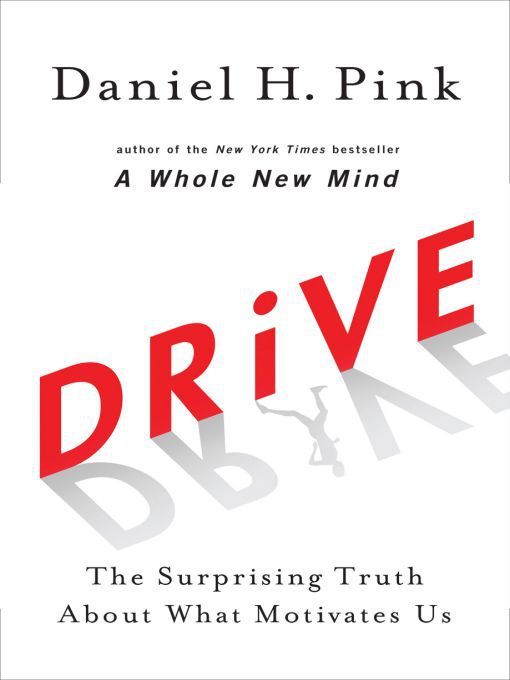
Nova: Exactly! It turns out, to truly win the AI talent war, to build a team that's not just brilliant but deeply committed and innovative, you have to tap into something far more profound than money. Today, we're diving into the human heart of the machine, drawing insights from two incredible thinkers. First up, we're looking at Daniel H. Pink's groundbreaking work, "Drive: The Surprising Truth About What Motivates Us." Pink, who made a fascinating pivot from a high-profile political career as Al Gore's chief speechwriter to exploring human behavior, really flipped our understanding of motivation on its head.
Atlas: Right, like how do you apply abstract behavioral science to the hyper-specific, high-stakes world of AI development, where the stakes aren't just market share, but sometimes ethical implications that could change society? That makes me wonder, how do these deeper drivers actually translate into tangible results for an AI leader?
Nova: That's precisely what we're going to unpack. And then, we'll connect that to the equally critical concept of communication within these high-performing teams, drawing from Kim Scott's "Radical Candor." Scott, who led teams at titans like Google and Apple, saw firsthand how crucial direct, caring feedback was in those innovation hubs. It's about building an environment where people don't just tolerate each other, but truly thrive and challenge each other to build better, more responsible AI.
The Intrinsic Motivation Engine: Autonomy, Mastery, and Purpose in AI Teams
SECTION
Nova: So let's start with Pink's "Drive." He argues that for complex, creative work, which AI development certainly is, the traditional carrot-and-stick motivators—rewards and punishments—are actually counterproductive. Instead, he identifies three intrinsic drivers: Autonomy, Mastery, and Purpose.
Atlas: Okay, so you're saying that for a brilliant AI engineer, a bigger bonus might not be as motivating as… what, exactly? How do you grant autonomy to an AI engineer working on a critical, ethically sensitive project without it descending into chaos or missing crucial deadlines? It sounds a bit like letting kids run the candy store.
Nova: That's a great question, and it's a common misconception. Autonomy isn't about a lack of accountability; it's about control over the work gets done. Think about Google's famous "20% time" policy, where engineers could dedicate a fifth of their work week to projects of their own choosing. That wasn't just a perk; it was a strategic investment in autonomy. It led to innovations like Gmail and AdSense. For an AI team, this could mean giving engineers more say in choosing the tools, methodologies, or even the specific problems they tackle within a larger project scope. It's about giving them ownership, not just tasks.
Atlas: Wow, that's actually really inspiring. So it’s like giving them the reins, but pointing them in the general direction. What about "Mastery"? In AI, the landscape changes so fast. How do you foster continuous learning and skill development when yesterday's breakthrough is today's baseline? Especially for leaders who need to stay technically sharp to guide these teams meaningfully?
Nova: Mastery is about the urge to get better at something that matters. In AI, that pursuit of mastery is almost built into the DNA of the field. It’s the constant learning, the pushing of boundaries. Leaders can cultivate this by providing dedicated time for learning, access to cutting-edge research, and opportunities to work on truly novel problems. For example, a leading AI research lab might host internal "AI Grand Challenges" where teams compete to solve complex, unsolved problems, giving them a chance to truly push their skills. It's not about being perfect, but about constant progress.
Atlas: I can definitely relate to that. The idea of always learning, always growing, that's a huge draw for anyone in a rapidly evolving field. But I imagine a lot of our listeners, especially those driven by purpose and responsible innovation, might feel that "purpose" is the most compelling of these three. How do you clarify the larger purpose of their work, especially when the day-to-day can feel like debugging endless lines of code?
Nova: You've hit on a critical point, especially for ethical architects. Purpose is the desire to do something in the service of something larger than ourselves. For AI teams, this means explicitly connecting their code, their algorithms, their models, to the real-world impact they're creating. It’s not just about building a recommendation engine; it’s about connecting people to information, or about developing a diagnostic tool that could save lives. An AI company focused on healthcare, for instance, might regularly bring in patients or doctors to share how their technology is making a difference. It reminds everyone of the profound "why" behind their incredibly complex "what."
Atlas: That's such a hopeful way to look at it. Honestly, when you're in the trenches, it’s easy to lose sight of that bigger picture. A lack of clear purpose can definitely lead to burnout, even if the pay is good. It sounds like these intrinsic motivators are about creating a culture where people to contribute, not just to.
Nova: Precisely. And that naturally leads us to the second key idea we need to talk about, which often acts as a counterpoint to what we just discussed: how we communicate within these highly motivated teams.
The Radical Candor Compass: Building Trust and Psychological Safety for AI Innovation
SECTION
Nova: Speaking of purpose and navigating complex challenges, that brings us to the crucial role of how we communicate within these teams. Kim Scott, with her experience at tech giants like Google and Apple, offers a powerful framework she calls "Radical Candor."
Atlas: Okay, but wait, now that you mention it, "Radical Candor" sounds a bit like an oxymoron. Isn't it just a fancy way of saying "be brutally honest and pretend you care"? I imagine in a high-pressure AI development environment, where egos are often as big as the ideas, that could easily backfire and crush creativity.
Nova: That's the exact misconception Scott addresses. Radical Candor isn't brutal honesty; it's caring personally challenging directly. Imagine a quadrant: on one axis, you have "Care Personally," and on the other, "Challenge Directly." Radical Candor lives in the sweet spot where you do both. The opposite isn't just being a jerk; it's "ruinous empathy," where you're so worried about hurting feelings that you don't give the feedback that's desperately needed.
Atlas: So basically you’re saying you can’t be a friend and a manager at the same time? Give me an example. Like how does this play out when an AI team is grappling with, say, a brilliant engineer's algorithm that's technically sound but has a subtle, potentially biased outcome?
Nova: That's a perfect example. Ruinous empathy would be a manager knowing the algorithm has a bias but not saying anything, hoping the engineer figures it out or that it passes unnoticed, fearing a confrontation. Radical Candor means sitting down with that brilliant engineer, acknowledging their genius, genuinely caring about their career development, and then directly, explicitly, and with evidence, pointing out the potential bias. It’s about saying, "I know you're one of the best, and I believe in your ability to fix this, but this part of the algorithm could lead to unfair outcomes, and we need to address it."
Atlas: Oh, I see. So it's not about tearing them down; it's about building them up by giving them the truth they need to hear, even if it's uncomfortable. That makes me wonder, how does radical candor help when an AI team is grappling with complex ethical dilemmas, where there's no clear 'right' answer, only trade-offs? This is where your ethical architect listeners really live.
Nova: That's where radical candor becomes absolutely essential for responsible innovation. When you're dealing with AI ethics, there often isn't a perfect solution. There are shades of gray and difficult choices. Radical candor fosters psychological safety—the belief that you won't be punished or humiliated for speaking up with ideas, questions, concerns, or mistakes. If a team feels safe, they're more likely to voice concerns about potential biases, unintended consequences, or ethical blind spots in an AI system it's deployed. It prevents "groupthink" and allows for robust, honest debate about the true impact of their work.
Atlas: That's a great way to put it. It sounds like it's about creating a culture where it's okay to be wrong, and it's okay to challenge, as long as it comes from a place of genuine care. For a strategic communicator trying to build consensus around complex AI products, what's a practical step they can take to cultivate this environment?
Nova: Start small. One powerful technique Kim Scott advocates is asking for feedback. Instead of always giving feedback, ask your team members, "What could I do better?" or "Is there anything I did today that was unhelpful?" By demonstrating your own openness to feedback, you create a pathway for others to offer it, and eventually, to receive it. It builds that muscle of direct, caring communication.
Synthesis & Takeaways
SECTION
Nova: So, when you put Pink's "Drive" and Scott's "Radical Candor" together, you see they're two sides of the same coin. "Drive" helps you understand what truly motivates your brilliant AI talent from within, fostering a desire for autonomy, mastery, and purpose. "Radical Candor" provides the communication framework to nurture that talent, ensuring they receive the honest, caring feedback needed to grow and to navigate the complex, often ethically charged, challenges of AI development.
Atlas: Absolutely. It’s about building a human-centric AI organization, where people aren't just cogs in the machine, but deeply engaged contributors. It's about designing an environment where they feel empowered to innovate responsibly. So, what's the one tiny step an AI leader can take this week to start implementing these ideas, especially if they're feeling the pressure of the talent wars and the weight of ethical decisions?
Nova: Reflect on your team's current projects. How can you increase their sense of autonomy, provide more opportunities for mastery, or clarify the larger purpose of their work? Even a small tweak in one of these areas can have a ripple effect. It's not about overhauling everything; it's about intentional, human-centered design for your AI team.
Atlas: That’s actually really inspiring. It shifts the focus from just managing to truly leading and empowering. It makes me think about the future of AI and how much more responsible and innovative it could be if every leader adopted these principles.
Nova: Indeed. The future of AI isn't just about algorithms; it's about the humans who build them. And how we nurture those humans will define the impact of the technology itself.
Nova: This is Aibrary. Congratulations on your growth!