

How to Lead with Impact: The Guide to Effective Communication in Management
Golden Hook & Introduction
SECTION
Nova: Atlas, give me your five-word review of "difficult conversations" in leadership. No overthinking, just gut reaction.
Atlas: Oh man, okay. Awkward, avoided, necessary, growth, terrifying.
Nova: Huh, I love that. Mine: Uncomfortable, transformative, essential, empowering, influence. We’re clearly looking at two sides of the same coin here.
Atlas: Absolutely! It's like we both know they're important, but my gut still wants to run for the hills.
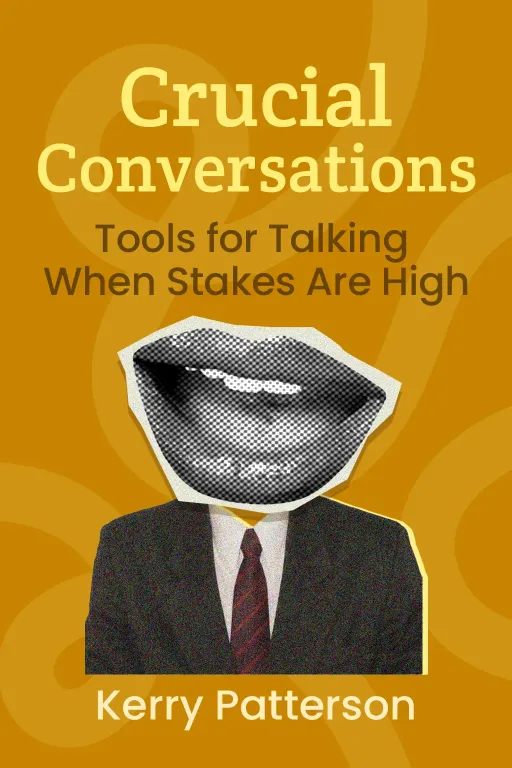
Nova: And that’s precisely why today, we're diving into. It’s a guide that cuts through the noise to show us why these tough talks aren't just necessary, but the very crucible of true leadership. We'll be drawing heavily from two titans in this space: by Patterson, Grenny, McMillan, and Switzler—a book born from decades of behavioral science research—and Kim Scott’s, forged in the high-stakes, high-pressure environments of Google and Apple.
Atlas: Wow, so we’re talking about turning those cringe-worthy moments into career-defining ones. That’s a powerful promise. But where do we even start with something that sounds so... un-fun?
Nova: We start with what the book calls 'The Cold Fact' – the uncomfortable truth that avoiding these moments is where real influence gets lost.
The Cold Fact: The Real Influence of Difficult Conversations
SECTION
Nova: Many leaders, myself included at times, shy away from these crucial moments. It’s a natural human instinct, right? Our brains are wired to avoid conflict, to seek comfort. But here's the paradox: avoiding the difficult conversations is precisely where you miss the opportunity to build real influence and impact.
Atlas: I can definitely relate. It’s like you're trying to be 'nice,' or at least not disruptive, but deep down, you know you're not actually helping anyone. So, what’s the actual cost of that 'niceness' when you avoid these talks?
Nova: The cost is profound, Atlas. Let me paint a picture. Imagine a project manager, let's call her Sarah. She has a team member, Mark, who's brilliant but consistently misses deadlines. Everyone on the team knows it, clients are starting to notice, but Sarah just can't bring herself to have the direct conversation. She tells herself, "Mark's a good guy, he's probably just stressed," or "I don't want to demotivate him."
Atlas: So she just kinda... hopes it gets better?
Nova: Exactly. But what happens? Mark continues to underperform, assuming his work is acceptable. The rest of the team, seeing this, starts to resent Mark, and implicitly, Sarah, for not addressing the issue. Morale dips. Deadlines keep slipping, and eventually, the project is delayed, costing the company money and Sarah her reputation for effective leadership. Her 'niceness' ends up being ruinous for everyone.
Atlas: Oh, I know that feeling. It’s like you're trying to be 'kind,' but you end up being really unhelpful, almost negligent. The team feels it, the client feels it, and Mark, who could have grown, never gets the chance.
Nova: Precisely. The book highlights that it's not just about lost productivity; it's about a breakdown of trust, a culture of mediocrity, and ultimately, a failure to truly lead. A leader who cares deeply enough will confront, not just comfort. The real influence is built when you step into that discomfort, not when you run from it.
Atlas: That sounds rough, but it makes so much sense when you frame it like that. It's the difference between managing tasks and actually leading people. So, if avoiding these talks is so detrimental, how do we flip that script? How do we even begin to approach these conversations effectively without, you know, making things worse?
Tactical Insights: Speaking Persuasively with Radical Candor
SECTION
Nova: That naturally leads us to the tactical insights from these incredible books. First, teaches us to speak persuasively, not abrasively, when stakes are high, opinions differ, and emotions run strong. The core idea is to create safety for open dialogue.
Atlas: Okay, 'create safety' – that sounds a bit squishy. What does that actually look like in a tense meeting where opinions are clashing, or someone's clearly upset?
Nova: It means starting with heart, clarifying your intentions, and asking genuinely curious questions. Instead of accusing, you express concern. Instead of demanding, you inquire. You make the other person feel heard and respected, even if you fundamentally disagree with their approach. It's about establishing mutual purpose and mutual respect. Then, takes it a step further with its famous framework: 'Care Personally, Challenge Directly.'
Atlas: So you're saying it's not enough to just be nice, or just to be direct? You need both?
Nova: Exactly. Kim Scott, the author, saw in her time at Google and Apple that the most effective leaders were those who truly cared about their people as human beings, were willing to tell them when their work wasn't good enough. She identifies four quadrants: 'Ruinous Empathy,' where you care but don't challenge, leading to situations like Sarah and Mark. Then there's 'Manipulative Insincerity,' where you neither care nor challenge, which is just being a bad boss.
Atlas: Ah, so 'ruinous empathy' is basically being a 'nice' leader who lets people fail because you don't want to hurt their feelings. And 'manipulative insincerity' is just being a bad boss, probably talking behind people's backs.
Nova: Precisely. And then you have 'Obnoxious Aggression,' which is challenging directly without caring personally – think of the stereotypical yelling boss. But the sweet spot, the game-changer, is 'Radical Candor': caring personally challenging directly.
Atlas: Can you give me an example of what that looks like? Because it still sounds like a fine line to walk.
Nova: Let's go back to Mark. A manager applying Radical Candor, let's call her Emily, notices Mark's missed deadlines. Instead of avoiding it, Emily schedules a one-on-one. She starts by saying, "Mark, I value your contributions to the team, and I care about your growth here. That's why I want to talk about the project deadlines." She's caring personally.
Atlas: She’s establishing that safety you mentioned.
Nova: Right. Then she challenges directly: "I've noticed a pattern of missed deadlines on your tasks, and it's impacting the team's ability to deliver. Can you help me understand what's going on?" She pauses, listens. Mark might reveal he's struggling with a new software, or has personal stress. Emily then works with him, offering training, adjusting his workload temporarily, or connecting him with resources. The outcome is not just improved performance, but a stronger, more trusting relationship, and Mark feels supported, not criticized.
Atlas: Wow, that’s such a different outcome. It’s like the difference between a doctor who tells you what you need to hear for your health versus one who just smiles and says you’re fine when you’re not. It’s about feedback being a gift, not a weapon.
Nova: Exactly! Kim Scott’s insights, honed in those high-pressure tech environments, showed her that fostering an environment where feedback is seen as a gift is paramount. It’s about promoting growth, not just pointing out flaws.
Atlas: That makes me wonder, though, how do you balance the 'care personally' with the 'challenge directly' without coming across as, well, 'radically aggressive' yourself? Because sometimes, even with good intentions, it can be misinterpreted.
Synthesis & Takeaways
SECTION
Nova: That’s the tightrope walk, isn't it? And it leads us to what we call 'Nova's Take': mastering these difficult conversations is the cornerstone of effective leadership. It's about transforming potential conflict into productive collaboration. The common thread from both and is creating environments where truth can be spoken and heard, even when it's uncomfortable. It's about the fundamental human need for psychological safety, even when delivering tough news.
Atlas: So, it's not about being a perfect communicator, but about being a courageous one who understands the deeper dynamics of human interaction. It sounds like the 'Tiny Step' from the book – identifying one difficult conversation you've been avoiding this week and planning how you'll approach it using the 'Care Personally, Challenge Directly' framework – is actually incredibly powerful. That feels actionable, even if it’s still a little terrifying.
Nova: Absolutely. It's about trusting your voice, knowing that every conversation is a practice. You are building connection, not perfection. The real lesson here is that leadership isn't about avoiding the hard parts; it's about leaning into them with skill and empathy to unlock growth for everyone involved. It’s the ultimate investment in your team and your own leadership journey.
Atlas: That’s actually really inspiring. It reframes what I used to see as a burden into an opportunity for genuine impact, not just for others, but for my own growth as a leader.
Nova: Indeed. Because when you master these moments, you don't just solve problems; you build stronger teams, foster deeper trust, and ultimately, you grow as a leader yourself. It’s about moving from a manager who delegates to a leader who truly inspires and empowers.
Atlas: That’s a profound shift in mindset.
Nova: It truly is.
Nova: This is Aibrary. Congratulations on your growth!









