Engineering Elite Teams: Designing High-Performance Culture
Golden Hook & Introduction
SECTION
Nova: Atlas, if I told you that the secret sauce to building an unstoppable, high-performance team wasn't about hiring only 'A-players' or having the most brilliant strategy, but something far more human and surprisingly simple, what would be your first thought?
Atlas: My first thought? Probably, “Is this another one of those fluffy corporate retreats where we all hold hands and sing kumbaya?” Because, honestly, for anyone building sustainable ecosystems or navigating market shifts, 'simple' usually sounds too good to be true.
Nova: That’s a fair initial reaction. But what if that 'simple' was actually backed by decades of research, real-world examples from Navy SEALs to Pixar, and could genuinely transform how your team operates? We’re talking about true, deep-seated psychological safety and purpose.
Atlas: Okay, you've piqued my interest. Because when you’re constantly trying to magnetize and retain top talent, the idea of a 'secret sauce' that isn't just about throwing money at the problem is incredibly appealing. So, what’s the recipe?
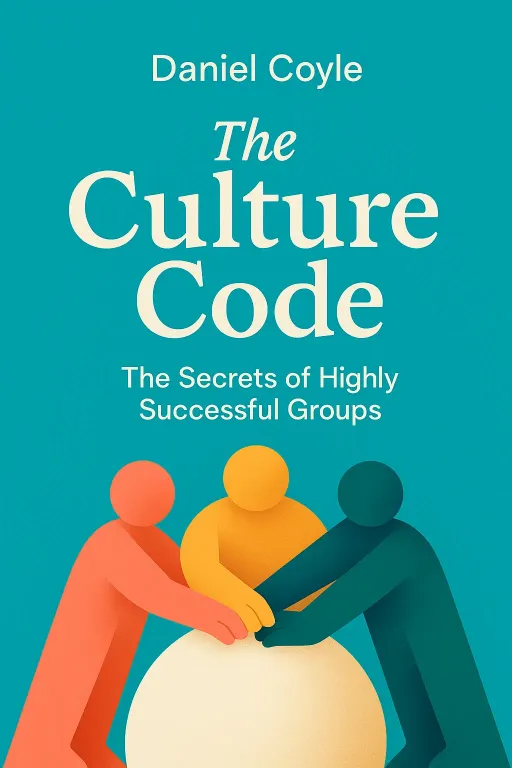
Nova: Today, we're dissecting the blueprint for that very recipe by diving into 'Engineering Elite Teams: Designing High-Performance Culture,' drawing heavily from Daniel Coyle's acclaimed book, 'The Culture Code,' and Kim Scott's 'Radical Candor.' Coyle, a journalist who spent years embedded with some of the world's most successful groups, offers a fascinating look at what truly makes teams click. His work is widely acclaimed for demystifying what often feels like an intangible 'culture' and breaking it down into actionable components.
Atlas: I love that. Because culture often feels like this nebulous, 'you know it when you see it' thing, but for someone who approaches things holistically, it needs to be something you can actually.
Nova: Exactly! And that’s where Coyle's insights, honed from observing everything from Google to a notorious jewel-heist gang—yes, really—become so powerful. He argues that high-performance cultures aren't accidental; they're deliberately designed through psychological safety and shared commitment. It’s about creating an environment where people feel safe to be vulnerable, to make mistakes, and to truly connect.
The Blueprint for Cohesion and Safety
SECTION
Atlas: Vulnerability as a superpower? That's a concept I imagine a lot of our listeners, especially those with strategic foresight, might find counterintuitive. We're often taught that leadership means projecting unwavering strength.
Nova: Absolutely, and that’s precisely the myth Coyle debunks. He spent years trying to understand what made certain groups perform at an extraordinary level, and he found it wasn't raw talent alone. It was something far more subtle: how they interacted, how they communicated, and the underlying psychological safety they shared. He distilled this into three core skills: building safety, sharing vulnerability, and establishing purpose.
Atlas: So, it’s not just about saying, 'Hey guys, let's be safe.' How do you actually psychological safety? Because that sounds like something you can't just mandate from the top down.
Nova: It's definitely not a mandate. Think of it less like a rule and more like a climate. Coyle found that elite teams signal belonging through what he calls 'belonging cues.' These are small but consistent actions that communicate, 'You are safe here. You are part of this group.' Things like physical proximity, eye contact, energy, mimicry, turn-taking, even subtle sounds of affirmation.
Atlas: So, like, if someone says something a bit out there in a meeting, and instead of a blank stare, they get a nod or a 'hmm, interesting'?
Nova: Precisely! Or a quick, 'Thanks for sharing that, Atlas.' It’s about creating a constant stream of signals that say, 'We are connected. We are safe.' He highlights a study from Google, their Project Aristotle, which found that psychological safety was the of team success, above individual talent, experience, or even conscientiousness. Teams scoring high on psychological safety were more likely to stay together, innovate, and perform better.
Atlas: Wow. So, it's not about being 'nice,' but about creating a space where people feel secure enough to take risks, ask questions, and even admit mistakes without fear of retribution. That’s a game-changer for anyone trying to foster innovation.
Nova: Exactly. And this leads directly into the second skill: sharing vulnerability. It’s not just about feeling safe, it’s about safe. Coyle observed that in high-performing teams, leaders would often initiate vulnerability. They’d admit a mistake, ask for help, or acknowledge a weakness.
Atlas: Hold on, so a leader admitting a mistake actually the team? That goes against the traditional image of the infallible leader.
Nova: It’s transformative. When a leader admits, 'Hey, I messed up on that last project, and I need your input to fix it,' it sends a powerful signal. It tells the team it's okay to be imperfect, it's okay to not have all the answers, and that seeking help is a strength, not a weakness. It's what Coyle calls 'vulnerability loops,' where one person's vulnerability invites another's, building trust and interdependence.
Atlas: That makes sense. It creates a reciprocal environment. Instead of everyone trying to look perfect, they’re all pulling together, focused on the problem, not on protecting their ego. I can see how that would lead to sustainable ecosystems, as opposed to fragile ones.
Nova: And the third skill is establishing purpose. It’s about clearly articulating the team exists and they are striving for. This isn't just a mission statement on a wall; it's a deeply internalized, shared understanding that guides every action and decision. When people know their contribution matters to a larger, meaningful goal, their engagement skyrockets. Coyle observed this in various contexts, from a struggling professional basketball team that found its purpose in collective humility and hard work, to an improv comedy troupe whose shared purpose was to make each other look good.
Atlas: So, it’s not just about 'what' we do, but 'why' we do it, and how we do it together. That profoundly impacts motivation and commitment. It sounds like a deliberate effort to create an environment where everyone feels seen, safe, and significant.
Radical Honesty, Radical Growth
SECTION
Nova: And that brings us to our second core idea, which beautifully complements psychological safety: the power of 'Radical Candor' by Kim Scott. If Coyle gives us the blueprint for safety and purpose, Scott provides the framework for honesty within that safe space.
Atlas: Okay, 'Radical Candor.' That phrase itself sounds like it could either be incredibly effective or incredibly destructive, depending on how it's wielded. I imagine a lot of our listeners struggle with giving feedback that truly helps without, you know, causing a hostile work environment.
Nova: You're hitting on the exact tension Scott addresses. She defines Radical Candor as caring personally while challenging directly. It’s about being brutally honest but doing it from a place of genuine care. She argues that most feedback falls into three other quadrants: 'Ruinous Empathy', 'Manipulative Insincerity', or 'Obnoxious Aggression'.
Atlas: So, 'Ruinous Empathy' is when you don't want to hurt someone's feelings, so you sugarcoat feedback or don't give it at all, and they never improve. I've definitely seen that. It feels kind, but it's actually incredibly damaging in the long run.
Nova: Exactly. It’s the 'bless your heart' of feedback. And 'Obnoxious Aggression' is the opposite: you challenge directly, but you don't care personally, so it comes across as harsh, mean, or dismissive. That erodes trust and psychological safety almost immediately.
Atlas: So, Radical Candor is the sweet spot where you genuinely care about the person’s success and well-being, you’re willing to tell them the hard truths they need to hear to grow. How does one actually that? Because it sounds easy in theory, but in practice, those conversations are tough.
Nova: It absolutely is tough, and Scott emphasizes that it’s a skill that needs practice. One of her key insights is to focus on the behavior, not the person, and to be specific and immediate. Instead of saying, 'You’re always late,' which feels like an attack on character, you say, 'When you were five minutes late to the meeting this morning, we had to re-explain the first point, which delayed us.'
Atlas: That’s a crucial distinction. It makes it about the observable action and its impact, not a judgment of their inherent worth. It also makes it actionable.
Nova: And critically, it’s about having those conversations face-to-face, not over email, and not letting things fester. She also talks about the importance of soliciting feedback. As a leader, if you openly ask for and genuinely receive criticism, it sets the tone for your team to do the same. It builds that vulnerability loop Coyle talked about.
Atlas: That’s brilliant. By seeking feedback on yourself, you model the behavior and demonstrate that it’s safe to challenge, even upwards. It creates a culture where feedback is seen as a gift, not an attack.
Nova: Precisely. Scott shares stories from her time at Google and Apple, where challenging directly was not just tolerated but expected, but it was always rooted in a deep respect and care for colleagues. She recounts a time when her boss, Sheryl Sandberg, told her that she sounded like an idiot during a presentation. It was blunt, but it came from a place of wanting Scott to succeed. It was radically candid.
Atlas: That’s a powerful example. Because for visionary leaders, being able to give and receive that kind of feedback is essential for continuous growth, both personally and for the entire team. It’s the difference between a team that stagnates and one that constantly adapts and improves.
Synthesis & Takeaways
SECTION
Nova: So, bringing Coyle and Scott together, we see a powerful synergy. Coyle gives us the foundations of psychological safety and shared purpose, while Scott offers the practical tools to navigate the tough conversations that inevitably arise within any high-performing team.
Atlas: It’s about creating an environment where people feel safe enough to be vulnerable, to make mistakes, to ask for help, and then to give and receive direct, honest feedback that fuels their growth. It's not about avoiding conflict, but about channeling it productively.
Nova: Exactly. It’s about designing a culture that truly magnetizes and retains top talent, because people want to be in places where they can grow, contribute meaningfully, and feel genuinely connected. It’s a holistic approach to building sustainable ecosystems.
Atlas: And for our listeners, who are constantly seeking mastery and impact, what's a tiny step they can take this week to begin engineering their own elite team?
Nova: A tiny step: implement a 'vulnerability check-in' at the start of your next team meeting. Invite members to share one small challenge they're facing, professional or personal. It could be as simple as, 'I'm struggling to focus today,' or 'I'm feeling overwhelmed by a deadline.' It’s a low-stakes way to build those belonging cues and vulnerability loops.
Atlas: I love that. It normalizes imperfection and opens the door for genuine connection. And for the deep question?
Nova: How can you create more explicit channels for both appreciation and constructive challenge within your team, fostering trust without sacrificing accountability? Think about specific rituals or practices you could introduce. Is it a dedicated feedback session, a peer recognition program, or something else entirely?
Atlas: That’s a fantastic challenge. Because the journey towards mastery is never about perfection, but about continuous innovation and adaptation. Creating those channels is how you ensure that journey is shared and supported.
Nova: It truly is. This is Aibrary. Congratulations on your growth!