Beyond the Org Chart: Cultivating High-Performance Teams as a Leader
Golden Hook & Introduction
SECTION
Nova: What if I told you that the biggest obstacle to your team's success isn't a funding gap, a market crash, or even a lack of individual talent? What if it's something far more insidious, lurking right within your own ranks?
Atlas: Whoa. That's a bold claim, Nova. Most leaders I know are laser-focused on external threats or skill gaps. You're saying the real enemy is... internal? Give me a hint here. Is it office politics? The coffee machine queue?
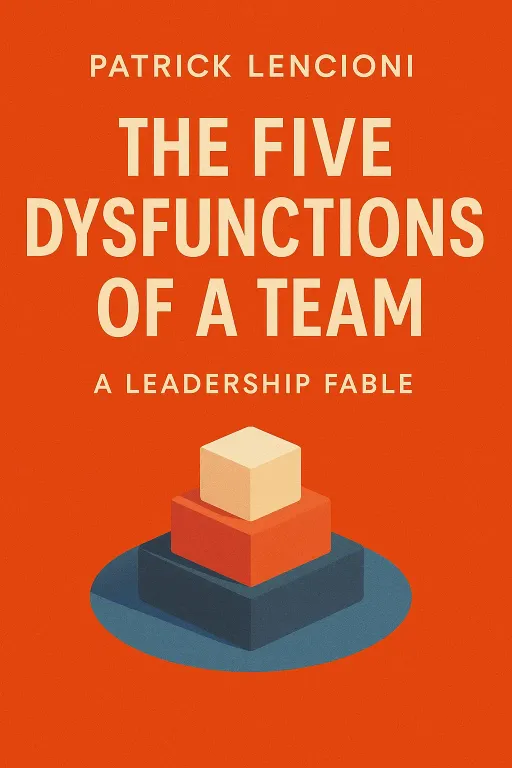
Nova: Worse than that, Atlas. Today, we're cracking open two foundational texts that tackle exactly this: Patrick Lencioni's seminal work,, and Kim Scott's incredibly practical guide,.
Atlas: Ah, Lencioni! He’s known for making complex organizational dynamics incredibly accessible through his business fables. And Scott, with her extensive background at powerhouses like Google and Apple, really brings that real-world, high-stakes tech environment perspective to leadership. She’s seen it all in the trenches.
Nova: Exactly. They both offer profound insights into building truly high-performing teams, showing us that the cold, hard fact is: a team's performance often suffers not from a lack of skill, but from unresolved interpersonal issues. It's about that invisible architecture of trust and interaction.
Atlas: So, we're talking about the human operating system of a team, not just the hardware. I like that. Let's dive in.
The Five Dysfunctions: Unmasking Team Performance Blockers
SECTION
Nova: Precisely. Lencioni lays out a powerful, hierarchical model. He argues that if you have issues at the base of the pyramid, everything above it crumbles. And at the very bottom, the bedrock of any high-performing team, is the absence of trust.
Atlas: Absence of trust. That sounds a bit vague. I imagine a lot of our listeners might think, "Well, of course, we trust each other, we all show up on time." But what kind of trust are we really talking about here? Because 'interpersonal issues' can mean a lot of things.
Nova: That's a great distinction, Atlas. Lencioni isn't talking about predictability—knowing your colleague will meet a deadline. He's talking about. It's the confidence among team members that their peers' intentions are good, and that there's no reason to be protective or careful around the group. It means being able to admit mistakes, share weaknesses, and ask for help without fear of reprisal or judgment.
Atlas: Wow. Vulnerability. That sounds almost counter-intuitive in a high-stakes, competitive environment where people are often driven to prove they're the smartest in the room. How does a leader even begin to build that kind of vulnerability? It sounds like you're asking people to drop their armor.
Nova: It absolutely is, and it's incredibly challenging. Think about a product launch team I once observed. There was a critical bug discovered late in the cycle. Everyone knew about it, but no one wanted to be the bearer of bad news, or admit they'd missed it earlier, fearing the blowback from management. So, they held back, hoping someone else would speak up, or that the problem would magically resolve itself.
Atlas: Oh, I've seen that play out. The silence is deafening, and then the problem explodes.
Nova: Exactly. The lack of trust meant critical information was suppressed. They launched with a known flaw, leading to customer backlash and a costly recall. If there had been vulnerability-based trust, someone would have flagged it immediately, and they could have pivoted. Now, directly above trust, Lencioni places the fear of conflict.
Atlas: Now that you mention it, I imagine many listeners thinking, "But healthy conflict? That's just an invitation for drama and infighting!" How do you differentiate between productive disagreement and just plain toxicity?
Nova: That's the key. Lencioni isn't advocating for personal attacks or destructive arguments. He's talking about. It's the ability to engage in passionate, unfiltered debate around issues and ideas. When there's trust, team members feel safe enough to challenge each other directly, knowing it’s about the best outcome for the team, not about winning a personal argument.
Atlas: Right, like debating the best marketing strategy or the most efficient coding solution without anyone taking it as a personal affront. It’s about challenging the idea, not the person.
Nova: Precisely. In a team with fear of conflict, meetings are often "artificial harmony." Everyone nods, but deep down, they disagree. Decisions are made without truly exploring all options, leading to mediocre outcomes. This then cascades to the next dysfunction: lack of commitment. If people aren't debating issues openly, they can't truly buy into decisions.
Atlas: So, if I haven't had my say, or if I've held back my true concerns, I'm less likely to wholeheartedly commit to the final plan. It makes perfect sense. I'm just going through the motions.
Nova: And that leads to the avoidance of accountability. If you’re not committed, you’re less likely to hold your peers accountable for their performance or behavior. And finally, at the very top, is inattention to results. If you're not holding each other accountable, the collective focus shifts from shared goals to individual status or ego.
Radical Candor: The Art of Caring Personally and Challenging Directly
SECTION
Nova: And that naturally leads us to the second key idea we need to talk about, which often acts as a powerful antidote to what Lencioni describes: Kim Scott's. Her framework provides a practical, actionable approach for leaders to build the trust and healthy conflict essential for high-performance.
Atlas: Okay, 'Radical Candor.' It sounds a bit intense. Is this just about telling people what you really think, no matter how harsh? Because that sounds like it could easily slip into obnoxious aggression, not exactly building trust.
Nova: That's a common misconception, Atlas. Radical Candor is about balancing two crucial dimensions: and. Imagine it as a two-by-two matrix. If you challenge directly without caring personally, that's Obnoxious Aggression – the jerk boss. If you care personally but fail to challenge directly, that's Ruinous Empathy – the nice boss who lets underperformance slide to avoid discomfort.
Atlas: Ah, Ruinous Empathy. I’ve been there. You want to be supportive, so you don't give the tough feedback, and then the person never improves, and the team suffers. It feels kind, but it's actually incredibly damaging in the long run.
Nova: Exactly! And then there's Manipulative Insincerity, where you neither care nor challenge – that’s just passive-aggressive behavior. Radical Candor, however, lives in that sweet spot where you genuinely care about the person you're willing to give them direct, often uncomfortable, feedback because you want them to succeed.
Atlas: So, if Lencioni gives us the diagnosis of team dysfunction, Radical Candor is a powerful prescription. It sounds like it's directly addressing that 'fear of conflict' and 'absence of trust' head-on, by giving leaders a language and a toolset to navigate it constructively.
Nova: It absolutely is. Think of a leader I know, a director at a major tech company. She had a brilliant engineer on her team, let's call him David, who was technically superb but had a habit of interrupting colleagues during presentations, unintentionally undermining their contributions. Colleagues were starting to avoid collaborating with him. His previous manager, out of Ruinous Empathy, never addressed it.
Atlas: So he never even knew he had this blind spot.
Nova: Right. This director, however, pulled David aside. She started by saying, "David, I know you're incredibly smart, and your insights are invaluable. I genuinely want to see you leading bigger projects here." That's the "Caring Personally." Then she moved to "Challenging Directly": "However, I've noticed in team meetings that you often jump in before others have finished speaking. When you do that, it not only cuts them off but also makes it harder for the team to hear their ideas, and frankly, some people are starting to disengage from you."
Atlas: That's direct, but it's framed in a way that feels supportive. It’s not an attack; it's an observation with a clear impact.
Nova: Precisely. She then provided specific examples and suggested a tactic: "Next time, try waiting until they've paused, and even physically lean back to signal you're listening before you speak." David was initially defensive, but because he felt the genuine care, he listened. He started practicing, and within months, his collaborative skills transformed. He wasn't just a brilliant engineer; he became a respected team player, eventually leading a major initiative. That’s Radical Candor in action, building trust and enabling productive interaction.
Synthesis & Takeaways
SECTION
Nova: So, what we see here is an undeniable link: Lencioni diagnoses the invisible ailments, and Scott provides the surgical tools. To cultivate high-performance teams, a leader must actively recognize and address these dysfunctions. It’s about understanding that the strength of a team isn't just the sum of its individual talents; it's the quality of their interactions, the depth of their trust, and their ability to constructively navigate conflict.
Atlas: That’s a profound insight. It means leadership isn't just about strategy or execution; it's fundamentally about shaping human behavior and creating an environment where people feel safe enough to be their best, even when that means being vulnerable or challenging.
Nova: Absolutely. It's about cultivating an environment where trust thrives, conflicts are productive, and everyone is committed to shared success, leading to tangible innovation and collective goal achievement.
Atlas: For our listeners who are leading teams, maybe trying to make a significant mark, what’s one tiny, practical step they can take today to start shifting their team’s dynamic, maybe applying this lens?
Nova: It's simpler than you might think, Atlas. Think about your current team. Which of Lencioni's five dysfunctions—absence of trust, fear of conflict, lack of commitment, avoidance of accountability, or inattention to results—do you suspect might be subtly impacting your team's effectiveness right now? Just identifying that one dysfunction is the first, crucial step toward addressing it.
Atlas: That’s a powerful challenge. Self-awareness is always the starting point for any real change. And for our listeners looking to deepen their understanding of human behavior and truly lead, embracing this journey, recognizing that every step is progress, is key.
Nova: Indeed. This is Aibrary. Congratulations on your growth!