Beyond the Org Chart: Cultivating High-Performance Teams as a Leader
Golden Hook & Introduction
SECTION
Nova: What if the biggest threat to your team's success isn't a lack of talent or resources, but something far more insidious, lurking right beneath the surface of everyday interactions?
Atlas: Whoa, that's a bold claim, Nova. I think most leaders immediately jump to skill gaps or budget constraints when things aren't clicking. You're saying it's something… deeper?
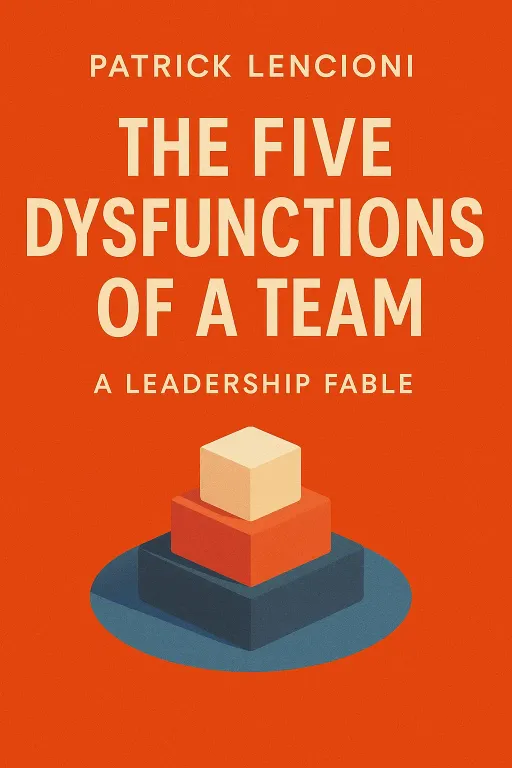
Nova: Absolutely, Atlas. We're talking about the invisible architecture of team dynamics. Today, we're diving into two seminal works that peel back those layers: Patrick Lencioni's "The Five Dysfunctions of a Team" and Kim Scott's "Radical Candor." What's fascinating about Lencioni, for example, is that he didn't just theorize about this; his insights came from years as a corporate consultant, witnessing these exact breakdowns in countless organizations firsthand. He literally wrote the book on why smart, talented people often form dysfunctional teams.
Atlas: That makes a lot of sense. So, we're talking about going beyond the bullet points on a resume and really looking at the human operating system of a group. I'm intrigued. What's the first major breakdown Lencioni identifies?
Unmasking the Invisible Walls: Lencioni's Five Dysfunctions of a Team
SECTION
Nova: Well, he lays it out as a pyramid, and at the absolute base, the foundation, is the "Absence of Trust." This isn't about whether people like each other, but whether team members feel safe enough to be vulnerable. Can they admit mistakes, ask for help, or offer constructive criticism without fear of retribution or judgment?
Atlas: Okay, but how does a leader even this trust problem when everyone's being polite and nodding in meetings? It feels like it could be so subtle.
Nova: Exactly! It's subtle but devastating. Imagine a product development team. They're on a tight deadline for a new feature. Sarah, a junior engineer, spots a potential flaw in the architecture that could cause a major bug down the line. But she hesitates. She thinks, "If I bring this up, will the senior engineers think I'm questioning their judgment? Will I look like I don't trust their work? Will I seem like I'm not a team player?" So, she stays silent.
Atlas: Oh, I've seen that play out. So, the flaw goes unnoticed, the feature launches, and then… BOOM. Production issue. And suddenly, everyone's pointing fingers.
Nova: Precisely. That's the absence of trust manifesting. And it leads directly to the next dysfunction: "Fear of Conflict." Because if you don't trust each other, if you're afraid to be vulnerable, you're certainly not going to engage in passionate, unfiltered debate around important issues. You'll have superficial harmony instead.
Atlas: Isn't conflict inherently bad for a team, though? I mean, my instinct as a leader is always to smooth things over, to keep the peace. How do you make conflict productive? That sounds counterintuitive.
Nova: It’s not about personal attacks or yelling matches, Atlas. It's about ideological conflict – robust, honest debate focused on ideas, not individuals. Think of another team, maybe a marketing department brainstorming a new campaign. If there’s a fear of conflict, someone might propose a mediocre idea, and everyone just goes along with it to avoid an argument, even if they privately think it's a bad strategy.
Atlas: Right, like that awkward meeting where everyone agrees, but you can feel the unspoken dissent in the room. And then the campaign launches, it underperforms, and no one really owns the failure because no one truly bought into it in the first place.
Nova: Exactly! That’s the domino effect of Lencioni's pyramid. Absence of trust leads to fear of conflict, which then leads to a "Lack of Commitment," because if people haven't truly debated and bought into a decision, they won't fully commit to its execution.
The Art of Constructive Candor: Kim Scott's Radical Candor in Action
SECTION
Nova: So, if fear of conflict and a lack of commitment are crippling teams, how do we actually productive conflict and foster genuine buy-in? That's where Kim Scott steps in with "Radical Candor." She offers a framework to address these very issues head-on.
Atlas: Okay, so how do I actually this? It sounds great in theory, but how do I challenge directly without sounding like an obnoxious aggressor, especially in a high-stakes environment where people are sensitive?
Nova: That’s the million-dollar question, and Scott provides a brilliant answer. She outlines two axes: "Caring Personally" and "Challenging Directly." Radical Candor lives in that sweet spot where you do both simultaneously. Think of it like a coach who genuinely cares about their athlete but isn't afraid to give them tough, honest feedback to help them improve.
Atlas: That’s a great analogy. So, it's not just about being brutally honest; it's about delivering that honesty from a place of genuine concern.
Nova: Precisely. Let’s look at the other quadrants. If you challenge directly but care personally, that’s "Obnoxious Aggression." That’s the manager who publicly shames an employee for a mistake, tearing them down without offering support. It might get results in the short term, but it destroys trust and morale.
Atlas: Yeah, that’s a quick way to get people to shut down and never take risks again.
Nova: On the flip side, if you care personally but challenge directly, that’s "Ruinous Empathy." This is the manager who sees an employee consistently underperforming, but out of a desire to be 'nice' or avoid an uncomfortable conversation, they never give the crucial feedback.
Atlas: Oh, I’ve been there. You want to spare someone’s feelings, but by doing so, you’re actually hurting their growth, and potentially the team’s performance. It feels kind, but it’s actually destructive.
Nova: It is. It’s ruinous because it allows poor performance to fester, it’s unfair to the rest of the team, and it ultimately does a disservice to the individual who isn't given the chance to improve. Radical Candor is about finding that balance. It’s about creating an environment where people know you care about their success, so they’re more open to hearing the hard truths they need to hear to get there.
Synthesis & Takeaways
SECTION
Nova: So, bringing Lencioni and Scott together, we see this powerful synergy. Lencioni diagnoses the disease – the dysfunctions that plague teams. Scott offers a potent medicine – Radical Candor – that directly addresses things like absence of trust and fear of conflict. By caring personally and challenging directly, leaders can actively build that foundation of trust, transforming fear of conflict into healthy debate, and ultimately driving genuine commitment and accountability. The true 'org chart,' it turns out, isn't the lines on paper, but the invisible web of trust and open communication you cultivate.
Atlas: That’s incredibly insightful. It reframes leadership from just managing tasks to actively nurturing the human relationships that make work possible. For our listeners out there, especially those driven to make a significant mark, it’s not just about strategy; it’s about cultivating psychological safety.
Nova: Exactly. It's about remembering that at the heart of every innovation, every successful project, every collective goal, are people. And if those people aren’t operating from a place of trust and honest communication, even the best strategies will crumble.
Atlas: So, for our listeners out there, think about your current team. What's one dysfunction you've noticed – maybe an absence of trust, or a tendency to avoid crucial conflicts? And how might you apply a touch more radical candor this week to start addressing it, even in a tiny way?
Nova: This is Aibrary. Congratulations on your growth!