Beyond the Offer Letter: Building a Culture that Keeps Top Talent.
Golden Hook & Introduction
SECTION
Nova: You know, Atlas, most people assume top talent leaves a company because of money. They get a better offer, they're gone. But what if that's almost never the real reason? What if we've been looking at the wrong numbers entirely when it comes to retention?
Atlas: That's a bold claim, Nova. I mean, common wisdom definitely points to compensation as the king. Are you suggesting the entire corporate world has fundamentally misunderstood why people jump ship?
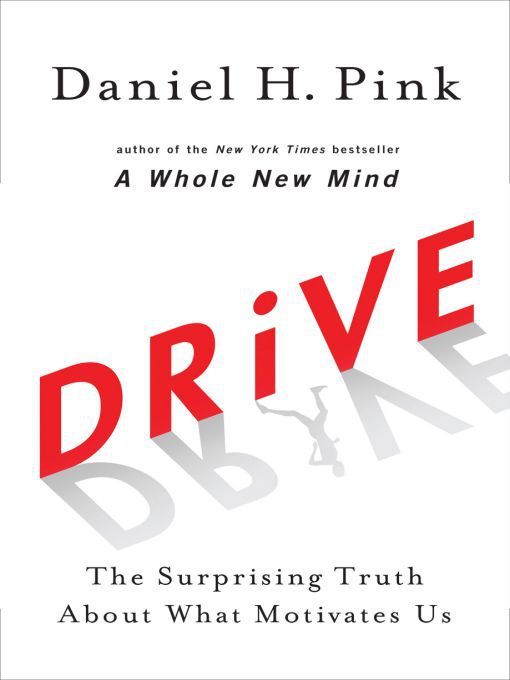
Nova: Well, not entirely, but it’s a huge piece of the puzzle we often overlook. And today, we're diving into some foundational texts that completely reframe this, starting with Daniel H. Pink's incredibly influential book, “Drive: The Surprising Truth About What Motivates Us.” Pink, who started his career as a speechwriter and political aide, shifted gears to explore human behavior and economics. This book, which built on decades of psychological research, really changed the conversation around motivation in the workplace when it landed.
Atlas: So he's saying it’s not about the gold at the end of the rainbow? I’m curious, because for someone who's trying to build for lasting impact, understanding the drivers of a team's commitment is absolutely critical.
Unlocking Intrinsic Motivation: Beyond the Paycheck
SECTION
Nova: Exactly. Pink argues that for complex, creative, knowledge-based work—which is most of what we do today—those traditional external rewards, the "carrot and stick," are often ineffective, sometimes even counterproductive. He says the real drivers are intrinsic: autonomy, mastery, and purpose.
Atlas: Okay, so autonomy, mastery, purpose. Can you break those down? Because for a strategist, those sound like concepts that could either be incredibly empowering or incredibly chaotic if not implemented correctly. How do you give someone autonomy without losing control of the overall vision?
Nova: That’s the core question, and it’s brilliant. Autonomy is about our desire to direct our own lives. It’s not about doing whatever you want whenever you want, but having control over you do, you do it, you do it, and you do it with. Mastery is our urge to get better and better at something that matters. And purpose is the yearning to do what we do in the service of something larger than ourselves.
Atlas: I can see how those would be appealing. I mean, who doesn't want to feel like they're good at something meaningful, and have a say in their work? But how does this play out in a real-world, high-stakes environment? Are there companies actually putting this into practice and seeing results?
Nova: Absolutely. Think about the concept of dedicated "passion project" time. Companies like Atlassian, for instance, famously implemented a version of this. They would give their developers 24 hours—a full day—to work on anything they wanted, with anyone they wanted, as long as it wasn't part of their regular job. The only requirement? Show the results to the rest of the company at the end.
Atlas: Wow, so basically a hackathon, but on a regular basis, and entirely self-directed? That sounds like a dream for a developer, but for a manager, that introduces a lot of variables. What kind of results did they actually see from giving up that control?
Nova: The results were astounding. In just one day, they produced significant bug fixes, new features, and even entirely new products that wouldn't have emerged otherwise. The engineers were deeply engaged, felt a strong sense of ownership, and were innovating on their own terms. It was a clear demonstration of how autonomy, when coupled with a clear, overarching purpose—to improve the company—unleashes incredible creativity and problem-solving.
Atlas: That's fascinating. So it's not about letting people run wild, but empowering them within a defined framework of purpose. I imagine a lot of our listeners, especially those building sustainable scaling models, are grappling with how to maintain innovation and engagement as their teams grow. This sounds like a powerful counter-narrative to the idea that more structure equals more output.
Nova: Precisely. Another great example is the "Results-Only Work Environment," or ROWE, implemented at companies like Best Buy. Instead of focusing on hours worked or being physically present in the office, the focus was entirely on results. Employees could come and go as they pleased, as long as their work got done.
Atlas: Okay, so no punch clocks, no fixed schedules, just hit your targets. That feels almost revolutionary for a large corporation. What was the impact there?
Nova: They saw significant increases in productivity, lower turnover, and higher employee engagement. The freedom and trust inherent in ROWE fostered a deep sense of responsibility and ownership. People weren't just showing up; they were performing because they to, not because they were being watched. It's a powerful statement that when you trust your people with autonomy, they often exceed expectations.
Atlas: So for a founder building a legacy, this isn't just about making employees happy; it's about creating an environment where high-performers are intrinsically motivated to deliver their best work, aligning their personal drive with the company's goals. That feels like a sustainable model for growth.
The Power of Radical Candor: Building Trust Through Truth
SECTION
Nova: Absolutely. And speaking of sustainable models and empowering teams, that leads us perfectly into another cornerstone of retention: how we actually communicate and build trust. For that, we turn to Kim Scott's incredibly insightful book, "Radical Candor: Be a Kick-Ass Boss Without Losing Your Humanity."
Atlas: Radical candor. That phrase itself sounds like a tightrope walk. You're talking about being a "kick-ass boss" while still being "human." How do you balance those two? Especially for someone who values inspirational leadership and wants to empower their growing team, the idea of being 'radical' might feel counterintuitive to fostering a warm, collaborative environment.
Nova: That’s the genius of Scott's framework. She defines radical candor as caring personally and challenging directly simultaneously. It’s about building genuine relationships with your team members—caring about their careers, their lives, their well-being—and you care so deeply, you're willing to give them direct, honest feedback, even when it's uncomfortable.
Atlas: So it's not just about being brutally honest or, as some people might call it, "obnoxious aggression." It’s the that makes the direct challenge land differently.
Nova: Exactly. Scott illustrates a spectrum. On one end, you have "obnoxious aggression"—challenging directly but not caring personally. That's just being a jerk. Then you have "ruinous empathy"—caring personally but failing to challenge directly, which often happens when we're too afraid to hurt someone's feelings. That's actually ruinous because it prevents people from growing. And then there's "manipulative insincerity"—neither caring nor challenging. Radical Candor sits in that sweet spot of caring personally challenging directly.
Atlas: I've been there with the ruinous empathy. It feels like you're being kind, but looking back, you're actually doing a disservice. But challenging directly can still feel... well, radical. How do you do it without alienating people, especially when you're trying to inspire a growing team? It takes a certain amount of courage.
Nova: It absolutely does. Scott shares a powerful personal story from her time at Google. She was leading a team, and her boss, Sheryl Sandberg, told her she was doing a great job, but then suggested she should work on her "ums" and "ahs" during presentations. Scott brushed it off. Later, Sandberg pulled her aside and said, "When you say 'um' every third word, it makes you sound stupid."
Atlas: Wow. That's... direct. I can imagine that stung a bit.
Nova: It did! Scott was initially offended. But because she knew Sandberg genuinely cared about her and her success, she was able to hear the feedback. She realized it wasn't an attack, but a genuine desire to help her improve. She then got a speech coach, and it transformed her communication skills. That’s the essence of radical candor: the feedback, no matter how tough, is delivered from a place of genuine care, making it possible for the person to actually hear and act on it.
Atlas: That’s a perfect example. Because if it had come from someone she didn't trust, or who she felt didn't care about her, it would have just been an insult. So, for someone who values deep thought and building for impact, this isn't just about being "nice." It's about creating a foundation where honest feedback fosters actual growth and a sense of belonging. It builds psychological safety.
Nova: Precisely. Google's own Project Aristotle, which studied what makes teams effective, found that psychological safety—the belief that you won't be punished or humiliated for speaking up with ideas, questions, concerns, or mistakes—was the single most important factor. Radical candor cultivates that safety. It’s how you retain top talent, not just by paying them well, but by creating an environment where they feel safe enough to be themselves, to grow, and to contribute their best work.
Synthesis & Takeaways
SECTION
Nova: So, when we look beyond the offer letter, what we see is that building a culture that keeps top talent isn't about shiny perks or endless raises. It's about profoundly understanding human nature. It's about fostering intrinsic motivation—that deep desire for autonomy, mastery, and purpose—and then coupling that with an environment of radical candor, where trust and psychological safety allow for genuine growth.
Atlas: It sounds like it all boils down to respect. Respect for people’s inherent drive to do meaningful work, and respect enough to be truly honest with them, even when it’s hard. For those of us driven by legacy and lasting change, this isn’t just about management tactics; it’s about crafting a foundational philosophy for an organization.
Nova: It absolutely is. It’s about creating a place where people don't just clock in, but where they genuinely belong, feel empowered, and are continuously challenged to become their best selves. When you hit those notes, the talent doesn't just stay; they thrive, innovate, and become the architects of your company's future.
Atlas: So, if we’re looking to build lasting change and empower our teams, what’s one practical, immediate step a leader can take to foster that sense of autonomy or trust this week? Something concrete for our listeners who are focused on big-picture thinking, daily.
Nova: I'd say, pick one small but significant task you usually handle yourself, and instead of just delegating it, give one person on your team full autonomy over it. Let them own the and the, not just the. Then, schedule a check-in, not to micromanage, but to offer truly candid, caring feedback on their approach and results. It's a small step, but it's where culture shifts begin.
Atlas: That’s a powerful way to start. It’s about building that muscle of trust and empowerment, one intentional action at a time. This is Aibrary. Congratulations on your growth!