

The Empathy Advantage: Why Emotional Intelligence Fuels Leadership.
Golden Hook & Introduction
SECTION
Nova: For decades, we’ve been told that the smartest person in the room wins. We've lionized the brilliant strategist, the technical genius, the one with all the answers. But what if that very brilliance is quietly sabotaging your leadership, preventing true influence and connection, making your strategic vision a lonely one?
Atlas: Oh, I like that. That’s a bit of a gut punch for a lot of high-achievers out there. We’re taught to optimize for intellect, for raw processing power. To hear that it might actually be a blind spot… that’s a surprising claim. So you’re saying all that brainpower isn't enough?
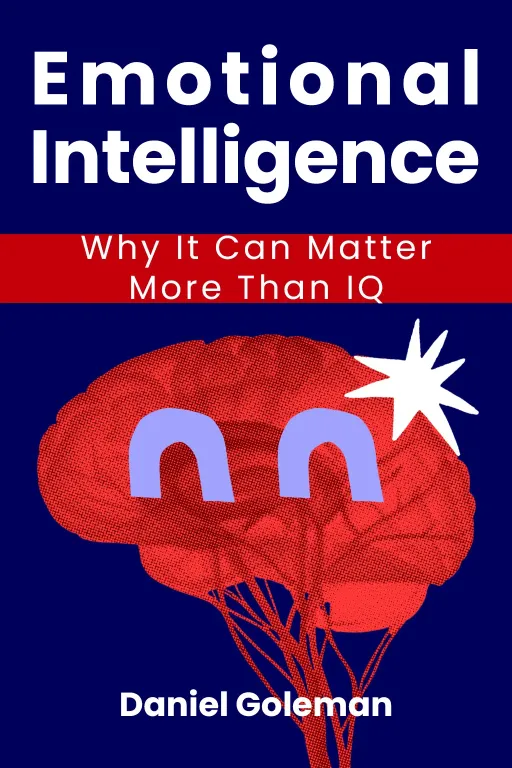
Nova: Exactly. Today we're cracking open a concept that completely flipped the script on what makes a truly effective leader. This shift is largely thanks to Daniel Goleman's groundbreaking work, particularly his seminal book "Emotional Intelligence" and its powerful follow-up, "Primal Leadership." Goleman, a science journalist by trade, had this incredible knack for translating incredibly complex psychological research into insights that resonated with millions. He made the academic accessible.
Atlas: That makes sense. He wasn’t just another academic writing for other academics. He was a translator, making these profound ideas actionable for leaders who desperately needed to understand the human element in their organizations. He gave us a language for something we intuitively knew was important but couldn't quite articulate.
Nova: Precisely. And what he articulated so powerfully was that many leaders, despite their impressive IQs and strategic prowess, often fall into a critical trap. They develop what we call "The Leadership Blind Spot." It’s a silent killer of potential, quietly undermining even the most brilliant strategies.
The Leadership Blind Spot: Why IQ Isn't Enough
SECTION
Atlas: The leadership blind spot. That sounds ominous. For someone who’s constantly striving for advancement, for making a significant difference, what does that actually look like? How does this blind spot manifest in the real world when you're trying to inspire and lead?
Nova: Let’s paint a picture. Imagine a brilliant tech founder, Sarah. She’s a visionary, a coding prodigy who built her company from the ground up, disrupting her industry with sheer intellectual horsepower. She can out-think, out-strategize, and out-innovate anyone in the room. Her IQ is off the charts. She believes in logic, data, and ruthless efficiency. She expects her team to be as self-reliant and data-driven as she is.
Atlas: I know that leader. They’re often celebrated, at least initially, for their singular vision and drive. They get things done. So what’s the catch? What's the downside to such a clear-minded, strategic approach?
Nova: The catch is, despite her brilliance, Sarah’s company is bleeding talent. Her team meetings are tense, people rarely speak up, and there’s a pervasive fear of failure. She often dismisses emotional responses as "irrational" or "unproductive." When a team member expresses frustration about a tight deadline, she responds with a logical breakdown of why the deadline is necessary, completely missing the underlying burnout and demotivation. She sees their hesitation as a lack of commitment, not a cry for support or understanding.
Atlas: Oh man. That’s actually really inspiring, but also kind of heartbreaking for the people working for her. So her technical prowess, which propelled her to the top, becomes her Achilles' heel when it comes to leading people. She’s managing tasks, but she’s not leading humans.
Nova: Exactly. Her inability to understand and manage emotions—both her own and those of her team—creates this profound blind spot. She can’t read the subtle cues in a meeting, she misinterprets silence as agreement, and she’s completely oblivious to the growing resentment and disengagement. She’s excellent at the 'what' and the 'how' of the business, but she’s failing miserably at the 'who.'
Atlas: So basically you’re saying, for our listeners who are managing high-pressure teams, focusing solely on the technical or strategic brilliance might actually be counterproductive. It's not just about missing out on "being nice"; it actively hinders performance. How does that translate into hard business problems for someone like Sarah?
Nova: It translates directly into hard business problems. High turnover means constant retraining costs and loss of institutional knowledge. Low morale stifles innovation, because people are too afraid to take risks or share dissenting opinions. And a lack of trust prevents effective collaboration, meaning projects take longer, quality suffers, and the strategic vision, no matter how brilliant, never fully materializes. Her blind spot isn't just about soft skills; it's a strategic imperative she's missing. She's driving a high-performance car with only one eye open.
Atlas: That’s a powerful analogy. It makes me wonder, how many brilliant minds are out there leading teams, thinking they’re doing everything right, but are actually creating these invisible walls that block their own impact? It sounds like a lonely place to be as a leader, and an even tougher one for the team.
Nova: It absolutely is. And this brings us to the profound insight Goleman and his colleagues brought to the forefront. They argued that while IQ gets you in the door, emotional intelligence is what determines your true success and, more importantly, your lasting influence as a leader.
The Empathy Advantage: Fueling Resonant Leadership
SECTION
Atlas: So if IQ isn't the whole story, what? How do we fix this blind spot? What's the shift we need to make? Because for ambitious leaders, it’s not enough to just identify the problem; we need the solution that drives results.
Nova: The shift, Atlas, is towards what Goleman termed Emotional Intelligence, or EQ. He broke it down into five crucial components: self-awareness, self-regulation, motivation, empathy, and social skills. And "Primal Leadership" by Goleman, Richard Boyatzis, and Annie McKee took this further, showing how emotionally intelligent leaders create what they call "resonance."
Atlas: Resonance. I like that. It sounds like a leader who can really connect, who can move hearts and minds, which is exactly what an influencer wants to do. But can you break down, say, empathy? What does that look like in action for a leader, beyond just 'feeling someone's pain'?
Nova: Absolutely. Empathy in leadership isn't about being a therapist. It’s about understanding the emotional landscape of your team and your stakeholders. It's about being able to accurately read non-verbal cues, to grasp the unspoken concerns, and to anticipate reactions. It's a strategic tool for navigating complex human dynamics. Imagine David, a CEO facing a major market downturn. His company is in a tough spot, and he knows he has to make some difficult decisions, including potential layoffs.
Atlas: That's a high-stakes scenario. The strategic thinker in me says, "Cut costs, protect the bottom line, communicate the tough facts." Where does empathy fit into that without compromising the necessary actions?
Nova: That’s the critical question. A low-EQ leader might deliver the news bluntly, focus solely on the numbers, and then wonder why morale plummets and productivity tanks. David, however, understands the fear and uncertainty his team is experiencing. He holds open, honest town halls, not just to deliver information, but to listen. He acknowledges the difficulty, validates their feelings, and clearly explains the 'why' behind the decisions, not just the 'what.' He models vulnerability, sharing his own concerns while also projecting a clear, hopeful path forward.
Atlas: That's a powerful distinction. He's not avoiding the tough decisions, he's just delivering them with an understanding of the human impact. He's translating the strategic truth with emotional intelligence. So, how does that make a concrete difference compared to Sarah’s approach?
Nova: The difference is profound. David’s team, despite the difficult circumstances, feels respected, heard, and still connected to the company's mission. They might be anxious, but they’re not resentful. This empathy, combined with his self-regulation to remain calm and focused, and his social skills to communicate effectively, fosters trust. This trust then fuels collective action. People are more likely to support tough decisions, to innovate under pressure, and to pull together because they believe in their leader and feel valued.
Atlas: Wow. That’s actually really inspiring. So it’s not just about "feeling good," it's about building resilience and driving collective action, even in adversity. For an ambitious leader, what's the direct, measurable benefit of this 'empathy advantage' beyond just 'happier employees'? What's the strategic payoff here?
Nova: The strategic payoff is immense. It leads to higher employee retention, which saves massive recruitment and training costs. It fosters a culture of psychological safety, which is a direct driver of innovation and problem-solving. When people feel safe to speak up, to experiment, and even to fail, your organization becomes more adaptive and resilient. An empathetic leader creates a positive emotional climate, and that climate is what allows teams to perform at their absolute peak, driving collective action beyond mere directives. It’s the difference between a team that to follow you and a team that to follow you.
Atlas: That makes perfect sense. It’s about unlocking human potential, not just managing human resources. And that’s a game-changer for any leader aiming to make a significant difference.
Synthesis & Takeaways
SECTION
Nova: So, what we’ve seen today is that emotional intelligence isn't a 'soft skill' to be relegated to the HR department. It’s the essential partner to IQ, the fuel that allows intellectual brilliance to actually translate into impactful, resonant leadership. It's the difference between merely directing people and genuinely inspiring them, between a team that performs out of obligation and one that performs out of passion and shared vision. Developing your EQ means you can navigate the incredibly complex human dynamics of any organization, fostering trust, and driving collective action in a way that pure intellect simply cannot. It’s about understanding that true influence, true connection, comes from the heart as much as from the head.
Atlas: Absolutely. That’s a great way to put it. This really challenges us to reflect, to really hear what others are saying, and what they’re saying. For our listeners, especially those striving to lead and inspire, I’m curious: Reflect on a recent team interaction you had. How might a deeper understanding of emotional cues—a bit more empathy, more self-awareness—have changed the outcome or strengthened those relationships? Where could you have listened, truly listened, more effectively? It’s a continuous journey, isn’t it?
Nova: It absolutely is. And a profoundly rewarding one. This is Aibrary. Congratulations on your growth!









