

The Empathy Advantage: How Understanding Minds Fuels Leadership
Golden Hook & Introduction
SECTION
Nova: Atlas, I have a burning question for you today, something that’s been on my mind.
Atlas: Oh, I like that. Lay it on me. I’m ready.
Nova: What do you truly know about emotional intelligence? Like, if you had to give me your five-word review, right now.
Atlas: Oh man, my five-word review for emotional intelligence… Hmm. “That thing my therapist recommends.”
Nova: Exactly! See, that’s the common perception, isn’t it? It’s often seen as this nebulous, soft skill, something for therapy sessions or HR workshops. But today, we’re tearing down that misconception and diving into why it's actually the bedrock of truly impactful leadership, thanks to the groundbreaking work of Daniel Goleman.
Atlas: So, we’re talking about more than just managing your feelings, right? Because a lot of our listeners are probably thinking, 'I'm a strategist, I'm an analyst; I deal with data, not feelings.'
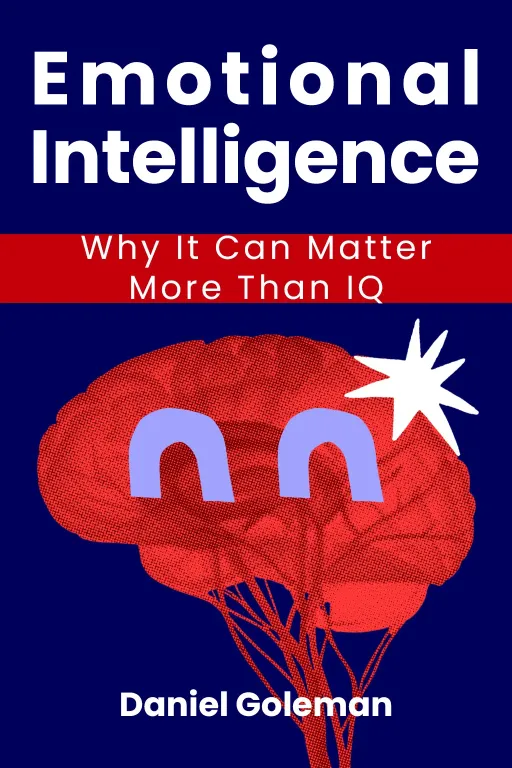
Nova: Precisely. We’re talking about leadership that isn't just about strategy or IQ, but about understanding the emotional landscape of your team and, crucially, yourself. Our guide today is Daniel Goleman, particularly his seminal book "Emotional Intelligence," and its powerful follow-up, "Primal Leadership," which he co-authored with Richard Boyatzis. Goleman, originally a science journalist for The New York Times, had this incredible knack for translating complex psychological research into something accessible and profoundly relevant. He really brought the concept of EQ from academic journals into boardrooms and living rooms, showing us it matters.
Atlas: I can see how a journalist's eye would make it relatable. It’s one thing to have the theory, another entirely to make it actionable. But for someone whose career has been built on logic and strategic thinking, this might feel like a radical shift. What’s the core argument that Goleman and Boyatzis make that challenges our traditional view of leadership?
Emotional Intelligence as the Bedrock of Leadership
SECTION
Nova: Well, the cold, hard fact they present is that leadership isn't just about strategy; it’s deeply, profoundly human. Ignoring the emotional landscape can derail even the best-laid plans. Goleman's work makes the compelling case that emotional intelligence—meaning self-awareness, self-regulation, motivation, empathy, and social skill—is a stronger predictor of success than traditional IQ.
Atlas: Wait, are you saying that someone with a lower IQ but higher EQ could actually be a leader? That feels counterintuitive to everything we’re taught in business schools.
Nova: Absolutely. Think of it this way: imagine a brilliant CEO, genius-level IQ, incredible strategic mind. They can map out the most intricate business plans, predict market shifts with uncanny accuracy. But they’re completely oblivious to the rising anxiety among their team during a restructuring, or they dismiss a passionate employee’s concerns as 'emotional outbursts.'
Atlas: Oh, I know that feeling. It’s like they’re speaking a different language.
Nova: Exactly. That leader, despite their intellectual brilliance, will struggle to inspire loyalty, to foster collaboration, or to retain top talent. Their team might execute tasks, but they won't feel to go the extra mile. They might even actively disengage. The genius plans might fail not because of a flaw in the logic, but because the human element was completely neglected.
Atlas: So, it’s not just about knowing to do, but understanding people will react to it, and how to get them to to do it. But how does self-awareness, for instance, translate into a tangible leadership outcome? Can you give an example?
Nova: Of course. Consider a leader who is highly self-aware. They understand their own triggers, their strengths, their weaknesses. Let's call her Sarah. Sarah is leading a critical project with tight deadlines. She notices she tends to become overly critical when stressed, which can shut down her team's creativity. Because she's self-aware, she can proactively manage this. She might tell her team, "Look, I know I can get intense when the pressure's on. If I seem overly direct, please know it's the deadline talking, not a judgment on your work. And feel free to push back if you think there's a better way."
Atlas: That’s a game-changer. That’s not just managing herself, it’s actively building trust by acknowledging her own humanity. It’s giving her team permission to interact with her authentically.
Nova: Precisely. That transparency, born from self-awareness and self-regulation, creates an environment where the team feels safe. They're not walking on eggshells. They can focus their energy on solving problems, not on navigating their boss's mood. Goleman shows that these capabilities, often dismissed as 'soft,' are actually the hard skills of human connection and influence. They allow leaders to inspire and truly connect, which is far more powerful than just dictating tasks.
Resonant Leadership: Moving Teams Through Emotional Connection
SECTION
Nova: And this naturally leads us to the second key idea, which builds directly on emotional intelligence: resonant leadership. While Goleman laid the groundwork for emotional intelligence is, "Primal Leadership" by Goleman and Boyatzis shows us leaders use it to create something truly transformative: resonance. It's about leaders who literally move others.
Atlas: So, emotional intelligence is the individual skill, and resonance is the collective outcome? Like, if my EQ is a musical instrument, then resonant leadership is the symphony?
Nova: That’s a perfect analogy, Atlas. Resonance is that feeling of being in sync, that shared positive emotional tone within a team or organization. Leaders who foster this create a climate where people feel seen, heard, and valued. And when people feel that, they don't just perform; they thrive. They become intrinsically motivated.
Atlas: I can see how that would boost morale, but does it actually translate to better performance? Or is this just about everyone feeling warm and fuzzy? Because frankly, some of our listeners are in cutthroat environments where "warm and fuzzy" isn't exactly the priority.
Nova: It's absolutely about performance, but it's a deeper, more sustainable kind. Think of a leader who walks into a room and instantly lifts the energy, even without saying a word. Their presence alone can shift the mood. This isn't magic; it's a skilled application of emotional intelligence. Goleman and Boyatzis argue that leaders who resonate emotionally with their teams create a positive climate that fosters high performance.
Atlas: Can you give me an example of what that looks like in action? How does a leader that resonance?
Nova: Imagine a tech startup facing a huge setback – their main product launch is delayed, and morale is plummeting. The CEO, instead of just giving a dry, logical explanation for the delay and a new timeline, does something different. She gathers the team, acknowledges the collective disappointment, and shares her frustration and concern, but then pivots to her unwavering belief in their collective talent and the product's ultimate potential. She recounts a previous challenge they overcame together, reminding them of their shared resilience.
Atlas: So she’s not just communicating facts; she’s communicating and a shared narrative.
Nova: Exactly. She's not just talking them; she's talking them, emotionally. She's creating a shared emotional experience, a sense of "we're in this together, and we'll get through it." This empathetic connection allows her to re-ignite their motivation, not through fear or mandate, but through a genuine, shared purpose. The team leaves feeling not just informed, but re-energized and committed. That's resonance. It literally moves people to higher levels of performance and commitment because they feel a deep, personal connection to the leader and the mission.
Atlas: So what happens if a leader tries to fake that? Can people tell? Because I imagine there’s a fine line between genuine connection and just trying to manipulate emotions.
Nova: That’s a critical question, and it’s why genuine self-awareness and empathy are so crucial. People absolutely can tell. Inauthentic emotional displays, or what Goleman calls "dissonant leadership," actually create the opposite effect. They breed cynicism, distrust, and disengagement. Resonance isn't about putting on a performance; it’s about aligning your internal emotional state with your external actions in a way that genuinely connects with others. It's not about being 'nice'; it's about being authentic and understanding the impact you have. True influence comes from that deep, empathetic connection, not just positional authority.
Synthesis & Takeaways
SECTION
Nova: So, what we’re really exploring here is that leadership, at its most effective, isn't a purely intellectual exercise. It's an intricate dance of human connection, driven by emotional intelligence. The leaders who truly stand out, the ones who inspire loyalty and foster innovation, are the ones who master this emotional landscape, not just the strategic one.
Atlas: That actually makes so much sense. It’s like, you can have the most advanced engine in the world, but if the driver doesn’t understand how to handle the road conditions or connect with their crew, they’re still going to crash. It's about recognizing that emotions aren't just background noise; they're the operating system.
Nova: And the beauty of it is that emotional intelligence isn't a fixed trait. It’s a skill set that can be developed. It starts with that tiny step Goleman suggests: observe a recent team interaction. Identify one emotion you might have missed, either in yourself or in someone else, and consider its impact. That act of reflection is the first step toward greater self-awareness and, ultimately, more resonant leadership.
Atlas: I love that. It’s not about a grand overhaul, but a conscious, consistent effort to tune into the human currents around us. It’s an invitation to trust your inner wisdom, as our listeners often do, and to practice active listening, because that’s how connections are strengthened.
Nova: Absolutely. It's a journey, not a destination. And for anyone looking to build future influence, to understand human decision-making, and to strategically network with purpose, cultivating this empathy advantage is, without a doubt, the most powerful tool you can wield.
Atlas: That’s a fantastic way to put it. So, for all our listeners out there, what’s one emotion you might have missed this week? How might understanding it have shifted an outcome? Think about that.
Nova: This is Aibrary. Congratulations on your growth!









