The 'Emotional Intelligence' Trap: Why Soft Skills Are Hard Power.
Golden Hook & Introduction
SECTION
Nova: Most people think emotional intelligence is about being 'nice.' We're here to tell you it's actually about wielding significant power – the kind that makes or breaks companies, careers, and even entire movements.
Atlas: Whoa, that’s a bold claim, Nova. I think when a lot of our listeners hear 'emotional intelligence,' they picture calm, collected individuals, maybe good listeners, but 'power'? That feels like a reframe.
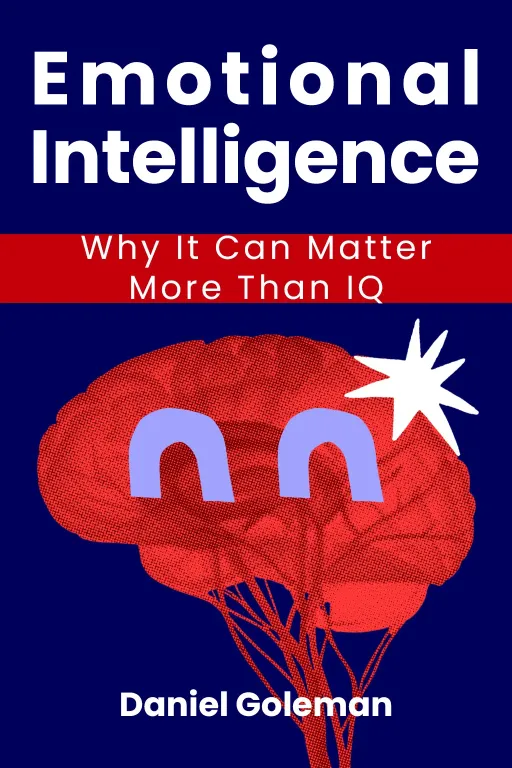
Nova: Absolutely, Atlas. And that reframe is precisely what makes the work of Daniel Goleman so revolutionary. Today, we're dissecting a concept often misunderstood, championed by Goleman in his seminal work, 'Emotional Intelligence,' and later expanded in 'Primal Leadership' with Richard Boyatzis and Annie McKee. What's fascinating about Goleman is that he brought this concept to the mainstream not as an academic locked in an ivory tower, but as a science journalist, making complex psychological ideas accessible to millions. He essentially pulled back the curtain on what makes truly effective leaders tick.
Atlas: And that accessibility is key, especially when we're talking about something that sounds so… well, on the surface. That’s the exact perception we’re up against, right? This idea that emotional intelligence is a kind of 'nice-to-have' leadership accessory, rather than the core engine.
Nova: Precisely. That's our first big blind spot, and it's where we're starting today.
The 'Soft Skill' Illusion: Why Emotional Intelligence is Actually 'Hard Power'
SECTION
Nova: For too long, emotional intelligence has been relegated to the 'soft skills' bucket – a pleasant bonus for leaders, but not essential. This categorization is a fundamental misunderstanding, and frankly, a strategic trap. Think about it: when you categorize something as 'soft,' it often implies it's less critical, easily dismissed, or even a distraction from the 'hard' metrics of profit and productivity.
Atlas: I can see that. For our listeners who are strategic builders, often in high-pressure environments, the focus is always on tangible outcomes, measurable results. If something isn't directly contributing to the bottom line, it can feel like a luxury they can't afford.
Nova: Exactly! But here's the kicker: overlooking emotional intelligence isn't just a missed opportunity; it's a direct impediment to achieving those very 'hard' results. Let me paint a picture for you. Imagine a brilliant, technically gifted CEO, let's call him Alex. Alex founded a groundbreaking AI startup. He could code circles around anyone, understand market trends with uncanny accuracy, and secure venture capital with ease. But Alex had a significant blind spot: he was emotionally tone-deaf.
Atlas: Oh man, I’ve seen this play out in various forms. The 'brilliant jerk' archetype.
Nova: Spot on. Alex dismissed team concerns as 'whining,' saw emotional reactions as 'unprofessional,' and believed that pure logic and data should drive every decision. He micro-managed, delivered criticism with a bluntness that felt like an attack, and never truly understood why his top engineers started leaving. He couldn't connect with his clients beyond their technical specifications, failing to grasp their underlying anxieties or unstated needs.
Atlas: That sounds rough, but isn't that just bad management? Or a bad personality? What makes it specifically an emotional intelligence issue, rather than just a general leadership failing?
Nova: That’s a great question, Atlas, and it highlights the distinction. It a leadership failing, but the root cause is a lack of emotional intelligence. Alex’s brilliant mind could process data, but it couldn't process. He lacked self-awareness to understand his own impact, self-regulation to temper his reactions, and empathy to truly understand his team's motivations or his clients' unspoken concerns. The was his inability to perceive and manage emotions – his own and others'. The involved a growing chasm between him and his team, leading to a toxic culture where innovation stifled, trust eroded, and vital feedback was never shared. The was devastating: key talent fled, project deadlines slipped, product quality suffered, and eventually, despite cutting-edge tech, the startup lost significant market share and investor confidence. His 'hard skills' were exceptional, but without the 'hard power' of emotional intelligence, they crumbled.
Atlas: Wow, that’s actually really compelling. It makes you realize that what seems like 'soft' interpersonal dynamics are actually the bedrock of operational efficiency and strategic execution. It sounds like emotional intelligence isn't just about avoiding conflict; it's about building the very resilience that companies need to navigate complex challenges.
Nova: Exactly. It's the difference between a high-performance engine that's perfectly tuned, but eventually seizes up because the oil – the human connection, the trust, the psychological safety – was neglected.
From Innate Trait to Strategic Tool: The Learnable Competencies of Emotional Intelligence
SECTION
Nova: So, the question then becomes: if emotional intelligence is this critical 'hard power,' is it something you're just born with, or can it be cultivated? This is where Goleman’s work offers profound hope and a clear path forward. He redefined intelligence to show that emotional competencies like self-awareness, self-regulation, and empathy are not innate traits, but learned skills.
Atlas: Okay, so you’re saying Alex, our brilliant but doomed CEO, have learned these? That’s a game-changer, especially for our listeners who are always looking for practical wisdom and proven paths to self-improvement. But how do you empathy? It sounds so abstract, like a feeling, not a skill. What does 'self-regulation' actually look like in a meeting when someone just delivered bad news?
Nova: Excellent questions, Atlas. Let's break it down. Take self-awareness. It starts with recognizing your own emotions, their triggers, and their impact on your thoughts and actions. It's about knowing your strengths and weaknesses, your values and goals. How do you learn it? Daily reflection, for example – something we often recommend to our listeners. Just 15 minutes of quiet contemplation, asking yourself: "What did I feel today? Why? How did I react? Was that effective?"
Atlas: That makes sense. It’s about building a deeper inner compass, as our user profile often suggests. But then, self-regulation. That feels like the next logical step.
Nova: It is. Once you're aware, you can manage. Self-regulation isn't about suppressing emotions; it's about channeling them constructively. In that meeting where bad news is delivered, a self-regulated leader feels the frustration or disappointment, but instead of lashing out, they pause. They choose their response. They might say, "Okay, this is tough news. Let's take a moment. What are the facts? What's our next step?" It's about staying calm under pressure, acting with integrity, and being adaptable.
Atlas: I’m curious, what’s a practical way to cultivate self-regulation? Beyond just taking a deep breath, which is sometimes easier said than done in a crisis.
Nova: Think of it like building a muscle. You practice by consciously choosing your response in low-stakes situations. Maybe someone cuts you off in traffic. Instead of immediate road rage, you actively choose to breathe and let it go. Over time, that neural pathway strengthens. For leaders, it's about consciously applying a framework: "Recognize the emotion, pause, consider the impact of your reaction, then choose your response." It’s a deliberate, active process.
Atlas: That’s a great way to put it, like a deliberate pause before acting. And then empathy. That’s the one many people struggle with the most, I think. How do you teach someone to truly feel what another person is feeling?
Nova: Empathy isn't necessarily about the exact same thing; it's about understanding and sharing the feelings of others. It’s perspective-taking. It’s active listening, truly hearing what someone is saying, not just waiting for your turn to speak. It’s observing non-verbal cues. Let me give you another example. Consider Maria, a project lead in a mid-sized non-profit. Her team was facing severe burnout. Maria herself felt overwhelmed and disconnected. She recognized her own stress and realized her short temper was alienating her team. This led her to actively practice self-regulation, taking breaks, and managing her own frustration.
Atlas: So far, that's her own internal work. Where does the empathy come in?
Nova: Her empathy developed as she made a conscious effort to truly listen to her team members individually. She didn't just ask, "How's the project going?" She asked, "How are doing? What's weighing on you? What support do you need that you're not getting?" She started holding regular 'check-in' sessions where the only agenda was emotional well-being. The was a team on the brink of collapse due to unaddressed stress and a leader struggling to connect. The involved Maria consciously developing her EI: regular self-reflection, deliberate management of her own stress reactions, and then, crucially, actively seeking to understand her team’s emotional landscape. She learned to read the room, to hear the unspoken frustrations. The was transformational. Morale soared. Team members felt seen and valued. They started collaborating more effectively, not because of new rules, but because of renewed trust and connection. Productivity increased, and the non-profit began hitting its goals with a renewed sense of purpose. Maria created what Goleman calls 'resonance' – a powerful, positive emotional tone that spreads through the team, driving collective success.
Atlas: That’s amazing. It really shifts emotional intelligence from a personal virtue to a strategic imperative. It's about building those high-performing, resilient teams, as you said earlier. It’s not just about leadership being 'nice,' it’s about leadership being and.
Nova: Exactly. These aren't just 'touchy-feely' concepts. They are the bedrock of what allows sustainable growth models and mindful innovation to flourish. Without a leader's emotional intelligence, the best strategies can unravel because the human element, the 'people' part of building, isn't adequately supported or understood.
Synthesis & Takeaways
SECTION
Nova: So, what we’ve truly explored today is how emotional intelligence is not a trap, but a powerful lever. It’s not a soft skill that makes you 'nice'; it's a hard power that makes you an incredibly effective, resilient, and impactful leader. It transforms the way you build products, build people, and build culture.
Atlas: Absolutely. For our listeners who are driven by impact and care about sustainable growth and well-being, understanding this distinction is critical. It’s about recognizing that your own emotional landscape, and your ability to navigate the emotional landscape of others, directly translates into tangible results.
Nova: And that brings us to the profound insight from Goleman and 'Primal Leadership': a leader's mood and actions profoundly impact team performance. Emotionally intelligent leaders create resonance, driving collective success, not just by what they say, but by how they make people feel. It's the silent force shaping every interaction.
Atlas: That gives me chills, honestly. It’s a reminder that leadership isn't just about intellect or strategy; it's deeply, fundamentally human. So, for everyone listening, reflecting on today's discussion: think about a recent team challenge you faced. How might a deeper understanding of your own emotions, or those of others, have altered the outcome?
Nova: It’s a question that can unlock incredible growth. This is Aibrary. Congratulations on your growth!