Leading with Authenticity and Emotional Intelligence
Golden Hook & Introduction
SECTION
Nova: Here is a sobering statistic for the high achievers listening. Research suggests that a leader’s emotional state accounts for up to seventy percent of their team’s climate. That means you are not just managing tasks or projects. You are essentially the thermostat for the entire operation, whether you intend to be or not.
Atlas: That is a terrifying thought when you realize how many of us spend our mornings running on coffee and anxiety. If my internal state is dictating the climate of the room, that changes the entire job description of a leader. It makes the role feel less like a project manager and more like an emotional architect.
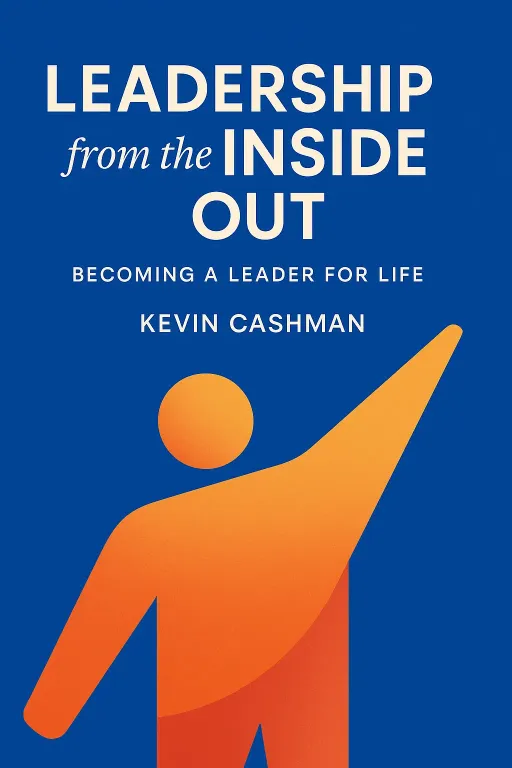
Nova: Exactly. And that is the central tension we are unpacking today. We are looking at two seminal works that redefine what it means to lead. First, we have Leadership from the Inside Out by Kevin Cashman. Cashman spent decades coaching executives, and he realized that most leaders hit a ceiling not because they lack technical skill, but because they have not done the internal work to support their external ambitions.
Atlas: I have heard that name come up in high-level management circles. He has this reputation for being the coach who tells you the uncomfortable truth you have been avoiding.
Nova: He really is. He argues that leadership is a process of self-actualization. You cannot lead others effectively if you have not first learned to lead yourself. And to pair with that, we are bringing in Primal Leadership by Daniel Goleman, Richard Boyatzis, and Annie McKee. They took the concept of emotional intelligence, which Goleman essentially popularized for the business world, and mapped it directly onto the biological reality of how leaders influence their teams. They argue that leadership is not just about logic or strategy. It is about emotional contagion.
Atlas: It sounds like we are shifting from the old-school idea of leadership as a command-and-control hierarchy to something much more biological and personal. Let’s get into the mechanics of this. If I am the architect of my own professional path, where does the construction actually begin?
The Inside-Out Paradox
SECTION
Nova: It begins by admitting that your external results are a direct reflection of your internal state. Cashman makes a very specific point that most people try to lead from the outside in. They think, if I just get the right software, the right team structure, or the right organizational chart, then I will be a great leader. They are constantly tweaking the exterior, hoping the interior will catch up.
Atlas: That resonates with anyone who has ever tried to fix a broken culture by just changing the policy handbook. It feels like rearranging deck chairs on a sinking ship. Why is it so tempting to focus on the exterior stuff?
Nova: Because it is safe. It is measurable. It is easy to point at a spreadsheet and say, this is the problem. It is much harder to look in the mirror and say, my inability to handle stress is causing my team to freeze up. Cashman’s premise is that leadership development is actually personal development in disguise. He argues that you have to master yourself before you can master the environment.
Atlas: I see the logic there. If I am an architect designing a building, I cannot just focus on the paint and the furniture. If the foundation is cracked, the whole structure is compromised. But here is the pushback—what if the environment you are in is genuinely toxic? Does internal work really matter if your boss is a nightmare or the market is crashing?
Nova: That is a fair critique. And the answer is that the internal work actually matters more in those environments. When the external environment is chaotic, your internal stability is the only thing that prevents you from being swept away. Cashman talks about personal mastery as a form of resilience. It is the difference between reacting to the chaos and responding to it.
Atlas: So, it is about creating a buffer. By doing the work on your own emotional intelligence, you are essentially building a shock absorber. When the market crashes or the deadline shifts, you are not rattled because your foundation is secure.
Nova: Precisely. You stop being a victim of your circumstances and start becoming a creator of your outcomes. Think about the most effective leaders you have ever worked with. Were they the ones who panicked when the project went sideways?
Atlas: Definitely not. They were the ones who stayed calm, asked questions, and pivoted without losing their composure. It felt like they had this quiet, unshakable confidence. I always thought that was just a personality trait. You are saying it is a trained state?
Nova: It is absolutely a trained state. Cashman emphasizes that this is not about being born with a specific temperament. It is about the intentional cultivation of self-awareness. It is the practice of noticing your own triggers, understanding your own biases, and managing your own energy. It is the difference between being a thermometer, which just reflects the temperature of the room, and a thermostat, which sets it.
Atlas: I love that distinction. A thermostat actively changes the environment. It is proactive. But let me ask you this—how does this translate to the day-to-day grind? I am a strategic learner. I want the blueprint. If I am sitting in a meeting and I feel my blood pressure rising because someone is challenging my plan, how do I apply this "inside-out" philosophy in those five seconds?
The Biology of Emotional Contagion
SECTION
Nova: That is the perfect bridge to Goleman’s work in Primal Leadership. When you feel that blood pressure rise, you are experiencing what Goleman calls an amygdala hijack. Your brain’s emotional center is bypassing your logical center. And here is the kicker—your team is watching you. They are not just listening to your words; they are scanning your face, your tone, and your body language for cues on how they should feel.
Atlas: Wait, are you saying that my team is literally picking up on my physiological state? That sounds like something out of a science fiction movie.
Nova: It is not science fiction; it is neurobiology. Goleman and his co-authors point to the discovery of mirror neurons. We are hardwired to mirror the emotions of the people around us. If you walk into a meeting with a look of irritation, your team will unconsciously mirror that irritation. They will become defensive, closed off, and less creative. Their brains are literally preparing for a fight because your brain is signaling that a fight is coming.
Atlas: That is a staggering responsibility. It means my bad mood is not just my problem. It is an organizational liability. If I am stressed, I am essentially inducing stress in everyone I lead.
Nova: Exactly. That is the contagion effect. It is why a leader’s mood is the most important piece of data in the room. You can have the best strategy in the world, the most brilliant plan, and the highest-performing team, but if your emotional contagion is negative, you will actively sabotage your own success.
Atlas: This changes how I view "executive presence." We usually think of that as wearing a nice suit or speaking with authority. But you are saying executive presence is actually emotional regulation. It is the ability to hold a space that allows others to be at their best.
Nova: That is a brilliant way to put it. Executive presence is the ability to regulate your own nervous system so that you can effectively regulate the nervous system of the group. Think about a time you worked for someone who had that ability. They didn't need to yell or micromanage. Their mere presence made you feel capable, focused, and safe.
Atlas: I remember a project lead I had years ago. Everything was falling apart, the client was furious, and we were months behind. I walked into his office, ready to quit. He just looked at me, took a breath, and said, let’s look at the data. Let’s see what we can solve right now. He didn't ignore the crisis, but he didn't feed the panic either. He was the anchor.
Nova: That is a classic example of what Goleman describes. He didn't deny the reality of the situation, but he controlled the emotional tone of the interaction. By staying calm, he allowed your brain to switch from "fight or flight" back to "problem-solving." He literally enabled you to think more clearly.
Atlas: It sounds like he was intuitively using the very thing we are discussing. He was managing his own internal state to influence the external climate. But let's look at the other side of this. If a leader is unaware of this, if they are just running on autopilot, what is the long-term impact?
Nova: The impact is a slow erosion of trust and performance. If you are constantly leaking anxiety or frustration, your team will learn to walk on eggshells. They will stop bringing you bad news, they will stop taking risks, and they will stop being honest with you. You end up in an echo chamber where you only hear what people think you want to hear. And that is the death of any strategic vision.
Atlas: That is the ultimate trap. You think you are in control because you are the boss, but you are actually blind because you have created a culture of fear. It is like trying to drive a car while wearing a blindfold. You might be the one holding the steering wheel, but you have no idea where you are going.
Nova: And that is why the "Inside Out" work is not just a nice-to-have. It is a strategic imperative. If you want a high-performing team, you have to be the most self-regulated person in the room.
The 5-Second Pause & Implementation
SECTION
Atlas: Okay, I am sold on the "why." Now let's talk about the "how." The user profile for our listeners is someone who is ambitious, analytical, and wants clarity. They want a blueprint. How do we turn this abstract concept of emotional regulation into a daily practice?
Nova: This is where we get to the "Tiny Step" we mentioned earlier. It is the five-second pause. It sounds incredibly simple, almost too simple to be effective, but it is the fulcrum upon which your leadership effectiveness turns.
Atlas: Five seconds. It sounds like such a short amount of time. But I know that when I am triggered, five seconds feels like an eternity.
Nova: That is the point. When you are triggered, your brain is demanding immediate action. It wants you to snap back, defend yourself, or issue a command. The five-second pause is the gap between the stimulus—the annoying email, the difficult feedback, the project failure—and your response. In that gap, you have the freedom to choose your behavior instead of just reacting.
Atlas: So, how do I actually execute this? Do I just sit there in silence for five seconds while everyone stares at me? That might feel a bit awkward.
Nova: You don't have to make it a performance. It is a mental shift. When you feel that trigger—the tightening in your chest, the spike in adrenaline—you acknowledge it. You say to yourself, "I am feeling defensive right now." That simple act of labeling the emotion moves the activity from your emotional center to your prefrontal cortex, which is your logical brain. It puts the brakes on the amygdala hijack.
Atlas: I see. So it is about naming the emotion to tame it. It is like creating a tiny bit of distance between me and the feeling.
Nova: Exactly. And during those five seconds, you can take a breath. You can ask yourself one question: "What is the most effective response here?" Not the most satisfying response, not the one that defends my ego, but the one that actually moves the objective forward.
Atlas: That is a powerful framing. It shifts the goal from "winning the argument" to "winning the outcome." And I imagine this gets easier with practice. It is like a muscle.
Nova: It is absolutely a muscle. And here is where the "Architect" mindset comes in. You treat this as a non-negotiable appointment with your future self. Start with low-stakes situations. Practice it when you are stuck in traffic. Practice it when a friend makes a comment that mildly annoys you. Do not wait for a high-stakes board meeting to try this for the first time.
Atlas: That is a great piece of advice. Build the habit in the shallow end before you try to swim in the deep end.
Nova: Precisely. And notice what happens to your team when you start doing this. When you stop reacting and start responding, the environment changes. You become a stabilizing force. You signal to your team that it is safe to be honest, that it is safe to fail, and that you are there to solve problems, not to assign blame.
Atlas: It really is about being the architect of the culture. You are building the foundation of safety and trust, one interaction at a time. It is not about grand gestures. It is about the consistency of your presence.
Synthesis & Takeaways
SECTION
Nova: That is the profound truth of both Cashman’s and Goleman’s work. Leadership is not a destination. It is a continuous, moment-to-moment practice of self-awareness. It is the rigorous pursuit of alignment between who you are on the inside and how you show up on the outside.
Atlas: I think the most valuable takeaway for our listeners today is that the "soft stuff" is actually the "hard stuff." Managing your own emotions, cultivating presence, practicing the pause—these are not distractions from the work. They are the work.
Nova: Well said. You are not just building a product or a company. You are building a system of influence. And that system starts with the person in the mirror. If you want your team to be resilient, you have to be resilient. If you want your team to be innovative, you have to be open. If you want your team to be honest, you have to be self-aware.
Atlas: I love that. It takes the pressure off the external checklist and puts it back on our own growth. It is empowering, really. It means the biggest lever I have for changing my team’s performance is actually within my own control.
Nova: Exactly. It is the ultimate form of strategic leverage. So, for our listeners this week, the challenge is simple but demanding. Identify your primary emotional trigger in professional settings. Maybe it is when you feel ignored in a meeting, or when someone questions your data. Whatever it is, just identify it. And then, when it happens, take that five-second pause. See what happens to the room when you choose a response instead of a reaction.
Atlas: I am going to try that. I have a meeting on Thursday that is notorious for being high-pressure. I am going to use that pause as my primary strategy.
Nova: Let us know how it goes. And remember, this is not about being perfect. It is about being intentional. You are an architect of your own growth. Build carefully.
Atlas: That is a great note to end on. Thank you for walking us through this, Nova. It is clear that the best leaders are the ones who are constantly under construction themselves.
Nova: Always. This is Aibrary. Congratulations on your growth!