The Architecture of Radical Innovation
Golden Hook & Introduction
SECTION
Nova: Forget your five-year plan. Forget your market research reports. What if the most powerful strategy session you could have, the one that truly unlocks radical innovation, began not with numbers or spreadsheets, but with one deeply human question?
Atlas: Oh, I like that. That's a bold claim right out of the gate, Nova. Because for most of us building businesses and trying to scale, strategy numbers. It’s market share, it’s projections, it’s all the tangible metrics. What kind of human question are we talking about here that overrides all of that?
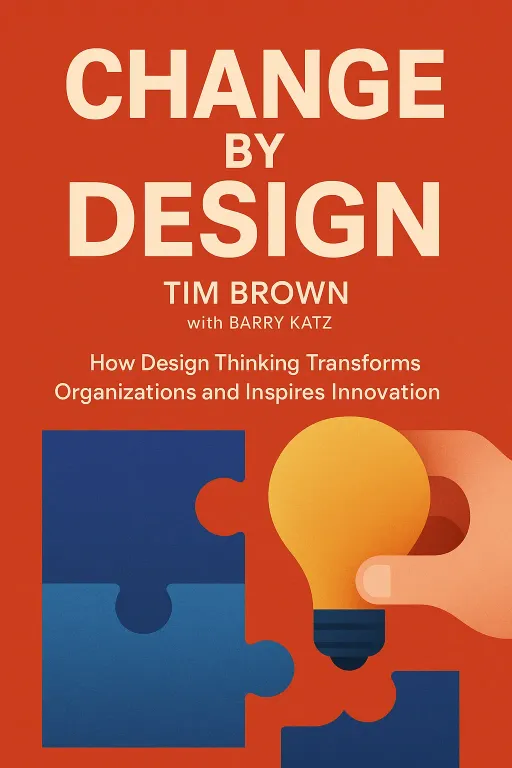
Nova: It’s a question that cuts to the core of why any business exists. It’s the kind of inquiry that Tim Brown, the CEO of the legendary design firm IDEO, championed in his groundbreaking book, "Change by Design." And it’s a question that William C. Taylor, the co-founder of Fast Company magazine, shows us how to actually on with practical discipline.
Atlas: Okay, so we’re talking about "The Architecture of Radical Innovation" here, and these two authors are really foundational. Tim Brown, from IDEO, is practically synonymous with design thinking. And Taylor, from Fast Company, you know, that magazine was always about pushing boundaries and the future of business. So, what’s the big idea connecting these two giants? How do they help us move beyond just optimizing existing systems to actually building something truly new?
Nova: Exactly. The big idea is this: in a world of constant disruption, the most successful ventures aren't just incrementally better; they're radically different. And that difference often stems from a profound understanding of human needs, not just market gaps. The core takeaway that weaves through both their work, the question you should start your next strategy session with, is: "If we were designing this business from scratch today, what human need would we solve first?"
Atlas: That makes me wonder, how does that shift from a product-first or market-first approach to a human-need-first approach? Because, honestly, for a lot of strategists and builders, the human element can feel a bit… squishy. We like clear objectives.
Nova: That’s a great way to put it. It feels squishy because we're often trained to think in terms of features, benefits, and competitive advantages. But design thinking, as Brown outlines, flips that script. It’s a human-centered approach to problem-solving that demands we balance desirability, feasibility, and viability. And desirability, that’s where the human need comes in first.
The Human-Centered Compass for Radical Innovation
SECTION
Nova: Think about it this way: most companies start with "What can we build?" or "What does the market say we should build?" Design thinking says, "Let's start with, 'What problems do real people have that we could solve, even if they don't know how to articulate the solution?'"
Atlas: So you're saying it's about deep empathy, almost like anthropology, before you even sketch a product or service?
Nova: Absolutely. It’s about observing, listening, and immersing yourself in the lives of the people you aim to serve. It's about uncovering unspoken needs, frustrations, and desires. Only then do you move to feasibility—can we build it? And viability—can we make money doing it? But desirability is the North Star.
Atlas: I can see how that would be powerful for a startup, a blank slate. But for established organizations, for builders who have efficient systems in place, who are constantly optimizing operations... this sounds like throwing out the playbook. It sounds like a massive, risky pivot. How does a company with legacy infrastructure even begin to embrace this "designing from scratch" mindset?
Nova: That's a critical point, and it’s where the radical nature of the approach truly shines. It’s not about literally tearing down your factories. It’s about a mental reframing. Let me give you a hypothetical, but very real-world scenario. Imagine a traditional banking institution. They've been optimizing for transactions, security, and financial products for decades. Their strategy sessions revolve around market share in mortgages, checking accounts, investment vehicles.
Atlas: Right. Very numbers-driven. Very product-centric.
Nova: Exactly. Now, apply the "design from scratch" question. "If we were designing banking today, what human need would we solve first?" They might realize the deepest human need isn't "a checking account." It's "financial security," "peace of mind about money," "freedom from financial stress," "the ability to achieve life goals."
Atlas: Oh, I see. That's a completely different lens. It’s not about the account; it’s about the outcome.
Nova: Precisely. And if you start there, you might not design a better checking account. You might design a completely new service that integrates budgeting, savings, investing, and even psychological support for financial anxiety. You might create an AI-driven financial coach that proactively helps you manage your money, or a community platform for shared financial goals. The "cause" is a shift in perspective—from product to human problem. The "process" involves deep ethnographic research, rapid prototyping of services, and iterative feedback. The "outcome" could be a radical new business model that disrupts traditional banking by truly serving a human need in an integrated way.
Atlas: That’s actually really inspiring. Because for someone focused on business model innovation, this provides a framework for identifying entirely new revenue streams, not just tweaking old ones. But it also sounds like it requires a certain courage to step away from what’s comfortable, what’s known. It asks you to question everything.
Nova: It absolutely does. And that’s why it’s called "radical" innovation. It’s not about making a faster horse; it’s about inventing the automobile because you understood the deeper human need for faster, more personal transportation. This thinking is what propelled companies like Apple and Airbnb. Apple didn't set out to make a better phone; they set out to create a more intuitive, human way to interact with technology. Airbnb didn't just rent rooms; they tapped into the human need for authentic travel experiences and connection.
Atlas: So, the human-centered approach is the compass, pointing us towards what truly matters. But once you have that radical idea, that amazing new solution to a deep human need, how do you actually it? How do you move from the "aha!" moment of desirability to the nuts and bolts of making it happen in a practical, scalable way? Because that's where many visionary ideas stumble.
Executing Radical Ideas with Practical Discipline
SECTION
Nova: That’s the perfect segue to William C. Taylor's insights in "Practically Radical." He argues that in a world of constant disruption, the most successful leaders aren't just visionaries; they're those who execute radical ideas with practical discipline. It's the fusion of audacious vision and grounded, relentless execution.
Atlas: That makes sense. Because I've seen plenty of brilliant ideas wither on the vine due to poor execution, or get lost in bureaucratic inertia. For a builder, the question always comes down to: how do you translate that grand vision into something actionable that can be built into an efficient system, especially when it’s something truly new?
Nova: Taylor’s work highlights leaders who understand that "radical" doesn't mean chaotic. It means being willing to challenge the status quo, yes, but then systematically building the new future. They don't just have a big idea; they have a big idea a detailed plan for how to chip away at it, piece by piece, learning at every step.
Atlas: Can you give an example? Because it feels like "radical" and "practical discipline" are almost at odds sometimes.
Nova: Let’s imagine a large, established manufacturing company. They’ve been making the same product for decades, optimizing for cost and efficiency. Their radical idea, born from design thinking, is to pivot to a personalized, on-demand manufacturing model, where customers co-create products that are then 3D printed locally. This is a massive shift from mass production.
Atlas: Whoa, that’s radical. That impacts everything from supply chain to factory floor to customer service. How would a leader even begin to execute that without completely collapsing the existing business?
Nova: A leader with practical discipline wouldn't try to flip the entire company overnight. The "cause" is the radical vision for personalized production. The "process" involves breaking it down. They might start with a small, experimental unit, a "skunkworks" team, completely separated from the main operation. This team would focus on one product line, one geographical market, or even just one component of the new process. They'd iterate rapidly, learn from failures, and demonstrate small, tangible successes. They’d build new systems for design, customer interaction, and localized production, refining them constantly.
Atlas: So it's about creating a microcosm of the future within the present, and proving it out before scaling? That sounds like iterative learning in action, which is a key growth recommendation for strategists.
Nova: Exactly. This leader would also be incredibly disciplined about communication, celebrating early wins, and addressing resistance head-on. They wouldn't just announce the vision; they'd live it, model it, and provide the resources and psychological safety for their teams to experiment and fail forward. The outcome is a gradual, yet profound, transformation of the business, proving that radical change can be built with methodical steps. It's about building resilient organizations that can embrace continuous evolution.
Atlas: That’s a fantastic distinction. It’s not just having the vision, but having the strategic foresight to implement it in a way that doesn't destabilize the whole ship. It's about designing the future of commerce, as our listener profile suggests, but doing it with a blueprint, not just a dream. It addresses the builder's need for efficient systems and the strategist's need for scalable success.
Nova: Right. It’s the difference between a brilliant inventor who can imagine a flying car, and the Elon Musk or Henry Ford who can actually mobilize the resources, build the factories, and create the infrastructure to make it a reality. Taylor emphasizes that true radical leaders are also incredibly pragmatic. They know that a vision without a path is just a hallucination.
Atlas: So, it's about identifying that deep human need, crafting a desirable solution, and then having the grit and the practical steps to actually build it. That's a powerful combination.
Synthesis & Takeaways
SECTION
Nova: It truly is. When we talk about "The Architecture of Radical Innovation," what we're really discussing is the blueprint for building a future that genuinely serves humanity while also being sustainable and profitable. It starts with Tim Brown's human-centered design thinking—asking what human need you'd solve first if you were starting from scratch. That's your compass.
Atlas: And then, it’s about taking that compass bearing and actually moving forward. William C. Taylor’s "Practically Radical" gives us the framework for that movement. It's about the leader who doesn't just dream big, but builds smart, iteratively, and with unwavering discipline, transforming those radical ideas into tangible, scalable realities.
Nova: It’s the fusion of profound empathy and relentless execution. It’s understanding that the biggest disruptions come from connecting deeply with human experience, and then having the practical courage to build something entirely new around that connection. For anyone driving growth, designing business models, or building resilient organizations, this is the ultimate strategic challenge.
Atlas: That makes me reflect on how often we get caught in the trap of optimizing what already exists, instead of stepping back and asking that fundamental question: "What human need would we solve first?" It’s an invitation to embrace iterative learning, to schedule that 30 minutes weekly for deep work on a strategic challenge, and really think about what's truly essential.
Nova: Exactly. It's a call to look beyond the immediate competitive landscape and imagine a world where your business fundamentally improves lives. This isn't just about business success; it's about designing a better future.
Atlas: So, for all our listeners out there striving for scalable success, for those building efficient systems and driving growth, take that question to heart. What human need are you truly solving?
Nova: And how will you put the practical discipline behind that radical vision?
Atlas: This is Aibrary. Congratulations on your growth!