The 'Data Deluge' Trap: Why You Need a Sensemaking Framework.
Golden Hook & Introduction
SECTION
Nova: You know that feeling when you just “know” something? That gut instinct that feels so right, so immediate, almost undeniable? What if I told you that very feeling is often leading you down the wrong path, subtly sabotaging your best intentions and even your most important decisions?
Atlas: Oh man, that’s going to resonate with anyone who’s ever made a snap judgment that backfired, or felt a strong intuition only to find out the facts told a completely different story. It’s like our brains are playing tricks on us!
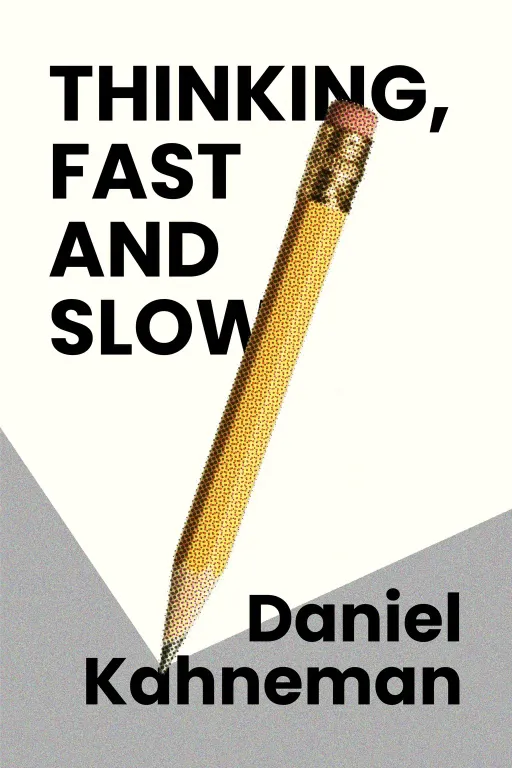
Nova: Exactly! And today, we’re dissecting the brilliant work of Daniel Kahneman, particularly his groundbreaking book, Thinking, Fast and Slow, and his later collaboration, Noise, with Olivier Sibony and Cass R. Sunstein. Kahneman, a Nobel laureate in Economic Sciences despite being a psychologist, completely revolutionized our understanding of human judgment and decision-making, showing how our minds are wired for both brilliance and systematic error.
Atlas: Wow, a psychologist winning the Nobel in economics? That’s already telling me something about how deeply these ideas cut across disciplines. It’s not just about individual psychology then, is it? It sounds like it influences entire systems.
Nova: Absolutely. And that’s our jumping-off point. Kahneman’s work reveals that our minds operate with two distinct systems, and understanding them is the first step to making better choices.
Deep Dive into Core Topic 1: The Invisible Hand of Intuition: Decoding System 1 Thinking
SECTION
Nova: So, let’s talk about these two systems. He calls them System 1 and System 2. System 1 is our fast, intuitive, emotional, almost automatic thinking. It’s what helps you recognize a friend’s face or react to a sudden noise. System 2 is slow, deliberate, effortful, and logical. It’s what you use to solve a complex math problem or plan a trip.
Atlas: Okay, so System 1 is like the autopilot, and System 2 is when we’re consciously flying the plane. I can see that. But what’s the problem? Isn’t autopilot good for efficiency?
Nova: It is, and System 1 is incredibly efficient. The problem arises because System 1 is also prone to predictable biases, and it often jumps to conclusions without involving System 2. Kahneman illustrates this beautifully with what’s known as the “bat and ball problem.” Are you ready for a quick test, Atlas?
Atlas: Hit me with it. I’m always ready for a mental workout.
Nova: A bat and a ball cost $1.10 in total. The bat costs $1 more than the ball. How much does the ball cost?
Atlas: Okay, my System 1 is screaming "10 cents!" That’s what it feels like it should be.
Nova: And that’s the classic System 1 response! It’s quick, it’s intuitive, and it’s confidently wrong. If the ball cost 10 cents, and the bat cost $1 more, the bat would be $1.10, making the total $1.20. The correct answer is 5 cents for the ball, which means the bat is $1.05, totaling $1.10.
Atlas: Whoa. That’s incredible. My brain literally just short-circuited. I felt so sure! So, that’s System 1 in action, just leaping to the easy answer. But how does this play out in, say, a high-pressure business meeting or a quick personal decision? It’s not always about math puzzles.
Nova: Exactly. System 1’s quick judgments extend far beyond simple arithmetic. Think about judging a job candidate based on their handshake and initial impression, rather than their full resume and interview performance. Or making a snap decision about a new investment based on a flashy presentation, disregarding deeper due diligence. Our System 1 loves a coherent story, even if it’s incomplete or inaccurate. It’s why we often fall prey to the halo effect – if someone is good at one thing, we assume they’re good at everything.
Atlas: I totally know that feeling! It’s like when you meet someone charismatic, and you automatically assume they’re also intelligent and trustworthy, even if you have no real evidence. So, our gut feelings, while powerful, can be incredibly misleading. It’s not that intuition is bad, but it needs a reality check from System 2.
Nova: Precisely. And this leads us to an even broader, more insidious problem. It’s not just that our individual brains are wired for these biases. What happens when those biases, and a whole lot of other factors, create a cacophony of inconsistent decisions across entire organizations? That’s where 'noise' comes in.
Deep Dive into Core Topic 2: The Echo Chamber of Error: Understanding 'Noise' in Judgment
SECTION
Nova: So, building on Kahneman’s insights into individual biases, his later work with Olivier Sibony and Cass R. Sunstein in "Noise" introduces a different, yet equally damaging, problem: unwanted variability in judgments. Imagine a group of people, all trying to make an objective decision, but arriving at wildly different answers. That variation, that scatter in judgments, is what they call ‘noise.’
Atlas: So, it's not just about being unfair because of prejudice or a specific bias, but just... random inconsistency? That sounds almost more insidious because it’s harder to pinpoint. I mean, if it's just 'random,' how can you even fix it?
Nova: That’s the critical insight. Noise isn't bias. Bias is a systematic deviation in one direction – like consistently overestimating risks. Noise is variability. Think about two different doctors diagnosing the same patient with the same symptoms, but coming to different conclusions. Or two judges giving vastly different sentences for the exact same crime committed by similar offenders. This isn't necessarily due to overt prejudice, but rather to a host of subtle, often unconscious factors – mood, the weather, what they had for breakfast.
Atlas: That’s a bit like how two different film critics review the same movie and have completely opposite opinions, even if they both claim to be objective. Or how two different hiring managers interview the same candidate and one thinks they’re brilliant, and the other thinks they’re completely unsuitable.
Nova: Exactly! The book highlights truly staggering examples. They cite studies showing how much 'noise' exists in fields like insurance underwriting, forensic science, and even medical diagnostics. For instance, judges often give harsher sentences earlier in the day and after a lunch break, compared to just before a break when they might be feeling fatigued or hungry. This isn't about bias against a specific group; it's just random, unwanted variability in their judgment.
Atlas: That’s such a hopeful way to look at it – that we’re not necessarily prejudiced, just... inconsistent. But that still means unfair outcomes for real people. How does this 'noise' impact our daily lives beyond courtrooms and boardrooms? We’re not all judges or doctors.
Nova: It’s everywhere once you start looking. Think about performance reviews in your workplace. Are all managers applying the same criteria consistently, or is there 'noise' in how they evaluate? Are two different customer service representatives giving the same advice for the same problem? Even in our personal lives, the 'noise' in our own judgments can lead to inconsistencies. One day you’re motivated to tackle a big project, the next you’re procrastinating, even though the task hasn’t changed. Our decision-making isn’t a steady line; it’s a jagged, noisy one.
Atlas: That makes me wonder about all the times I’ve made a decision based on how I felt in that exact moment, rather than on a consistent set of principles. The cost of this noise, both individually and organizationally, must be immense.
Synthesis & Takeaways
SECTION
Nova: It is. So, Atlas, we’ve seen how our intuitive minds can mislead us with System 1 biases, and how that, combined with other factors, creates this pervasive 'noise' in judgments. The takeaway isn't that humans are inherently flawed beyond repair, but that relying solely on unexamined, unassisted human judgment is a trap. The 'data deluge' isn't just about too much information; it's about navigating that information with fallible tools.
Atlas: So, if our brains are wired for these traps, and noise is everywhere, what’s a curious learner like our audience to do? How do we build a 'sensemaking framework' to navigate this data deluge and avoid these pitfalls? It sounds like we need a guidebook for our own brains.
Nova: We absolutely do. The solution isn't to eliminate System 1 – that's impossible and undesirable. But it is to recognize its limitations and to actively implement System 2 processes. This means using systematic frameworks: checklists, algorithms, structured decision-making processes, even simply taking a moment to pause and ask "What am I missing here?" when your gut feels too certain. It’s about creating environments and processes that reduce both bias and noise, leading to more robust, fairer, and ultimately better decisions.
Atlas: That’s actually really inspiring. It’s not about being perfectly rational all the time, but about building better habits and systems around our natural human tendencies. It's about consciously designing our decision-making, rather than just letting it happen.
Nova: Precisely. The first step to making better choices isn't about having perfect judgment; it’s about recognizing how imperfect our judgment naturally is. Where in your own life might System 1 thinking or 'noise' be subtly influencing important outcomes? It’s a question worth pondering.
Atlas: And a question that will definitely spark some deep reflection for our listeners. Thanks for shedding light on this, Nova.
Nova: My pleasure, Atlas. This is Aibrary. Congratulations on your growth!