Mastering Decision-Making for Strategic Advantage
Golden Hook & Introduction
SECTION
Nova: Alright, Atlas, quick game. I give you a decision-making scenario, you give me the absolute worst possible way to approach it. Ready?
Atlas: Oh, I love this game, Nova. My specialty is chaos. Hit me.
Nova: You're launching a groundbreaking new product, one that could redefine your entire industry. How do you decide its core features?
Atlas: Easy. You gather all your loudest, most opinionated executives in a room, give them two hours, and then go with whatever the highest-paid person shouts last. Bonus points if you ignore all data.
Nova: Perfect! And why, Atlas, is that such a spectacularly terrible idea?
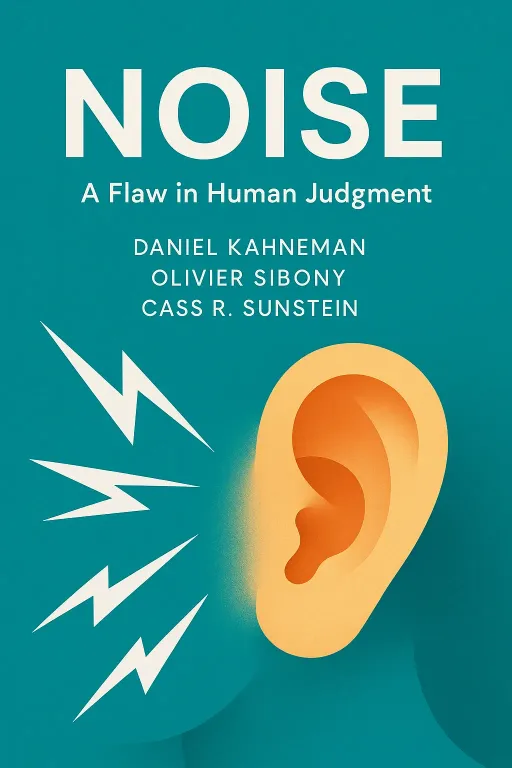
Atlas: Because it’s a recipe for what Daniel Kahneman and his co-authors, Olivier Sibony and Cass R. Sunstein, brilliantly dissect in their book, "Noise: A Flaw in Human Judgment." It’s a decision-making disaster waiting to happen, riddled with inconsistencies and hidden variability.
Nova: Exactly! Today, we're diving deep into "Noise," and also "Decisive: How to Make Better Choices in Life and Work" by Chip and Dan Heath. We're exploring why our best intentions often lead to bad decisions, and how to build systems that cut through the chaos.
Atlas: That title alone, "Noise: A Flaw in Human Judgment," sounds like it’s going to resonate with anyone who’s ever sat through a meeting where the consensus felt… arbitrary. Kahneman, of course, is a Nobel laureate, famed for his work on cognitive biases. It’s fascinating how he pivoted here to focus on noise, which he argues is often an even bigger culprit in poor judgment.
Nova: It’s a profound shift, really. Most of us are familiar with cognitive biases – those predictable, systematic errors in our thinking. But Kahneman, Sibony, and Sunstein argue that "noise"—the unwanted variability in judgments—is often a far costlier and more insidious problem, yet it's frequently overlooked.
Atlas: So, you’re saying it’s not just about our blind spots, but also about how inconsistently we apply our judgment, even when we think we’re being rational? That makes me wonder, Nova, for our listeners who are strategic thinkers, always looking at the big picture, how does this "noise" manifest in their world?
The Silent Killer of Good Decisions
SECTION
Nova: Think about it this way. Imagine two different insurance adjusters evaluating identical claims. If one consistently awards more than the other, that difference isn't bias; it's noise. Or two doctors diagnosing the same patient with similar symptoms, but coming to different conclusions. That variability, that spread in outcomes, is noise.
Atlas: That’s actually really inspiring. I always thought if you just identified your biases, you were halfway there. But this suggests there’s a whole other layer of inconsistency we’re not even aware of. So, how does "Noise" differentiate itself from bias?
Nova: It's a crucial distinction. Bias is a systematic deviation in one direction. Think of a judge who is consistently harsher on certain types of defendants. That's a bias. Noise, on the other hand, is random scatter. It's when the same judge gives vastly different sentences for similar crimes on different days, perhaps due to factors like their mood, the weather, or even whether they've had lunch. The book highlights that even highly trained professionals, like underwriters, forensic scientists, and even supreme court justices, exhibit shocking levels of noise in their judgments.
Atlas: Wow, that’s kind of heartbreaking. So, we're not just fighting predictable errors, but also this insidious, unpredictable variability. I imagine a lot of our listeners, the architects who build systems and legacies, often trust their intuition, believing it guides their vision. How does "Noise" challenge that?
Nova: It’s a direct challenge. The authors demonstrate that what we perceive as "expert judgment" is often riddled with noise. Our intuition, while valuable for generating hypotheses, is a terrible tool for consistent evaluation. The book is filled with examples of organizations that, when they actually measured the variability in their professionals' judgments, were absolutely stunned by the results. The differences were far greater than anyone anticipated.
Atlas: So basically you’re saying that the more we rely on unassisted human judgment for critical decisions, the more we're prone to this "noise" that can lead to inconsistent and unfair outcomes. That's a powerful insight, especially for those driven by impact and sustainable growth. It means our decisions aren't just suboptimal; they're inconsistent, creating a ripple effect.
Nova: Exactly. And this is where the Heath brothers' "Decisive" comes in as a perfect complement. They introduce the WRAP framework, which is a practical antidote to both bias and noise. The "W" stands for "Widen your options." Most people fall into the trap of narrow framing – "Should I do A or B?" The Heath brothers argue that this is a false dilemma. You need to actively seek out more choices, more alternatives.
Atlas: That makes sense. We often get stuck in a binary choice when there are probably dozens of other options we haven't even considered. So, like, expanding beyond "should I hire this candidate or that one" to "what if we restructured the team entirely, or outsourced this role?"
Nova: Precisely. They give an incredible example of a company, a small business that manufactured playground equipment. They were struggling, couldn't figure out how to grow. Their initial options were "cut costs" or "try to sell more." Both felt like dead ends. But by widening their options, they looked at other companies succeeding in related fields. They realized they could license their designs to larger manufacturers, effectively becoming a design house rather than a full-scale manufacturer. It was a completely different path they hadn't considered.
Atlas: That’s a great example. It highlights how important it is to step back and not get tunnel-visioned, especially when the stakes are high. It’s like, for a visionary trying to build a legacy, just focusing on two paths feels limiting.
Designing Systems for Noise Reduction
SECTION
Nova: Now, moving to the "R" in WRAP: "Reality-test your assumptions." This is where you actively challenge your beliefs. Don't just gather information that confirms what you already suspect. Instead, seek out disconfirming evidence. What would have to be true for your decision to be wrong?
Atlas: That sounds like a powerful way to combat both bias and noise. If you're only looking for evidence that supports your initial idea, you're not just biased, you're also likely to miss critical information that could lead to a better, more consistent decision.
Nova: The Heath brothers tell the story of a CEO who was convinced his new software product was a guaranteed hit. He had all his engineers and sales team telling him it was brilliant. But he forced them to conduct a "pre-mortem." He asked them to imagine it was a year later, and the product had failed spectacularly. What went wrong? This exercise revealed critical flaws in their assumptions about market adoption and technical scalability that had been completely overlooked because everyone was so enthusiastic.
Atlas: That’s such a smart technique! It’s like a controlled way to introduce skepticism without being negative. For someone who values deep understanding, that kind of rigorous testing of assumptions is gold. But wait, what about the "A" in WRAP?
Nova: The "A" is for "Attain distance before deciding." This is about stepping back from short-term emotions. When we're in the thick of a decision, especially a high-stakes one, our emotions can cloud our judgment. The book suggests several tactics, like the "10/10/10 rule": How will you feel about this decision 10 minutes from now? 10 months from now? 10 years from now?
Atlas: That’s a bit like taking the long view, which resonates with the strategic thinkers among our listeners. It reminds me of the importance of foresight. It’s tempting to react immediately, but true impact often comes from measured, long-term thinking.
Nova: Exactly. And the final "P" is "Prepare to be wrong." Even after all that careful consideration, things can still go sideways. So, you need to have contingency plans. What are the tripwires that would tell you your decision is going off track? What's your "undo" button?
Atlas: So, it’s about building resilience into the decision-making process itself. Instead of just hoping for the best, you’re actively planning for potential failure, which can actually de-risk the whole venture. That sounds like something an architect would appreciate—building in structural integrity from the start.
Nova: Absolutely. And when you combine the insights from "Noise" with the WRAP framework, you get a powerful system. "Noise" makes you aware of the unwanted variability that creeps into judgment, even among experts. WRAP gives you the practical tools to systematically reduce both bias and noise. It’s about moving from intuitive, inconsistent decisions to structured, robust ones.
Synthesis & Takeaways
SECTION
Atlas: So, what I'm hearing is that mastering decision-making isn't just about being smart or having good intentions. It's about designing systems that safeguard against the inherent flaws in human judgment. It’s about recognizing that our intuition, while powerful, needs to be tempered with structured processes.
Nova: Precisely. The core of our podcast today is really an exploration of how we can make our strategic decisions more consistent, more fair, and ultimately, more effective. It’s a call to move beyond merely identifying biases to actively reducing the "noise" that can derail even the best-laid plans. For our listeners who are visionaries, architects, and cultivators, this isn't just about making better individual choices; it's about building a culture of consistent, high-quality decision-making that underpins sustainable growth and meaningful connections.
Atlas: That’s actually a really inspiring thought, Nova. It’s not just about avoiding failure, but about actively cultivating an environment where sound judgment can thrive. It makes me wonder, how many brilliant ideas have been lost, not because they were bad, but because the decision-making process around them was too noisy?
Nova: Countless, I'd wager. But the good news is, armed with insights from "Noise" and tools like the WRAP framework, we can start to build those better systems. It’s about intentionality, about understanding the landscape of human judgment, and then designing processes that lead to more consistent, more equitable, and ultimately, more successful outcomes.
Atlas: Absolutely. For anyone looking to refine their core features, validate their market, or build a company culture that attracts and retains top talent, reducing noise and making decisive choices is paramount. It's the foundation for any legacy.
Nova: Well said, Atlas. And that’s a wrap on another insightful episode. This is Aibrary. Congratulations on your growth!