Pragmatic Leadership: Cutting Through the Noise
Golden Hook & Introduction
SECTION
Nova: Atlas, I've got a challenge for you today. You’re a sharp, strategic thinker. Define "leadership" for me. But here’s the catch: no corporate buzzwords. No "synergy," no "leveraging," no "paradigm shifts." Just tell me, simply, what is leadership?
Atlas: Oh, man. That’s… that’s harder than it sounds, isn’t it? My first instinct is to say something about guiding a team towards a common objective, fostering growth, empowering individuals… but even feels like I'm tiptoeing on the edge of a jargon cliff. It’s like trying to describe water without saying "wet."
Nova: Exactly! And that struggle, that innate tendency to complicate something that should be fundamentally simple, is precisely what we’re tackling today. We're diving into two incredibly insightful books that aim to strip away the fluff and give us a clear, actionable path to effective leadership.
Atlas: I’m curious. Because so many leaders, especially those driven by impact and developing others, often feel like they need to speak in a certain way, or follow complex frameworks, to be taken seriously.
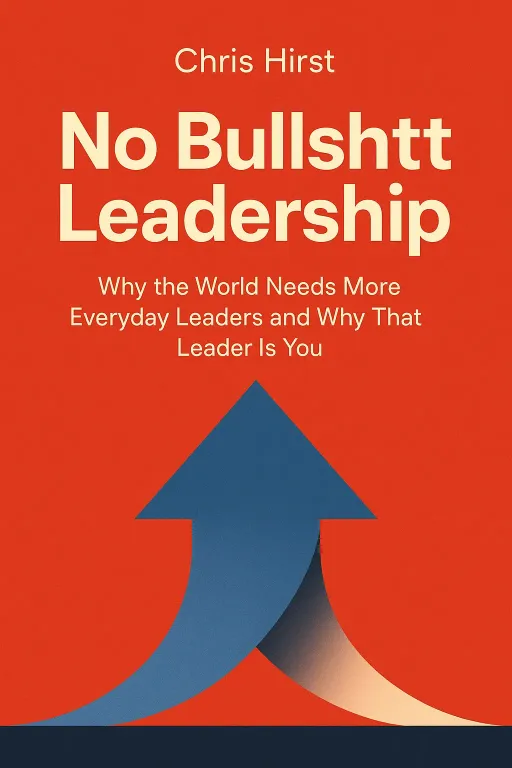
Nova: Absolutely. Our first guide is Chris Hirst’s powerful book, "No Bullsh*t Leadership." Hirst, a former CEO of Havas UK and Europe, spent decades navigating the often-jargon-heavy world of advertising. His book is a direct, no-nonsense distillation of his real-world experience, offering a candid critique of modern corporate speak and a plea for authenticity and decisiveness. He basically says, "Stop overthinking it, and just lead."
Atlas: That sounds refreshing. I imagine a lot of our listeners, who are constantly seeking clarity and direct impact, would resonate with that. What’s the other side of this leadership coin we’re flipping today?
Nova: Complementing Hirst’s directness, we have Ken Blanchard and Randy Conley’s "Simple Truths of Leadership." Ken Blanchard, of course, is a legendary name in leadership, famed for "The One Minute Manager." This book, co-authored with Randy Conley, who is the Chief Trust Officer at The Ken Blanchard Companies, distills decades of research into easily applicable principles. It’s all about servant leadership, trust, and the profound importance of relationships. So, on one hand, we have the courageous directness, and on the other, the empathetic simplicity.
Atlas: That’s a fascinating pairing. It suggests that true leadership isn't just about being tough or just being nice, but finding a way to integrate both.
Cutting Through the Noise: The Power of Directness
SECTION
Nova: Precisely. Let's start with Hirst and this idea of cutting through the noise. His core message is that effective leadership often comes down to simple, direct actions and crystal-clear communication, rather than complex theories or corporate jargon. He champions authenticity, decisiveness, and courage.
Atlas: Okay, but how does a leader actually this? In many organizations, there’s an expectation of a certain level of formality, of strategic language. How do you avoid being perceived as blunt or even insensitive when you’re trying to be "no-bullshit"?
Nova: That’s a brilliant question, and it’s where courage comes in. Hirst isn't advocating for rudeness; he's advocating for clarity. He points out that often, what we call "complexity" is just a smokescreen for indecision or a lack of clear thought. He gives an example of a senior leader who was constantly asking for more data, more reports, more "strategic alignment" before making any move. The team was drowning in paperwork, waiting for directives that never came.
Atlas: I know that feeling. It’s like being stuck in traffic, but the person in front just keeps checking their map instead of driving.
Nova: Exactly! Hirst’s approach was to challenge that leader directly. Not aggressively, but with a question like, "What is the we need to decide right now to move forward, and what’s preventing us from deciding it?" He helped that leader see that the "bullshit" wasn't malicious; it was a habit, a fear of making the wrong choice, masked by layers of process. By stripping away the layers, they realized the core decision was actually quite simple.
Atlas: So, it’s about identifying the real problem underneath the process. That makes me wonder, for our listeners who are managing high-pressure teams and trying to foster growth, how does this translate into everyday interactions? What's the first step to stripping away the jargon and overcomplication?
Nova: Hirst emphasizes two things. First, constantly ask "why." Not in an accusatory way, but to get to the root of a request or a problem. "Why do we need this report? What decision will it inform?" If the answer isn't clear, then the report is probably unnecessary. Second, communicate in plain language. If you can't explain your strategy to someone outside your industry in a few simple sentences, it’s probably not clear enough to your own team. It takes courage to simplify, because simplification often exposes potential flaws or risks, but it also enables decisive action.
Atlas: That makes sense. It’s about having the courage to be vulnerable with simplicity, rather than hiding behind complexity. It’s a strategic choice, not just a personality trait.
Nova: That’s a perfect way to put it. It’s a strategic choice that leaders make to empower their teams, rather than confuse them.
Building Bridges: The Foundation of Empathetic Simplicity
SECTION
Nova: Now, while Hirst tells us to cut the noise and get to the point, Blanchard and Conley show us what essential, human elements we need to cultivate in that clear space. Their book, "Simple Truths of Leadership," focuses on building bridges through empathetic simplicity.
Atlas: "Simple truths." That sounds almost too easy in a world of complex, globalized teams and rapid technological change. What’s the 'deep work' behind that simplicity, especially for leaders who are driven by developing others and aligning their vision with action?
Nova: That’s the critical insight. "Simple" doesn’t mean "easy." It means fundamental. They distill decades of research into principles like servant leadership, trust, and the importance of relationships. For them, true leadership isn't about power; it's about service. It's about genuinely caring for your team and helping them succeed.
Atlas: That’s actually really inspiring. I imagine a lot of our listeners who are focused on cultivating their team’s growth would find that resonant. But how do you put that into practice? What does "servant leadership" look like when you still have targets to hit and tough decisions to make?
Nova: They offer a powerful framework. Think about a manager who, instead of dictating tasks, spent significant time understanding each team member's aspirations, challenges, and strengths. This manager then actively removed obstacles for them, provided resources, and genuinely delegated decision-making authority when appropriate. It wasn't about being their friend; it was about being their most dedicated supporter.
Atlas: So, it’s not just about being nice or hands-off. It’s about intentional actions that build trust and empower. It requires active listening and a willingness to cede some control, which is often counter-intuitive for leaders.
Nova: Exactly. They emphasize that trust is built on two pillars: competence and character. Your team needs to trust that you know what you're doing, but also that you have their best interests at heart. A leader who embodies empathetic simplicity doesn't shy away from setting high standards, but they do it in a way that communicates belief in their team's ability to meet those standards, and offers support to get there.
Atlas: I see. So, the "simple truths" aren't simple to. They require a consistent, authentic commitment to transparency, honesty, and genuinely caring for the people you lead. It’s about creating an environment where people feel safe to be direct, because they trust you.
Nova: That's the perfect connection. Hirst gives us the "courageous directness" to cut through the noise, and Blanchard and Conley provide the "empathetic simplicity" that creates the psychological safety and trust needed for that directness to be productive, not destructive. One without the other is incomplete.
Atlas: That’s a powerful synergy. You can be direct all you want, but if your team doesn't trust your intentions, it's just perceived as being a bully. And you can be empathetic all you want, but if you can't make a clear decision, nothing gets done.
Nova: Precisely. It’s a delicate balance, but it’s what truly pragmatic leadership looks like. It’s about fostering clearer communication stronger team bonds. It’s about leading with both your head and your heart, but always with an eye towards impact.
Synthesis & Takeaways
SECTION
Nova: So, we’ve got Hirst telling us to cut the crap, to be authentic, decisive, and courageous in our communication. And then we have Blanchard and Conley reminding us to build on a foundation of trust, relationships, and servant leadership through empathetic simplicity. It's the courageous directness meeting empathetic simplicity.
Atlas: That's actually really profound. It’s about being clear and decisive, but doing it with a foundation of genuine care. Not easy, but incredibly impactful for anyone looking to develop their team and align their vision with action. It highlights that leadership isn't about being the smartest person in the room, but about creating the conditions for everyone to be their best.
Nova: Indeed. Our "Tiny Step" for this week is to identify one area where you can cut through 'bullshit' or simplify a process, applying a direct, honest approach as suggested by Hirst. Then, reflect on how you can build trust and foster stronger relationships with your team using one of Blanchard and Conley's 'simple truths.'
Atlas: And the deeper question for all of us is: How can you consistently embody both courageous directness and empathetic simplicity in your daily leadership interactions to foster clearer communication and stronger team bonds? It's a continuous journey, not a destination.
Nova: It is. And for our listeners who are always striving for self-growth and impact, this combination offers a powerful framework. It’s about leading with clarity, purpose, and genuine connection.
Atlas: It’s a reminder that sometimes, the most sophisticated solutions are found in the most straightforward approaches. It challenges us to look beyond the surface and commit to the foundational work.
Nova: Absolutely. Thank you for joining us on this exploration of pragmatic leadership. We hope it sparks some powerful reflection and action in your own journey.
Nova: This is Aibrary. Congratulations on your growth!