The Architecture of Organizational Health
Golden Hook & Introduction
SECTION
Nova: Atlas, quick game. I'll throw out a term, you give me the first thing that comes to mind, no filter. Ready?
Atlas: Oh, I like that. My mind is always a no-filter zone, Nova. Hit me.
Nova: "Competitive advantage."
Atlas: Oh, that's easy. Disruptive tech. Market share. Unfair pricing. Maybe a secret sauce no one else knows.
Nova: Interesting. All very... external. What if I told you the ultimate competitive advantage isn't found in any of those places? What if it's actually your organization, hiding in plain sight?
Atlas: Wait, are you saying it's not about the next big innovation or crushing the competition, but about... internal harmony? That sounds a bit out there for anyone trying to build efficient systems and scale growth.
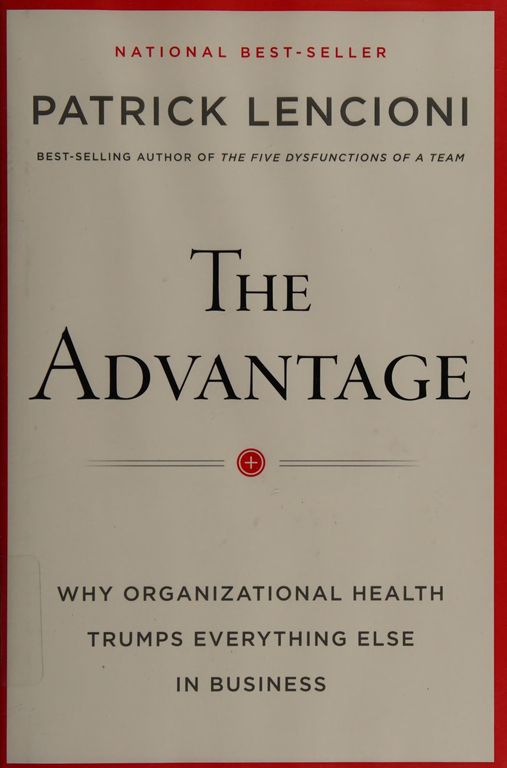
Nova: It sounds counterintuitive, doesn't it? But that's exactly the revolutionary idea Patrick Lencioni lays out in his seminal work, "The Advantage." Lencioni, famous for his accessible business fables that distill complex organizational dynamics into clear, actionable insights, argues that organizational health is the ultimate differentiator.
Atlas: Okay, so Lencioni is saying we should focus on "health." But how do we actually that? Is it just about good vibes and team-building exercises? Because for someone focused on market entry and designing the future of commerce, "good vibes" isn't a strategy.
Nova: Exactly, and that's where Liz Wiseman's brilliant research comes in. Her book, "Multipliers," provides the operational blueprint. Wiseman, whose data-driven insights have transformed how leaders view talent, shows us how certain leaders amplify intelligence and others diminish it. Together, these two books offer a profound one-two punch for anyone serious about resilient, scalable organizations.
The Foundation of Organizational Health
SECTION
Nova: So, let's unpack Lencioni's bold claim: organizational health over organizational intelligence. Most leaders, especially those with a sharp strategic mind, are obsessed with being smart. They focus on strategy, marketing, finance, technology. The "hard" stuff.
Atlas: Right, that's the tangible, measurable stuff. You can analyze business models, optimize operations, build efficient systems. That's clarity. That's what drives growth.
Nova: And Lencioni doesn't say those things aren't important. But he argues that an organization can have the smartest strategy, the most brilliant people, the best product, but if it's unhealthy—meaning high in politics and low in alignment—it will consistently underperform. Think of it like a Formula 1 car with a brilliant engine but a rusty chassis and a steering wheel that only turns left.
Atlas: That’s a great analogy. So, for our listeners who are builders and visionaries, how does "minimal politics" actually translate into a functional, scalable system? It’s not just about people being nice, is it?
Nova: No, it's far more profound. Minimal politics means people aren't wasting energy on self-preservation, turf wars, or trying to look good. They're focused entirely on the collective good of the organization. And high alignment means everyone, from the top down, understands and is committed to the same goals, values, and methods. It’s not about blind obedience; it’s about shared conviction.
Atlas: I can definitely relate. I imagine a lot of our listeners building high-growth companies have experienced the drag of internal friction. It feels like throwing sand in the gears of a finely tuned machine.
Nova: Precisely! Lencioni gives an example of a company that had all the "smart" elements in place – innovative products, strong market position, talented executives. But their leadership team was riddled with politics. People were more concerned with protecting their own departments, withholding information, and subtly undermining peers.
Atlas: So, it wasn't a lack of talent, it was a lack of cohesion.
Nova: Exactly. This internal strife meant decisions were slow, initiatives got bogged down, and the best ideas often died in committee because someone felt threatened. The company was constantly fighting itself, bleeding energy and resources. Compare that to a competitor, perhaps not as "brilliant" on paper, but with a leadership team that was completely aligned and transparent. They made decisions faster, executed flawlessly, and adapted to market changes with agility, simply because their internal systems weren't clogged with ego and fear.
Atlas: That makes perfect sense. It’s about operational efficiency at a human level. You can optimize processes all day, but if the people operating them are in conflict, it’s all for naught. What really matters is that fluid, unimpeded flow of information and decision-making.
Leaders as Multipliers
SECTION
Nova: This idea of alignment and minimal politics naturally brings us to leaders actually cultivate that environment. That's where Liz Wiseman's work on "Multipliers" becomes absolutely critical. She argues that leaders aren't just managers; they are either 'Multipliers' or 'Diminishers.'
Atlas: Okay, so you’re saying every leader falls into one of these two camps? That’s a pretty stark dichotomy. I imagine a lot of our listeners building efficient systems might see 'Diminishers' as just 'decisive leaders' who get things done. What's the subtle but crucial difference, especially when you're trying to drive growth and move fast?
Nova: It’s a fantastic question, Atlas, because it’s not about being soft or indecisive. A Diminisher isn't necessarily a tyrant. Often, they're brilliant, well-intentioned leaders who, perhaps unknowingly, stifle the intelligence and capability of the people around them. They might be the 'Know-It-All,' who always has the answer, or the 'Idea Generator,' who showers the team with so many ideas no one else can get a word in.
Atlas: That sounds like a fast track to getting things done, though. If you're the smartest person in the room, why you just provide the solution?
Nova: Because you're leaving 80% of the collective brainpower on the table! Wiseman’s research shows Multipliers do the opposite. They are genius makers. They don't just use their own intelligence; they actively work to extract and amplify the intelligence of everyone on their team. They see genius in others and create an environment where that genius can flourish.
Atlas: So, it's not about being the smartest person, it's about making smarter. That’s a powerful distinction for anyone focused on scalable success. How do they actually do that?
Nova: Wiseman identifies five disciplines of Multipliers. Think of them as behaviors that cultivate Lencioni's organizational health. For instance, 'The Challenger' doesn't just give answers, they ask bold questions that force people to think bigger and find their own solutions. 'The Debater' fosters intense debate to ensure the best ideas win, not just the loudest voice. And 'The Investor' gives people ownership and resources, stepping back to let them learn and grow.
Atlas: I can see how that would lead to higher alignment naturally. If people are invested in the solution because they helped create it, they're far more likely to commit.
Nova: Exactly. Imagine a project meeting. A Diminisher might walk in, announce the solution they've already formulated, assign tasks, and expect execution. The team complies, but they feel disengaged, perhaps even resentful. Their ideas were never invited, their intelligence never tapped.
Atlas: And what about the Multiplier in that same scenario?
Nova: A Multiplier leader would present the challenge, not the solution. They’d ask questions like, "What's the biggest obstacle we face here?" or "If we had unlimited resources, what would we try?" They’d facilitate a vibrant discussion, letting ideas clash and evolve, guiding the team to discover the solution themselves. The outcome? A more robust solution, higher team ownership, and a more intelligent, engaged workforce.
Atlas: That's fascinating. It's not about being "nice," it's about optimizing the for better outcomes and scalable success. How do we spot a Diminisher in ourselves, especially when we're under pressure to just? Because sometimes, it feels like providing the quick answer is the most efficient way.
Nova: That’s the tricky part. Diminishers often have the best intentions. They want to help, they want to be efficient. But if you find yourself constantly being the one with all the answers, if your team members always come to you instead of solving problems themselves, or if your meetings are mostly you talking, those are red flags. It's about recognizing that short-term efficiency can lead to long-term dependency and diminished capacity.
Synthesis & Takeaways
SECTION
Nova: So, bringing Lencioni and Wiseman together, we see that organizational health—minimal politics, high alignment—isn't just a soft skill. It's the ultimate competitive advantage, the engine that allows "smart" strategies to actually perform. And the fuel for that engine comes directly from leaders who act as Multipliers.
Atlas: This sounds like it directly impacts ROI, talent retention, and even market entry, not just morale. If your organization is healthy, and your leaders are amplifying intelligence, you're not just building efficient systems; you're building resilient ones. You're fostering a culture of innovation that can adapt to anything.
Nova: Absolutely. It's about cultivating an environment where everyone brings their best, where friction is productive debate, not political maneuvering. And it starts with conscious leadership.
Atlas: That’s a tangible step. It’s like iterative learning for leadership. Small shifts in behavior, significant impact on the whole system.
Nova: Exactly. Our tiny step for this week, inspired by Wiseman, is to identify one meeting where you can practice being a Multiplier. Instead of providing immediate solutions, focus on asking open-ended questions that draw out the intelligence of your team.
Atlas: Just one meeting. One subtle shift. That’s something anyone, from a strategist to a builder, can integrate into their weekly deep work. Imagine the ripple effect if everyone embraced that.
Nova: It’s a profound shift in mindset, from being the genius to being the genius maker. And in today's complex world, that collective genius is what will truly design the future of commerce and fuel sustainable growth.
Atlas: I love that. The competitive advantage is within.
Nova: It truly is.
Atlas: This is Aibrary. Congratulations on your growth!