

Strategic Execution for Dealership Growth
Golden Hook & Introduction
SECTION
Nova: You're pouring effort into your dealership's growth, chasing every lead, optimizing every process. But what if all that effort is actually getting in the way of true strategic execution?
Atlas: Whoa, hold on. Getting in the way? That sounds counterintuitive. My gut reaction is always, "more effort, more results." Are you saying we should just... stop trying so hard? Because that feels like a dangerous proposition in a competitive market.
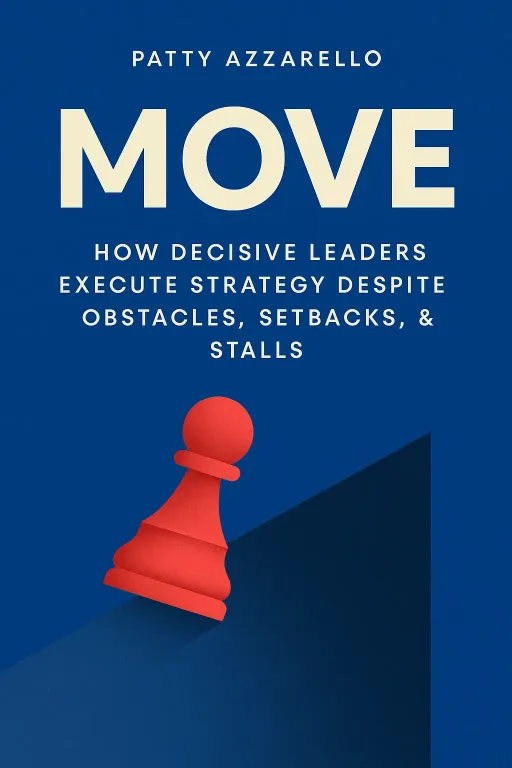
Nova: Not stop trying, Atlas. Quite the opposite. We're talking about a radical re-evaluation of that effort goes. Today, we're diving into two brilliant minds who challenge the very foundation of how we think about strategy and execution. First up, we have Patty Azzarello, a former tech executive known for her no-nonsense, highly actionable approach to leadership, and her book "MOVE." She argues that successful strategy isn't about more effort, but about focusing on the activities and aligning the entire organization.
Atlas: Okay, I see. So it's not about being lazy, it's about being smart with your energy. That resonates with the strategic operators out there who are constantly optimizing for profitability and loyalty. But how does that connect with strategy itself? Because strategy often feels like a big, annual, abstract thing.
Nova: That's where Alex Brueckmann comes in with his groundbreaking work, "The Strategy Legacy." Brueckmann offers a perspective that strategy isn't just a static plan, but a continuous, evolving narrative within an organization. He's really pushing us to embed strategic thinking into the very DNA of the business, ensuring long-term relevance and adaptability.
Atlas: A continuous, evolving narrative? That’s a powerful image. It makes me wonder how any dealership can genuinely integrate strategic execution into their daily operational rhythm, ensuring every team member truly understands and contributes to the dealership's overarching vision. Because often, strategy feels like a C-suite concern, not something that trickles down to the sales floor or service bay.
Nova: Exactly. And that's what we're here to unpack. We'll explore how to execute strategy with laser-like focus, then we'll discuss how to transform your strategy into a living, breathing narrative that adapts and thrives.
Precision in Strategic Execution: The 'Right' Activities
SECTION
Nova: So let's begin with Patty Azzarello's core insight from "MOVE." She essentially says that many organizations are like a car with one foot on the gas and one foot on the brake. They're pushing hard, but they're simultaneously creating their own drag. The key is to identify and eliminate the obstacles that prevent strategic initiatives from gaining momentum.
Atlas: That makes me think of all the times I’ve seen teams spinning their wheels, working incredibly hard but not actually moving the needle. But how do you identify what those "right" activities are, especially in a fast-paced dealership environment where every customer interaction feels critical? And what are these mysterious "obstacles"?
Nova: It’s often simpler than we make it. Azzarello's framework helps leaders ask tough questions. For example, is your sales team spending valuable time on administrative tasks that could be automated, instead of focusing on high-value customer engagement? Or, are you launching a new digital marketing campaign without first ensuring your CRM system can effectively handle and route those leads? These misalignments, these non-strategic activities, are the "brakes."
Atlas: Oh, I see. So it’s not just about what you, but what you doing, or what you. For a dealership, that could mean recognizing that a weekly team meeting that consistently runs over schedule and lacks clear objectives is an obstacle to efficient customer follow-up, rather than a productive collaboration.
Nova: Precisely. She talks about the importance of clarity. When strategy isn't clear, people make up their own version of it, and those individual versions often don't align. Imagine a dealership aiming to be the leader in EV sales in their region. If the service department isn't trained and equipped for EV maintenance, or if the finance team isn't educated on EV incentives, then the sales team is essentially working in isolation. That's a huge obstacle to the overarching strategy.
Atlas: That's a perfect example. A common challenge for many strategic operators is getting every department on the same page, especially when their daily tasks feel so disconnected from the 'big picture.' So, for Azzarello, it sounds like the first step is a ruthless audit of activities and a clear, almost brutally honest, communication of the strategic priorities.
Nova: Absolutely. It’s about creating a common language and understanding of what "winning" looks like for. It’s about asking: "Are we collectively working towards specific goal, and is every activity contributing to it, or detracting from it?" It requires leaders to be decisive about what to do, which is often harder than deciding what to add.
Atlas: That’s a great way to put it. Because we're all wired to want to do more, add more, innovate more. It takes real discipline to step back and say, "No, this is what we do right now, so we can excel at what truly matters."
Strategy as a Living, Evolving Narrative
SECTION
Nova: That idea of ruthless prioritization and clear focus really sets the stage for Alex Brueckmann's perspective on strategy. He challenges the traditional view of strategy as this grand, static document, often created once a year in an executive boardroom, then filed away. Brueckmann says strategy is a continuous, evolving narrative.
Atlas: A narrative? Not a plan? I mean, for many, the word "strategy" conjures images of thick binders, Gantt charts, and maybe a yearly off-site. "Narrative" sounds a bit… artistic for the hard-nosed world of dealership operations. Isn't that just marketing speak for "we'll just wing it"?
Nova: Not at all, Atlas. It's actually far more robust and resilient than a static plan. Brueckmann is advocating for embedding strategic thinking into the organizational DNA itself. Think of it like this: your dealership isn't just selling cars; it's telling a story. A story of innovation, customer service, community involvement, or perhaps a commitment to sustainability. And that story is constantly being written, adapted, and retold by everyone, from the CEO to the newest technician.
Atlas: So it's less about a rigid script and more about an overarching plotline that everyone understands and contributes to. How does that actually happen on the showroom floor, or in the service bay, though? What does embedding strategic thinking like in daily operations?
Nova: It means empowering teams to understand the behind their work, not just the. For example, if the dealership's strategic narrative is "We are the most trusted automotive partner in the community," then every interaction, every repair, every sales pitch becomes a chapter in that story. The service advisor isn't just selling a brake job; they're upholding the narrative of trust and reliability.
Atlas: Right, like if a customer comes in with a minor issue, and the service team could upsell them on something they don't really need, but instead, they focus on fixing the immediate problem efficiently and honestly, they're living that "trusted partner" narrative. It’s a moment-by-moment strategic decision, not just following a procedure.
Nova: Exactly! It fosters adaptability. When market conditions shift – say, a sudden surge in electric vehicle demand or new regulations – a dealership with a living strategic narrative can adapt much faster. Instead of waiting for a new annual plan, teams are already thinking: "How does this new development impact our story? How do we adapt our current chapter to maintain our relevance and continue our strategic direction?" They're not just executing; they're actively shaping the strategy.
Atlas: That's a huge shift from the traditional model. It demands more critical thinking from everyone, not just the leadership team. It sounds like it cultivates a culture where every team member is an active participant in the dealership's future, not just a cog in the machine. That’s how you get true buy-in and contribution to the overarching vision.
Nova: It's about collective ownership. When everyone understands the narrative, they can make informed decisions in real-time that align with the strategy, without constant top-down directives. It moves beyond static planning to continuous, dynamic adaptation, which is crucial for long-term relevance and growth.
Synthesis & Takeaways
SECTION
Nova: So, when we bring Patty Azzarello’s precision in execution together with Alex Brueckmann’s concept of strategy as an evolving narrative, we get a powerful blueprint for dealership growth. It’s not just about having a great plan, but about making sure that plan is truly alive, constantly adapting, and executed with laser-like focus on the activities that matter most.
Atlas: That’s it. For the strategic operator, it’s about making strategy less of a top-down mandate and more of a shared, living purpose that drives every interaction. It’s about moving past just doing and instead doing what's and making sure everyone's pulling in the same direction, writing the same story. That’s how you optimize for profitability and loyalty in the long run.
Nova: It means leaders need to be less about dictating and more about facilitating, creating the environment where this dynamic strategic narrative can flourish. It requires courage to eliminate the non-essential, and clarity to communicate the core story. And the payoff is a dealership that isn't just reacting to the market, but actively shaping its own future.
Atlas: It truly highlights that sustained growth isn't just about having a vision, it's about the relentless, focused, and adaptable execution of that vision, day in and day out, by every single person. It’s a continuous learning journey, and that curiosity is definitely a strength.
Nova: Absolutely. It’s about building a resilient, customer-centric organization that truly owns its destiny. So, for all our listeners out there, ask yourself: What’s the strategic narrative your dealership is telling? And are all your actions contributing to that story, or are some of them just noise?
Atlas: Food for thought indeed. And perhaps a good reason to dedicate 15 minutes daily to exploring one new market trend, just one, to keep that narrative fresh.
Nova: This is Aibrary. Congratulations on your growth!









