Building Trust at High Velocity
Golden Hook & Introduction
SECTION
Nova: The fastest way to slow down your organization is to make sure you approve every single decision. We think we are maintaining quality, but we are actually just building a cage of bureaucracy.
Atlas: Oh, I know that feeling of being trapped in the approval loop. It is like trying to run a marathon in waist-deep water.
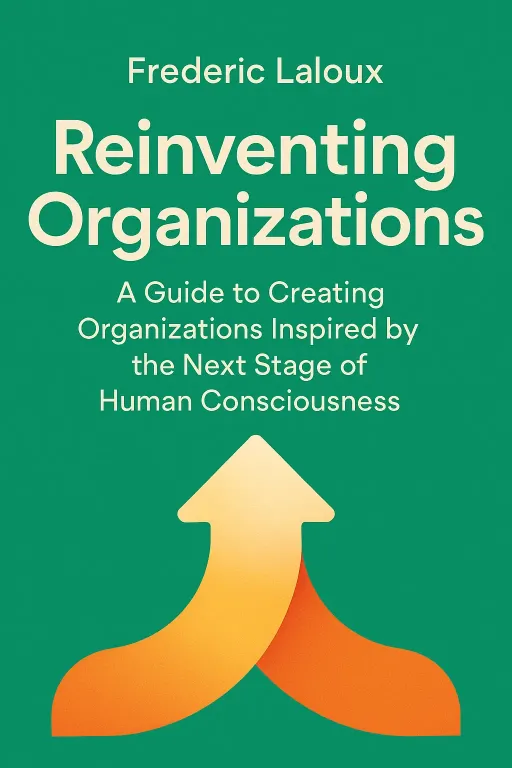
Nova: Exactly. Today we are diving into two groundbreaking books that offer a powerful blueprint for breaking free from that trap. We are looking at Reinventing Organizations by Frederic Laloux and Move Fast and Fix Things by Frances Frei and Anne Morriss.
Atlas: I love this pairing. Laloux spent years as a McKinsey partner researching companies that operate like living organisms rather than machines, while Frei is a Harvard Business School professor who famously went into Uber during its crisis to help rebuild their trust systems from the ground up.
Nova: Yes, and their combined wisdom gives us a fascinating look at how to build trust at high velocity. Laloux introduces the Teal organizational model, which replaces traditional hierarchies with self-management, wholeness, and evolutionary purpose. Meanwhile, Frei and Morriss argue that true leadership velocity is built on a foundation of deep trust and the rapid repair of cultural friction.
Atlas: That makes me wonder how these two ideas connect. Self-management sounds amazing, but in a high-stakes environment, it also sounds like a recipe for chaos. How do you move fast without losing control?
Nova: That is the core of our discussion today. We are going to explore how self-management actually accelerates velocity by removing bottlenecks, how to build the trust required to make it work, and how you can start testing these concepts in your own team this week.
Self-Management and the Teal Revolution
SECTION
Nova: Let us start with Frederic Laloux and this concept of Teal organizations. Laloux outlines how human consciousness and organizational models have evolved together over history. He uses colors to describe them. Red is impulsive and based on fear and power. Amber is highly conformist and hierarchical, like the military. Orange is achievement-oriented, focused on competition and innovation, which is where most modern corporations sit. Green focuses on culture and empowerment.
Atlas: Right, and Green organizations are great, but they often get bogged down in consensus-seeking. Everyone has to agree on everything, which can bring speed to a grinding halt.
Nova: That is where the Teal model emerges. Teal organizations shift away from the machine metaphor of the Orange organization and instead view the company as a living organism. The three pillars of Teal are self-management, wholeness, and evolutionary purpose.
Atlas: Hold on a second. Self-management in a large company sounds like an absolute myth. How does a massive team actually coordinate without managers telling everyone what to do?
Nova: It sounds impossible until you look at a concrete example. Consider Buurtzorg, a Dutch neighborhood nursing organization. Laloux writes about them extensively. In the early two thousands, the home care system in the Netherlands was highly bureaucratized. Nurses had their schedules optimized by software, and they had strict time limits for every task, like ten minutes for a bath or fifteen minutes to change a bandage. It was highly efficient on paper, but terrible for both the patients and the nurses.
Atlas: That sounds incredibly dehumanizing. It completely strips away the human connection that draws people to nursing in the first place.
Nova: Absolutely. So, a nurse named Jos de Blok started Buurtzorg with a team of four nurses. They decided to completely abandon the traditional management structure. Instead, they organized into small, autonomous teams of ten to twelve nurses. Each team is responsible for a specific neighborhood. They handle everything: patient care, hiring, scheduling, renting office space, and managing their own budgets.
Atlas: Wow, that is a huge amount of responsibility. But how did they scale? A small team is one thing, but how do you grow?
Nova: This is the mind-blowing part. Within a decade, Buurtzorg grew from four nurses to over ten thousand nurses, operating in hundreds of autonomous teams across the country. And get this: they managed this massive growth with a headquarters staff of only about fifty people, and only a handful of coaches who have no boss-like authority. They have zero regional managers.
Atlas: That is incredible. But what about the performance? Did the quality of care suffer?
Nova: The exact opposite happened. Buurtzorg became the highest-rated home care provider in the Netherlands. They cut the average care hours per patient by nearly half because they focused on helping patients become self-reliant again. They saved the Dutch healthcare system hundreds of millions of Euros annually, and they have been repeatedly named the best employer in the country.
Atlas: I guess that makes sense because the people closest to the work are the ones making the decisions. They do not have to wait for three levels of management to approve a change in a patient's care plan. But I am still skeptical about how they handle conflict or major financial decisions. What happens when two nurses on a team completely disagree on a hire?
Nova: Teal organizations rely on what Laloux calls the advice process. This is a crucial mechanism that replaces hierarchical approval. In the advice process, any person in the organization can make any decision, including spending company money, provided they do two things first. They must seek advice from everyone who will be meaningfully affected by the decision, and they must consult with people who have expertise in that area.
Atlas: Wait, so they do not need permission? Just advice?
Nova: Exactly. The decision-maker is not required to follow the advice. The point is not to reach consensus. The point is to gather collective intelligence. Once the advice is gathered, the decision-maker makes the call and takes full responsibility for the outcome.
Atlas: That sounds incredibly empowering, but it also sounds like it requires a massive amount of trust. If I am the founder of a company, letting go of that control feels terrifying. What if someone makes a disastrous decision?
Nova: It does require trust, but the advice process actually builds guardrails naturally. If you make a major decision without seeking advice from the right experts, your colleagues will lose trust in you, and your reputation within the self-managing network will suffer. It forces people to act with high responsibility. It is a system built on transparency and adult-to-adult relationships, rather than parent-child dynamics.
High-Velocity Trust and Cultural Repair
SECTION
Atlas: That transition to trust is the perfect bridge to Frances Frei and Anne Morriss. In Move Fast and Fix Things, they talk about leadership velocity. And they argue that you cannot have velocity without trust. If you try to move fast without trust, you end up breaking things in a way that ultimately slows you down.
Nova: Yes, they define trust through three core drivers, which they call the Trust Triangle. The three corners of the triangle are Authenticity, Empathy, and Logic. If any of these three are wobbly, trust collapses.
Atlas: Let us break those down. What does a wobble in each of those look like?
Nova: An authenticity wobble happens when people feel you are holding back or not showing your true self. An empathy wobble occurs when people believe you care more about yourself or your own agenda than about them. And a logic wobble happens when people doubt your intellectual capability or the soundness of your plan.
Atlas: That is a highly practical framework. I can think of times when I have doubted a leader because I felt they were just reading from a script, which is an authenticity wobble. Or when a strategy seemed completely half-baked, which is a logic wobble.
Nova: Precisely. And Frei and Morriss argue that when trust is broken, cultural friction increases. Cultural friction is like sand in the gears of your organization. It shows up as passive-aggressive behavior, endless alignment meetings, and people holding back their best ideas because they do not feel safe. This friction acts as a massive tax on speed.
Atlas: So, when we see companies trying to move fast by skipping meetings or rushing decisions, they might actually be slowing themselves down because they are creating cultural friction that they have to clean up later.
Nova: Exactly. True velocity is not about reckless speed. It is about the rate at which you can build trust and repair friction. Frei famously applied this when she stepped in to help Uber. At the time, Uber was experiencing massive trust collapses on multiple fronts. They had empathy wobbles with their drivers, logic wobbles with regulators, and authenticity wobbles with the public.
Atlas: That was a massive cultural crisis. How do you even begin to fix something that big at high velocity?
Nova: You start by identifying where the triangle is broken. At Uber, one of the biggest issues was an empathy wobble. Employees felt that the culture was hyper-competitive and that leadership did not genuinely care about their well-being or inclusion. To fix this rapidly, Frei and Morriss argue that you have to make bold, systemic changes rather than incremental tweaks.
Atlas: Like what? What did they actually do?
Nova: One simple but powerful change was addressing the meeting culture. People were constantly on their phones and laptops during meetings, texting each other about the meeting while it was happening. This created a massive empathy wobble because nobody felt truly heard or respected. They implemented a simple rule: technology-free meetings. If you are in the room, you are fully present. This immediately reduced cultural friction and rebuilt empathy among team members.
Atlas: That is a surprisingly simple fix, but it speaks to a larger point. You cannot build a self-managing, Teal organization if your trust triangle is broken. If your team does not believe you care about them, or if they think your logic is flawed, they will not feel safe taking on complete decision-making authority.
Nova: You have hit on the exact connection between these two books. Self-management is the ultimate expression of trust. But to get there, leaders have to actively work to repair the wobbles in their trust triangle. If you want your team to move fast and self-manage, you have to show deep empathy by giving them the tools to succeed, clear logic by setting a transparent evolutionary purpose, and authenticity by being vulnerable about your own limitations.
The Intersection: Designing Systems for Sustainable Trust
SECTION
Atlas: This makes me think about the systemic nature of all of this. For leaders who want to scale their businesses sustainably, this is not just about being nice. It is about designing a system that can handle growth without collapsing under the weight of its own hierarchy.
Nova: Absolutely. Traditional Orange organizations scale by adding layers of management. But as you add layers, information gets distorted, decision-making slows down, and the people at the top become increasingly disconnected from the reality on the ground. It is a highly fragile system.
Atlas: Right, it is like the telephone game. By the time the message gets to the CEO, it has been polished and sanitized, and the actual problem remains unsolved. Teal organizations scale horizontally. They scale by replicating autonomous units, much like cells in a living organism.
Nova: And that replication is only possible if you have a high-velocity trust system in place. When you trust your team, you do not need to monitor their every move. You shift your role from a controller to an enabler.
Atlas: But what about the anxiety that comes with that? I imagine a lot of our listeners are thinking, if I do not approve these decisions, how do I ensure quality? How do I make sure we do not drift away from our core mission?
Nova: Laloux addresses this through the concept of evolutionary purpose. In Teal organizations, the purpose of the company is not static, nor is it dictated solely by the founder. It is a living thing that the organization listens to and aligns with. When everyone is deeply connected to the purpose, it acts as a natural compass. You do not need rigid rules when everyone is pulling in the same direction.
Atlas: That sounds beautiful, but let us bring this down to earth. If I am running a high-pressure tech company or a fast-growing agency, shifting to a full Teal model overnight feels like jumping off a cliff without a parachute.
Nova: You are completely right, and neither author suggests doing this overnight. It is about taking intentional, deliberate steps to test the waters and build the trust muscle. You have to prove to yourself and your team that the system will not collapse if you let go of the reins.
Atlas: So, how do we start? What is the entry point for a leader who wants to move in this direction?
Nova: This brings us to the practical takeaway from these two books. The tiny step you can take this week is to identify one recurring meeting or one approval bottleneck in your current workflow. It could be something as simple as approving travel expenses, signing off on social media copy, or greenlighting minor budget adjustments.
Atlas: Okay, I have one in mind. Let us say it is the weekly approval for team project budgets under five thousand dollars. Currently, the department head has to sign off on every single one.
Nova: Perfect. That is a classic bottleneck that slows down velocity and signals a lack of trust. To test the Teal approach, you delegate complete decision-making authority on that specific item to a trusted team member or to the team itself. But you do it using the advice process.
Atlas: So, instead of the department head signing off, the team member can make the final call, but they must first seek advice from the finance person and anyone else affected by the budget.
Nova: Exactly. You set the boundary. You say, you have full authority to make this decision. You do not need my signature. However, you must use the advice process. Consult with the experts, listen to those affected, and then make the call.
Atlas: That is a brilliant way to test it because it has built-in safety. The advice process ensures they are not flying blind, but the final ownership sits squarely on their shoulders. It repairs any potential empathy and logic wobbles because you are actively demonstrating that you believe in their capability.
Nova: And it gives the leader a chance to practice the hard work of letting go. You will observe that the world does not end, the budget does not get ruined, and in fact, decisions get made much faster. The team feels empowered, and you have just freed up valuable cognitive space to focus on strategic, long-term systems design.
Synthesis & Takeaways
SECTION
Atlas: This conversation really reveals how trust and structure are deeply intertwined. We often think of trust as a soft, emotional concept, but Frei, Morriss, and Laloux show us that trust is actually a hard organizational design choice.
Nova: It really is. When we look at the systemic impact of these ideas, we see that building trust at high velocity is not just about efficiency. It is about creating workplaces where human beings can thrive, where wholeness is valued, and where innovation serves a deeper purpose.
Atlas: That is a powerful legacy to leave. For any leader listening who wants to build models that last, the message is clear: stop trying to control every variable. Start building the systems and the trust that allow your team to self-organize and adapt.
Nova: Start with that one bottleneck this week. Let go of that single approval, implement the advice process, and watch how quickly your team steps up to the challenge.
Atlas: This is Aibrary. Congratulations on your growth!