Beyond the Basics: Integrated Leadership & Talent Nurturing
Opening
SECTION
Nova: Content format for each line.
Golden Hook & Introduction
SECTION
Nova: Most leaders are climbing the wrong ladder. They're relentlessly focused on acquiring new skills, new tactics, new strategies, but they often forget to upgrade their own internal operating system. And that, my friends, is why some never truly reach their full, expansive potential.
Atlas: Oh, I like that. "Internal operating system upgrade." What do you mean, "wrong ladder"? Are we talking about competence versus character here, or something even deeper? Because for a lot of our listeners, the ladder is very real, very visible, and very much about measurable skills.
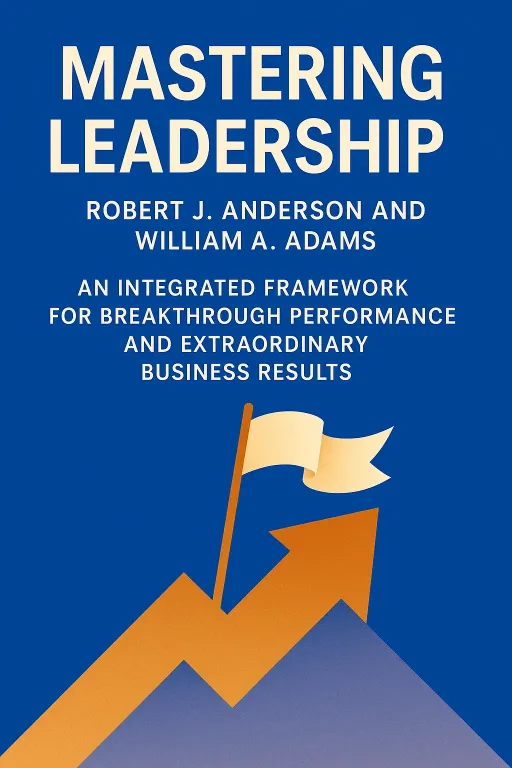
Nova: It is deeper, Atlas. It's about shifting our perception of what leadership development truly entails. Today, we're diving into an integrated view of leadership, drawing powerful insights from two influential works. First, "Mastering Leadership" by Robert J. Anderson and William A. Adams, who spent decades researching global leaders, challenging the very foundations of traditional leadership training. And then, we'll blend that with the profound wisdom of John C. Maxwell's "Everyone Wins When You Develop Leaders," a man whose practical, actionable approach has shaped countless leaders globally.
Atlas: That’s a powerful pairing. Maxwell is practically synonymous with leadership development, known for his ability to break down complex ideas into actionable steps. And Anderson and Adams, from what I understand, really push us to look inward, beyond just the observable behaviors. It sounds like we’re not just talking about leaders do, but they are, and how that impacts around them.
Nova: Exactly. These two books, from different angles, give us a powerful framework for integrated leadership that's both deeply personal and broadly impactful.
Deep Dive into Core Topic 1: The Inner Game of Leadership (Vertical Development)
SECTION
Nova: So, let's start with Anderson and Adams. They introduce a concept called the "Universal Model of Leadership," which integrates what they call "vertical development" with "horizontal development." Horizontal development is what most people think of: skills, competencies, strategies. It's about adding new apps to your phone.
Atlas: Right, like learning a new project management tool, or how to give better feedback, or mastering a new presentation technique. Those are all tangible skills.
Nova: Precisely. But vertical development, that's the game-changer. That's about upgrading your phone's operating system. It’s a shift in your mindset, your beliefs, your consciousness – essentially, your inner game. It's about as a leader, not just. It’s a profound journey of self-transformation.
Atlas: So you're saying I can learn all the project management techniques in the world, download every single leadership app, but if my fundamental belief is that my team is inherently unmotivated or incompetent, it won't matter? My upgraded operating system will just crash the new apps?
Nova: You got it. Your inner game, your underlying mindset and beliefs, profoundly influences your external behaviors and, consequently, the entire organizational culture you create. If you believe your team can't handle responsibility, you'll micromanage, regardless of how many delegation skills workshops you attend. The diagnostic framework Anderson and Adams provide isn't just about assessing skills; it's about identifying these deeper patterns and areas for growth beyond mere competencies.
Atlas: That makes me wonder, how do you even an "inner game" problem? It sounds a bit… abstract for someone who values strategic action and clear objectives. What's the starting point for a visionary leader who needs concrete steps, not just introspection?
Nova: It’s not therapy, though it certainly involves deep self-reflection. Their framework helps leaders identify their current "stage" of vertical development. For example, a leader might be operating from a "reactive" mindset, driven by external expectations or a need to control. This might manifest as perfectionism or a reluctance to empower others fully. The diagnostic helps them see these patterns and move towards a more "creative" or "integral" mindset, where they're more self-authored, collaborative, and focused on collective impact.
Atlas: So, it's about uncovering the hidden scripts running in the background of your leadership, the ones you might not even realize are there. It's like finding a bug in your personal code that's preventing all your shiny new apps from working optimally.
Nova: A perfect analogy! Consider a leader we'll call Sarah. Technically brilliant, she consistently delivered projects on time and under budget. But her team turnover was high. She prided herself on being hands-on, but the diagnostic revealed a deep-seated belief that "if you want something done right, do it yourself." This wasn't a skill deficit; it was an inner game issue rooted in a fear of failure and a lack of trust. Her vertical development involved confronting this belief, learning to truly empower her team by accepting that mistakes are part of growth, not a reflection on her. The result? Lower turnover, a more engaged team, and ultimately, even better project outcomes because she wasn't the bottleneck anymore.
Atlas: Wow. That makes so much sense. It’s not just about adding a new tool to the toolbox, it’s about rebuilding the entire workbench so it can hold more tools and bigger projects. And that commitment to deep self-growth resonates powerfully.
Deep Dive into Core Topic 2: Cultivating a Leadership Pipeline (Multiplying Impact)
SECTION
Nova: And that self-mastery, Atlas, that upgraded operating system, is precisely what unlocks the highest level of leadership, which John C. Maxwell talks about: developing others. He argues that developing others is the highest level of leadership because it creates a legacy and multiplies your impact far beyond your own individual efforts.
Atlas: Okay, I can definitely see how that connects. If you've upgraded your own operating system, you're better equipped to install upgrades in others. But isn't "developing leaders" just... good management? What makes it a "highest level" versus just part of a leader's job description?
Nova: It's more than good management; it's an intentional, strategic investment in people. Maxwell outlines a clear process for identifying, attracting, and empowering potential leaders within an organization. It’s not about finding mini-mes; it’s about seeing potential where others might not and then providing the environment for it to flourish. It’s about creating a culture where leadership development isn’t an HR initiative, but a shared responsibility.
Atlas: So, it’s not just about creating a succession plan, it’s about consciously building a where leadership development is everyone's shared responsibility. For someone who cares deeply about future potential and wants to cultivate their team's growth, that's incredibly resonant. It’s like planting a forest instead of just harvesting a single tree.
Nova: Exactly! It’s about creating a leadership. Maxwell emphasizes that you have to be intentional. You don't just hope leaders emerge; you actively seek them out. You look for people who show initiative, who are curious, who take ownership, even if they're not in a formal leadership role yet. Then you attract them by giving them opportunities, mentorship, and most importantly, belief. And finally, you empower them by giving them real responsibility, allowing them to make decisions, and supporting them when they stumble.
Atlas: Can you give an example of that intentional investment? Because it sounds great in theory, but in the day-to-day grind, how does a leader actually do this?
Nova: Absolutely. Think of a CEO, let's call him David. He was known for his ability to spot raw talent. Instead of just promoting based on seniority or current performance, he'd actively seek out individuals who demonstrated leadership – not just skill. He identified three rising stars in different departments. He didn't just give them more work; he assigned them to a high-stakes, cross-functional innovation project, giving them full autonomy and access to resources. He met with them weekly, not to dictate, but to coach and challenge their thinking. There was initial pushback from some established managers who felt these individuals were "too young" or "inexperienced."
Atlas: Oh, I've heard that one before. The classic "they haven't paid their dues" argument.
Nova: Exactly. But David held firm. He empowered these three to lead, supporting them through setbacks. Two years later, two of those proteges went on to lead major divisions within the company, and the third launched a successful new product line. David’s impact wasn't just his own leadership, but the multiplied impact of the leaders he intentionally developed. He built a legacy not just of achievement, but of empowered people.
Synthesis & Takeaways
SECTION
Nova: So, what we're seeing is that personal leadership growth – your vertical development, your inner game – isn't just about you; it's the prerequisite for effectively developing others and building that sustainable leadership pipeline. You can't give what you don't have.
Atlas: In other words, you can't truly lead others to grow if you haven't committed to your own profound evolution first. It's a continuous feedback loop: the more you grow, the better you are at helping others grow, and their growth, in turn, amplifies your impact. For a visionary leader, someone driven by developing others, this isn't just a strategy; it’s a philosophy.
Nova: Precisely. The deep question isn't "either/or," but "how can I integrate my personal leadership growth with the intentional development of those around me to create a sustainable leadership pipeline?" It’s about a holistic approach, recognizing that your inner world directly shapes your ability to empower the outer world. It’s about building a legacy not just of achievement, but of empowered people.
Atlas: And for our listeners who are strategic navigators and empathetic catalysts, that means embracing the journey of self-growth, scheduling that 20 minutes daily for focused learning, but also actively looking for those next leaders in their team. It's about seeing leadership development as the ultimate act of multiplying impact.
Nova: Absolutely. It's about leaving behind a network of capable, inspired individuals, ensuring that everyone wins, as Maxwell says. A true multiplication of impact, built on a foundation of self-mastery.
Atlas: That's a powerful thought to leave us with. This is Aibrary. Congratulations on your growth!