

Leadership Through Lifelong Learning
Golden Hook & Introduction
SECTION
Nova: Forget everything you think you know about leadership. You weren't born a leader, and neither was anyone else. What if the most powerful leadership trait isn't charisma, but curiosity?
Atlas: Whoa, hold on a second. That's a pretty bold statement, Nova. I think a lot of people, myself included, have this image of the 'natural born leader'—the one who just effortlessly commands a room. Are you telling me that's a myth?
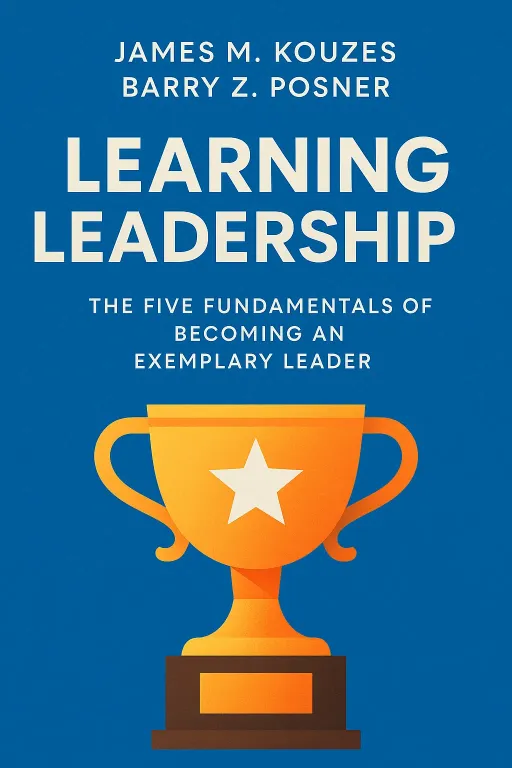
Nova: Absolutely, Atlas. And it's a myth that James M. Kouzes and Barry Z. Posner systematically debunk in their groundbreaking book,. These aren't just pop-psychology gurus; their work is built on decades of research, studying thousands of leaders across the globe to understand what truly makes them effective.
Atlas: So, their extensive studies actually confirm that leadership isn't some inherent superpower you're either blessed with or not? That's kind of a relief, honestly. For anyone out there trying to navigate complex teams, feeling like they're constantly hitting a wall, the idea of 'just being a natural' can be pretty daunting.
Nova: Exactly! It's incredibly empowering. And then, to go a step further, we have Michelle Parry-Slater's. While it's primarily a guide for L&D professionals, its principles offer a robust, practical framework for how individuals can design and own their personal leadership development.
Atlas: So, it's not just about what you learn, but you learn it, and how you intentionally weave it into your everyday leadership. That makes perfect sense.
Debunking the Myth: Leadership as a Learnable Skill
SECTION
Nova: Precisely. Kouzes and Posner's core argument is that leadership isn't about personality traits as much as it is about. They identified five exemplary practices of leadership that are consistently demonstrated by effective leaders, regardless of their innate 'charisma' or background. These are observable, learnable behaviors.
Atlas: Okay, but for someone who's always admired those seemingly effortless leaders, that sounds a bit too simple. Is it really just about practicing a few behaviors? What about the raw talent, the vision, the ability to inspire?
Nova: It’s not simplistic; it's liberating. Think of it like this: no one is born a concert pianist, right? They're not born knowing how to play a concerto. They might have a natural aptitude, good hand-eye coordination, but mastery comes from thousands of hours of deliberate practice, focused feedback, and a relentless commitment to growth. Leadership is no different.
Atlas: I guess that makes sense. It's like saying a great chef isn't born with the ability to create a Michelin-star dish; they learn techniques, they experiment, they get feedback, they refine.
Nova: That’s a perfect analogy! Kouzes and Posner's research shows that leaders who commit to this learning journey consistently outperform those who rely solely on innate abilities or past successes. They found that leaders aren't just 'born,' they're through a continuous cycle of experience, reflection, and learning.
Atlas: So you're saying that the leaders who truly excel are the ones who treat leadership itself as a skill to be perpetually honed, rather than a title they've achieved? That’s going to resonate with anyone who struggles with information overload and trying to filter signal from noise. It suggests the signal is in the learning process itself.
Nova: Absolutely. They tell a story about a leader named Maria, who started in a very technical role. She wasn't known for being outgoing or charismatic. But she was incredibly analytical and deeply committed to her team's success. She started by observing how others ran meetings, asking for feedback on her communication style, and actively seeking out mentors who could help her understand team dynamics.
Atlas: So she wasn't waiting for a leadership course or a promotion to 'become' a leader. She was actively building those muscles.
Nova: Exactly. Over time, through consistent effort and a willingness to be vulnerable and learn, she transformed into a highly respected and effective leader, not by changing who she was, but by refining her practices and adapting her approach based on feedback. Her influence grew because she was constantly learning, not because she suddenly became a different person.
Atlas: Wow, that’s actually really inspiring. It shifts the focus from 'who you are' to 'what you do' and 'how you grow'. It makes leadership feel much more attainable and less like an exclusive club.
Crafting Your Own Leadership Learning Journey
SECTION
Nova: And once we embrace that leadership is learnable, the next big question is, do we actually learn it effectively? How do we craft our own leadership learning journey? This is where Michelle Parry-Slater's work, originally for L&D professionals, offers incredible insights for personal development.
Atlas: Okay, so for our listeners who are already swamped, trying to find time for 'continuous learning' sounds like another thing on an endless to-do list. How do you make this without making it another source of overwhelm? It sounds like we're being asked to be our own personal L&D department. How do you even begin to design that for yourself when you're already trying to steer a ship?
Nova: That’s a crucial point, and it speaks directly to the 'overwhelmed navigator' in all of us. Parry-Slater emphasizes that effective learning isn't about consuming endless content; it's about experiences. For leadership, this means being intentional about reflection, seeking specific feedback, and integrating lessons into action.
Atlas: So, it's not about reading every leadership book on the shelf, but perhaps taking one specific challenge from a book and applying it?
Nova: Precisely. Think about the 'Tiny Step' from our prompt: reflect on a recent leadership challenge and identify it presented. Then, devise a plan to integrate that lesson. It’s about quality over quantity, and deliberate application.
Atlas: Can you give an example of what that might look like in practice? Because 'integrate that lesson' can feel a bit abstract.
Nova: Imagine a leader, let's call her Sarah, who just ran a project that went slightly off the rails because communication broke down between two key teams. Instead of just moving on, she intentionally sets aside 30 minutes. She reflects: Then, she identifies one learning opportunity:
Atlas: And then the integration part?
Nova: The integration isn't another huge project. It's a small, deliberate change. Maybe for the next project, she schedules weekly 15-minute check-ins specifically with the leads of those two teams, or she creates a shared communication channel that didn't exist before. It's one specific, actionable step based on that reflection. That's designing her own learning journey.
Atlas: That makes so much more sense. It's not about adding another course to your plate, but about extracting the lesson from the experience you're already having. That feels much more manageable for someone trying to build reading momentum and protect their learning time. It's about making time count.
Nova: Exactly. Parry-Slater's framework, applied to personal leadership, means we stop being passive recipients of experience and become active designers of our own growth. It’s about asking that 'Deep Question': How can you more intentionally integrate continuous learning into your leadership style to inspire and guide your teams through evolving challenges? It's about being proactive, not reactive, in your own development.
Synthesis & Takeaways
SECTION
Nova: So, what we've really uncovered today is this incredibly empowering truth: leadership is not a fixed state; it's a dynamic, learnable skill. It's a journey of continuous development, not a destination.
Atlas: And the most effective leaders aren't necessarily the smartest, but the ones most committed to continually getting smarter about leadership itself. And that means being proactive about our own learning, even in tiny steps.
Nova: Absolutely. It’s about building that leadership muscle, one focused rep at a time. The true power lies in the commitment to growth, in seeing every challenge as a learning opportunity.
Atlas: That’s actually really inspiring, particularly for anyone feeling stuck or like they've hit a ceiling. It turns leadership challenges into learning opportunities. It takes away the pressure of perfection and replaces it with the possibility of progress.
Nova: Exactly. So, our challenge to you, our listeners, is to truly embody this. Reflect on one recent leadership challenge. What specific learning opportunity did it present? And how will you integrate that lesson into your future actions?
Atlas: Don't just think about it, schedule it. Treat that reflection time like an important appointment. That's how momentum builds, and that's how you filter the signal from the noise. Trust that forward motion is the goal.
Nova: Absolutely. That forward motion, that commitment to growth, is the essence of true leadership.
Atlas: I love that.
Nova: This is Aibrary. Congratulations on your growth!









