

The 360 Degree Influence Protocol
Golden Hook & Introduction
SECTION
Nova: Atlas, rapid fire: 'influence.' What's the first thing that comes to mind?
Atlas: Power games. Political maneuvering. Or that awkward colleague who tries too hard to get their idea heard.
Nova: Spot on! And today, we're flipping that script entirely, showing you how influence is actually about elevation, not domination. It's about making things happen, not just because you have a title, but because you've genuinely cultivated impact.
Atlas: Oh, I like that. So, we're talking about more than just "managing up" or "managing down," aren't we?
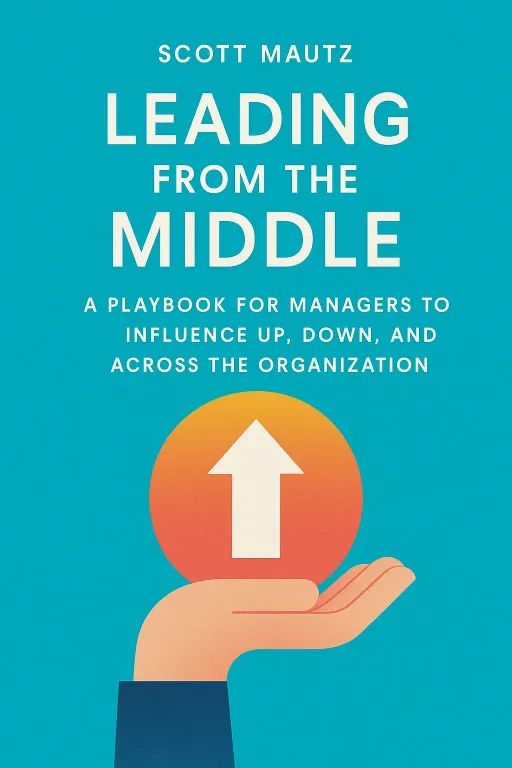
Nova: Absolutely. Today, we're diving into what we call the 360-Degree Influence Protocol, drawing insights from two brilliant minds. First, Scott Mautz, a former Procter & Gamble executive whose book "Leading from the Middle" offers a masterclass in navigating that unique tension of being both a subordinate and a boss. He lived the complexities of mid-level leadership and teaches us how to influence upwards effectively.
Atlas: That makes me wonder, given his background, he must have seen a lot of people trying to get their ideas across to senior leadership.
Nova: Exactly. And then, we pivot to Keith Ferrazzi, a renowned networking guru and author of "Leading Without Authority." Ferrazzi expands our understanding of influence beyond hierarchy, championing 'co-elevation' – a commitment to mutual growth where teammates hold each other accountable, regardless of their position on the org chart. He’s built his career on showing people how to forge powerful, collaborative relationships.
Atlas: Okay, so we're looking at influencing up and influencing sideways. That's a huge spectrum. For anyone feeling like their impact is limited by their current role, this sounds like an absolute game-changer.
The Art of Upward Influence & Navigating Organizational Tensions
SECTION
Nova: It truly is. Let's start with Scott Mautz and this idea of 'influence-up.' Many people in the middle of an organization feel like a bottleneck, or even worse, a glorified messenger. They have great ideas, they see problems, but getting buy-in from the executive suite feels like trying to move a mountain with a spoon.
Atlas: Oh, I know that feeling. I imagine a lot of our listeners, especially those driven by impact and continuous improvement, have experienced that frustration. You've got the vision, you've got the data, but the C-suite just isn't biting. So, how does Mautz suggest we start moving that mountain?
Nova: He says it's not about being louder or more persistent; it's about understanding the unique tension of your position and leveraging it. Think about "The Ambitious Project Manager" – let's call her Sarah. Sarah leads a fantastic product team, and they've developed an innovative feature that could revolutionize customer engagement, but it requires a significant investment and a shift in company strategy.
Atlas: Sounds like a classic scenario. Sarah's probably pouring her heart into this, but the execs are looking at quarterly numbers.
Nova: Precisely. Sarah’s initial approach was to present a detailed technical breakdown, highlighting all the cool new functionalities. She was speaking the language of her team. But the executives? They heard risk, cost, and disruption to their existing roadmap. The project stalled.
Atlas: So basically, she was speaking French, and they were speaking Mandarin. That's a communication breakdown right there.
Nova: A perfect analogy, Atlas. Mautz would say Sarah needed to shift her perspective. Instead of focusing on the feature was, she needed to focus on. Their priorities are revenue growth, market share, competitive advantage, risk mitigation.
Atlas: So, it's not just about having a good idea; it's about translating that idea into currency. How does Sarah do that?
Nova: She goes back to the drawing board. She identifies the executive who is the most likely champion, the one whose strategic goals align closest with her project's potential impact. She then reframes her pitch. Instead of "Here's our cool new feature," it becomes, "Here's how we can capture an additional 15% market share in the next two years, leveraging this solution to address our competitor's growing lead." She presents solutions, not just problems, and she offers options, showing she's thought through the implications.
Atlas: That makes me wonder, does she also anticipate their objections? Like, "This is going to cost too much," or "It's too risky"?
Nova: Absolutely. Mautz emphasizes anticipating concerns and proactively addressing them in their language. Instead of waiting for the "too expensive" pushback, Sarah might say, "We understand the initial investment is significant, but our projections show an ROI of X within 18 months, mitigating the long-term risk of market erosion." She also brings her team's insights, positioning herself as the conduit for critical information from the front lines, making her indispensable.
Atlas: That’s a huge mindset shift. It transforms her from someone for something to someone a strategic advantage. It also elevates her role, making her a crucial link between execution and strategy.
Co-Elevation: Building Peer Influence & Mutual Accountability
SECTION
Nova: Exactly. And that naturally leads us to the second key idea we need to talk about, which often acts as a counterpoint to influencing upwards: Keith Ferrazzi's concept of 'co-elevation.' If Mautz helps us look up, Ferrazzi asks us to look sideways and recognize that true leadership doesn't always come with a title.
Atlas: "Leading Without Authority" – that sounds a bit out there for some traditional corporate structures. I mean, isn't everyone just looking out for themselves, especially in competitive environments? How do you genuinely get people to commit to growth when their bonuses might depend on individual metrics?
Nova: That’s the core challenge, and Ferrazzi addresses it head-on. He argues that the traditional, siloed approach to work is outdated and inefficient. 'Co-elevation' isn't about being "nice" or "friendly"; it's a strategic commitment to mutual success. It’s about building trust and accountability with your peers, not just your direct reports.
Atlas: So, how does that work in practice? Can you give an example?
Nova: Let's consider "The Stalled Cross-Functional Initiative." Imagine two department heads, Mark from Marketing and Emily from Product Development. Historically, they've been at odds. Marketing complains Product is too slow; Product complains Marketing over-promises. Their shared project, a new product launch, is constantly hitting roadblocks because of miscommunication and differing priorities.
Atlas: Oh man, I’ve seen this play out a hundred times. It's like two ships passing in the night, each blaming the other for the fog.
Nova: Precisely. Ferrazzi would say they’re operating from a place of transactional interaction, not co-elevation. The breakthrough comes when Mark and Emily commit to 'co-elevate.' This means they even talk tasks or timelines, they sit down and define. Not Marketing’s success metrics, not Product’s, but metrics for the launch.
Atlas: That’s a crucial distinction. It’s not just about aligning goals; it’s about creating a of winning.
Nova: Exactly. They might agree that "a successful launch means 50,000 new sign-ups within the first month, with a 90% customer satisfaction score on initial usage." Now, every decision, every task, every potential conflict is filtered through that shared lens. When Product is slow, Marketing doesn't just complain; they ask, "How does this impact our 50,000 sign-ups?" When Marketing wants to push an aggressive timeline, Product asks, "Will this compromise the customer satisfaction score?"
Atlas: That’s a powerful shift. It moves them from adversaries to partners, both invested in the same outcome. It’s like they’ve merged their individual goals into one collective mission.
Nova: And it fosters mutual accountability. If Mark sees Emily struggling with a technical bottleneck, he doesn't just wait for her to fail. He offers Marketing resources, perhaps a simplified message to manage expectations, because success is tied to success. They become each other's champions, proactively identifying and removing obstacles for one another.
Atlas: I can see how that would not only improve project outcomes but also build incredible trust and respect between departments. It’s about creating a network of mutual support, which for our listeners navigating organizational change, could be invaluable.
Synthesis & Takeaways
SECTION
Nova: So, when we combine Mautz's 'influence-up' with Ferrazzi's 'co-elevation,' we realize that influence isn't a fixed commodity tied to your job title. It's a dynamic, expandable force that you cultivate. It’s about understanding the motivations of those above you and aligning with them, and it’s about forging genuine partnerships with those beside you, based on shared purpose.
Atlas: That’s actually really inspiring. It means your sphere of impact isn't limited by your direct reports or your boss's approval. You can actively expand it in every direction. It’s a powerful antidote to feeling stuck.
Nova: It truly is. These aren't manipulative tactics; they're genuine ways to foster collaboration, drive innovation, and ultimately, achieve shared success. It's about elevating everyone involved.
Atlas: That's a profound thought. So, for our listeners who are ready to put this into action, what's one immediate, pragmatic step they can take?
Nova: Here’s the concrete takeaway: Identify a cross-functional peer project—something you’re already working on or want to initiate. Then, invite a colleague, someone you need to collaborate with but don't directly manage, to 'co-elevate' on it. Before you even discuss tasks, sit down and explicitly define your shared success metrics. What does "winning" look like for of you?
Atlas: I love that. Define the win together. It sets the stage for genuine partnership, not just task delegation. It’s a small step that can build tremendous momentum, exactly what a focused strategist needs.
Nova: Absolutely. This isn't just about getting things done; it's about transforming how you lead and how you connect.
Atlas: That’s a great way to put it. Take 10 minutes this week, identify that project, and start that conversation. See how defining shared success metrics changes the entire dynamic.
Nova: This is Aibrary. Congratulations on your growth!









