Control Less, Influence More: The Paradox of Conscious Leadership.
Golden Hook & Introduction
SECTION
Nova: Atlas, I’ve got a challenge for you. Give me a five-word review of a leadership concept that sounds utterly counter-intuitive but actually works wonders.
Atlas: Oh, I love these! Hmm… how about: "Control less, achieve infinitely more."
Nova: Boom! Nailed it! That perfectly encapsulates what we’re diving into today: the profound paradox that underpins conscious leadership. It’s a concept that feels like it’s flipping the script on everything we’ve been taught about managing teams and driving results.
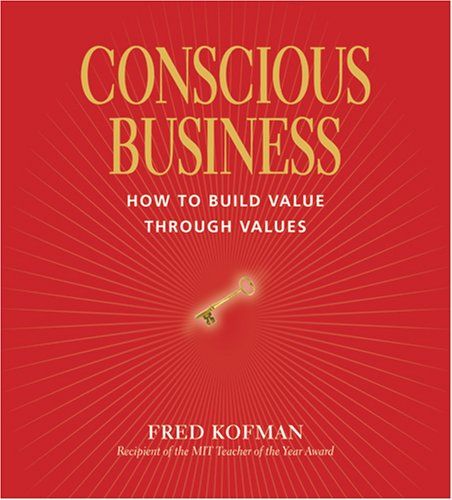
Atlas: Absolutely. And it’s not just some feel-good philosophy. We're talking about insights drawn from brilliant minds like Fred Kofman, with his work on 'conscious business,' and the incredibly impactful research from The Arbinger Institute. What's fascinating about Arbinger is that it’s not just one author; it’s a collective of thinkers who’ve spent decades studying self-deception and its effects on organizations. Their ideas are so accessible, yet so profoundly challenging to our everyday assumptions about human interaction in the workplace.
Nova: Exactly. Their core insight, for instance, into the 'inward mindset,' isn't some abstract academic theory. It's a lens through which you can instantly recognize why certain team dynamics feel perpetually stuck or why communication keeps breaking down. It’s about how our internal state fundamentally shapes our external interactions.
Atlas: And for anyone who's ever felt like they're hitting their head against a wall trying to motivate a team, or streamline a process, or even just foster genuine collaboration, these books offer not just answers, but a completely different way of framing the questions.
Nova: Which brings us directly to our first big idea today: why our default setting for leadership, this instinct for control, often creates more problems than it solves.
The Illusion of Control: Why Traditional Leadership Stifles Growth
SECTION
Atlas: So, Nova, this idea of 'control less' immediately makes me think of all the leaders out there who are probably saying, 'But wait, if I don't control, who does? Chaos?'
Nova: That’s the natural reaction, isn't it? It’s embedded in our management blueprints. We’re taught that leadership control—control over outcomes, control over processes, even control over people's time. But what The Arbinger Institute meticulously dissects is how this drive for control often stems from what they call an 'inward mindset.'
Atlas: Okay, so, an 'inward mindset.' Can you break that down for us? Because I imagine a lot of our listeners might think they're focusing on results, when maybe they're actually trapped in this mindset.
Nova: It’s subtle, Atlas, and that’s its power. An inward mindset means seeing others primarily as objects—as vehicles for results, obstacles to success, or irrelevant to concerns. We're so focused on our own objectives, our own metrics, our own perceived needs, that we fail to see the humanity, the needs, the aspirations of the people around us.
Atlas: Wow. That’s actually a really stark way to put it. Not just 'self-centered,' but actively seeing others as 'objects.' That resonates with anyone who’s ever felt like a cog in a machine.
Nova: Precisely. Let me give you an example. Imagine Sarah, a project manager, is overseeing a critical software launch. Her bonus depends on hitting the deadline. She's brilliant, detail-oriented, and genuinely wants the project to succeed. But she operates from an inward mindset. She dictates every step, micromanages code reviews, demands hourly updates, and dismisses team suggestions if they don't perfectly align with her pre-conceived plan.
Atlas: That sounds like a lot of high-pressure environments. I can see how, from her perspective, she’s just being diligent.
Nova: Exactly. Internally, she’s thinking, 'My team isn't as experienced as I am; I need to ensure quality. If I don't stay on top of them, this project will fail, and I'll look bad.' She's seeing her team as a collection of hands and brains to be directed, rather than as intelligent, creative individuals with their own insights and desire for ownership.
Atlas: So, what happens to her team in that scenario? Because I'm imagining it's not a happy place to work.
Nova: It’s anything but. Her team members, who initially came with enthusiasm and innovative ideas, start to disengage. They feel their contributions aren't valued. They stop offering solutions because they know Sarah will just override them. They become passive, waiting for her instructions, doing the bare minimum. Innovation plummets. Morale tanks. And ironically, Sarah ends up doing work, constantly correcting perceived errors and burning herself out.
Atlas: That's the insidious part, isn't it? The leader thinks they're solving a problem, but they're actually creating a bigger, deeper one. It's like trying to put out a fire with gasoline. It’s also interesting how that inward mindset could deeply impact a company culture. For anyone trying to build a healthy, innovative culture, that kind of leadership would be a poison.
Nova: A complete poison. The project might hit its deadline, but the long-term cost is immense: a demotivated team, high turnover, and a culture of compliance rather than collaboration. The illusion of control gives Sarah a false sense of security, but it actively sabotages growth and genuine commitment. The team is not, they're just.
Atlas: It makes me wonder, then, how does a leader, especially one under intense pressure, even begin to break free from that kind of ingrained pattern? Because simply saying 'don't micromanage' feels like a surface-level fix to a much deeper issue.
From Control to Influence: The Power of Conscious Leadership and Seeing Humanity
SECTION
Nova: That’s the million-dollar question, Atlas, and it’s where Fred Kofman’s work on 'conscious business' provides such a powerful counter-narrative. It’s about shifting from that 'me' mentality, which fuels the inward mindset, to a 'we' mentality. It’s a fundamental reorientation.
Atlas: So, stepping out of that 'seeing others as objects' frame, and into a space of shared purpose?
Nova: Exactly. It begins with self-awareness. Kofman argues that conscious leaders understand their own internal landscape, their biases, their fears, and how these impact their interactions. Only when you truly understand yourself can you genuinely begin to understand and empathize with others. It's about seeing the humanity in those you lead, not just their job functions.
Atlas: And how does that translate into tangible influence? Because for our listeners who are aiming to be ethical leaders and human architects, this sounds like the core of what they're striving for.
Nova: Let’s contrast Sarah with David, another project leader facing a similar high-stakes product launch. David also wants success, but he approaches his team with a 'we' mentality. He starts by clearly articulating the behind the project, not just the. He involves the team in problem-solving, asking questions like, 'How can achieve this deadline while maintaining quality?'
Atlas: So, he’s not just delegating tasks; he’s sharing ownership, sharing the of the challenge.
Nova: Precisely. David actively listens, not just to respond, but to truly understand his team members' perspectives, concerns, and insights. When a team member, Maria, expresses concerns about a technical roadblock, David doesn't dismiss it. He says, 'Maria, tell me more. What are you seeing that I'm not? How can overcome this together?' He sees Maria not as an obstacle to his timeline, but as a valuable expert with a unique perspective.
Atlas: That’s such a powerful shift. Instead of seeing her as a problem, he sees her as a resource. It makes me think about how much creativity and problem-solving capacity gets left on the table when leaders don't genuinely tap into their team's full potential.
Nova: It’s immense! Because David is operating from a place of genuine curiosity and respect, his team feels seen, valued, and empowered. They become personally committed to the shared goal, not just compliant with his directives. When challenges arise, they don't wait for David to fix them; they proactively seek solutions, knowing their contributions will be heard and appreciated.
Atlas: And the impact? I imagine it's night and day compared to Sarah's team.
Nova: Absolutely. David’s team not only hits the deadline, but they often exceed expectations, delivering a more innovative and robust product because everyone felt invested and contributed their best. Trust flourishes, communication is open, and the team cultivates a sense of collective achievement. This is influence in its purest form: inspiring commitment and collaboration by genuinely seeing and valuing the people you lead. It's about moving beyond transactional relationships to truly human ones.
Atlas: That’s actually really inspiring. It sounds like a more sustainable and, frankly, more joyful way to lead. It aligns so well with building a culture based on human connection and ethical practice. It's not just about getting things done, but they get done, and the environment it creates.
Synthesis & Takeaways
SECTION
Nova: So, what we're really talking about here, Atlas, is the profound impact of shifting your internal lens. The paradox is that when you relinquish the to control every variable, and instead focus on genuinely influencing through empathy and understanding, you actually gain a far greater, more sustainable power.
Atlas: That reframe is everything. It’s not about being 'soft' or 'hands-off.' It’s about being deeply intentional and strategic in where you place your energy. And it's not just about a change in behavior, but a change in —from seeing people as objects to seeing them as whole, contributing humans.
Nova: Exactly. And the beauty is, you don't need a massive organizational overhaul to start. The 'tiny step' that Nova's take emphasizes is simply practicing truly listening to understand, not just to respond. Imagine, in your next team interaction, instead of formulating your reply while someone else is speaking, you simply focus on absorbing their unspoken needs, their underlying perspective.
Atlas: That’s a powerful challenge. I imagine a lot of our listeners can think of a challenging conversation coming up, maybe with a team member, a colleague, or even someone at home. And that one small shift—just listening to understand—could fundamentally alter the outcome. It's a profound act of acknowledging someone's humanity, right there.
Nova: It is. It’s a micro-action with macro-impact. It’s how you begin to dismantle that inward mindset, one genuine connection at a time. It’s how you start to influence, not control.
Atlas: What a powerful way to put it. For anyone out there grappling with the complexities of leadership, or just the everyday challenges of human interaction, that one insight can be a complete game-changer.
Nova: Absolutely. It’s about building bridges, not walls.
Atlas: This is Aibrary. Congratulations on your growth!