Foundations of Influence: Mastering Leadership Essentials
Opening
SECTION
Nova: Content` format followed.
Nova: English.
Golden Hook & Introduction
SECTION
Nova: Alright, Atlas, let's play a little game. When I say "leader," what's the first image that pops into your head? Be honest.
Atlas: Oh man, a leader? Immediately, I picture someone in a crisp suit, standing at a podium, probably with a PowerPoint deck that has too many bullet points. Or maybe a CEO, commanding attention, making big decisions from a corner office. You know, the classic, top-down, "I'm the boss" vibe.
Nova: Exactly! That's the image so many of us default to. But what if I told you that entire mental picture is fundamentally flawed? What if leadership isn't about the corner office, the fancy title, or the power of position at all?
Atlas: Whoa. Hold on. So all those corporate ladders I've been eyeing are essentially decorative? You're telling me everything I thought I knew about leadership is… wrong? That's a bold claim, Nova. I'm intrigued, but also a little skeptical.
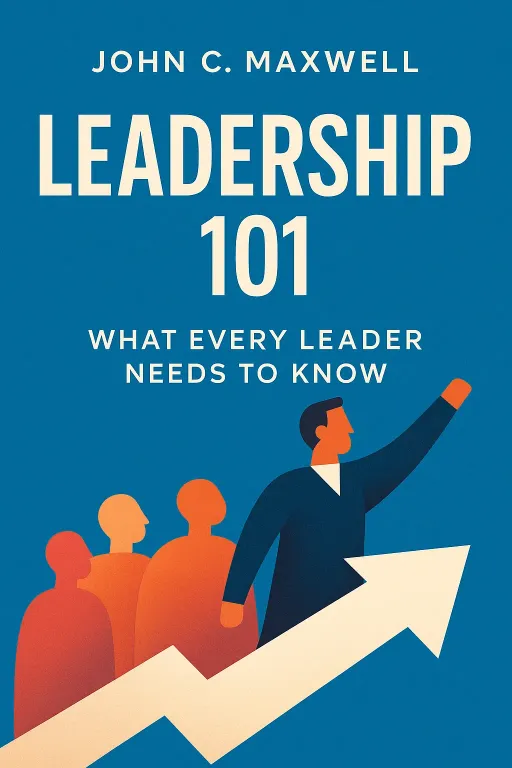
Nova: It is bold, and it’s a perspective we’re diving into today, straight from the wisdom of two titans. We're talking about the foundational insights from John C. Maxwell's "Leadership 101" and Dale Carnegie's "The Leader in You." Maxwell, for instance, is renowned globally for his prolific writing and practical, accessible approach to leadership development, having authored dozens of books that have sold millions. His work has fundamentally reshaped how many view leadership, moving it from an exclusive club to an inclusive skill.
Atlas: Okay, so Maxwell is saying it's not about the title. But then what it about? Because if I'm not the one with the 'CEO' badge, how do I actually lead? How do I get people to follow?
Deep Dive into Core Topic 1: Leadership as Influence (Maxwell)
SECTION
Nova: That’s the million-dollar question, and Maxwell’s answer is elegantly simple: Leadership is influence. Nothing more, nothing less. He argues that if you can influence someone, you are leading them. And the beautiful part is, anyone can cultivate influence, regardless of their position on an organizational chart.
Atlas: So basically you’re saying my ability to convince my partner to watch my favorite documentary instead of theirs, that’s leadership? I mean, I try. Sometimes it works. Is it really that simple? Because in a professional context, it feels like there’s a lot more at stake than movie night.
Nova: That’s a great example, actually! The stakes might be different, but the underlying mechanism of influence is very similar. Maxwell breaks it down into three core pillars: character, relationships, and vision. These are the building blocks of genuine influence.
Atlas: Character, relationships, vision. Okay. Let’s unpack that. Character first. What does that mean in the context of leadership, beyond just "being a good person"? Because I imagine a lot of our listeners strive to be good people, but might still struggle with influence.
Nova: Absolutely. Character, in this sense, is about integrity, trustworthiness, and consistency. It’s about doing what you say you’re going to do, even when no one is watching. It’s the bedrock upon which all other influence is built. Think about a project manager who consistently delivers on promises, admits mistakes, and always prioritizes the team's well-being over their own ego. They might not be the flashiest person, but their team trusts them implicitly. That trust, built on solid character, translates directly into influence. People will follow their lead because they believe in that person is.
Atlas: That makes sense. It’s less about a charismatic facade and more about a reliable foundation. So it’s less about telling people what to do, and more about someone they want to follow because they respect your integrity. But what about relationships? I've seen plenty of leaders who are technically competent and have good character but still struggle to connect with their teams.
Nova: And that’s where relationships come in. Influence isn't a monologue; it's a dialogue. It's built on genuine connection, empathy, and understanding. It's about knowing your team members, understanding their strengths, their challenges, their aspirations. Imagine a CEO who takes the time to personally check in with entry-level employees, remembering details about their families or hobbies. That kind of authentic connection, that investment in the individual, builds loyalty and rapport. When people feel seen and valued, they are far more likely to be influenced by your direction because they feel a personal stake in the shared journey.
Atlas: I can see that. That’s going to resonate with anyone who struggles with team engagement. It’s about moving beyond just professional courtesy to genuine human connection. But what about vision? You can have great character, strong relationships, but if you don't know where you're going, are you really leading?
Nova: Precisely. Vision is the destination. It’s the clear, compelling picture of the future that inspires people to move forward. A leader articulates a vision that is so clear, so exciting, and so meaningful that others want to be a part of it. Think of a startup founder, perhaps with limited resources but an incredibly powerful vision for how their product will change the world. They might not have a big office or a huge salary to offer, but their passion for that vision, coupled with their character and ability to build relationships, can attract top talent who are willing to take risks and work tirelessly towards that shared future. It’s about inspiring them towards a collective purpose, making them feel like they're building something bigger than themselves.
Atlas: That's powerful. So it’s not just about setting goals, it’s about painting a picture that people want to step into. It sounds like Maxwell is essentially saying that true leadership is an earned privilege, not an inherent right of a position. It's about earning the right to ask people to follow you.
Nova: Exactly. It’s a dynamic, ongoing process. You don't just achieve influence; you continually cultivate it through these three pillars. And for those of us who are driven by developing others, this framework is incredibly empowering because it means anyone, anywhere in an organization, can start building their leadership capacity today. You don't need a promotion to start influencing.
Deep Dive into Core Topic 2: Inspiring Action through Human Connection (Carnegie)
SECTION
Nova: And speaking of being someone people want to follow, that brings us beautifully to another foundational thinker, Dale Carnegie, and his book "The Leader in You." Carnegie’s work, which built upon his timeless principles of human relations, has had an enduring impact on personal and professional development for decades. His original work, "How to Win Friends and Influence People," published in the 1930s, became a cultural phenomenon precisely because it distilled complex social dynamics into practical, actionable advice for genuine connection. "The Leader in You" takes those principles and directly applies them to the art of leading and inspiring others.
Atlas: Carnegie, the 'win friends' guy. I know that name. But how does that translate to people, especially in today's fast-paced, results-driven environment where people often just want quick answers and efficiency? It sounds a bit like... 'be nice to people.' Is that really enough to inspire loyalty and action?
Nova: That's a fair question, and it's a common misconception. Carnegie’s approach is far more profound than just "being nice." It's about understanding fundamental human motivations and using that understanding to foster cooperation and inspire action. It's about leading by example, yes, but also about genuinely connecting with people on an emotional and psychological level to unlock their potential and commitment.
Atlas: Okay, so it’s strategic empathy, not just superficial pleasantries. Can you give me an example? Because for someone who's a strategic navigator, who wants to align vision with action, I need to know how this translates into tangible results, not just good vibes.
Nova: Let’s imagine a scenario. You have a team member who's been underperforming, perhaps even resistant to new ideas. A leader operating purely from position might issue a directive, or worse, threaten consequences. A Carnegie-inspired leader would approach it differently. They would first seek to understand the individual's perspective, without judgment. They might ask, "What are your biggest challenges right now?" or "What do you feel is holding you back?"
Atlas: So, listening. I mean, that sounds basic, but how often do we truly listen without just waiting for our turn to speak?
Nova: Exactly! It’s active, empathetic listening. But it goes further. They would then try to appeal to that person's higher motives. Perhaps the team member is feeling unappreciated, or they're overwhelmed. A Carnegie leader would find a way to make them feel important, to acknowledge their contributions, and to show them how their success aligns with a larger, meaningful team goal. They would frame the task not as a burden, but as an opportunity for growth, for recognition, for making a real impact.
Atlas: So it's not about forcing compliance, it's about making them to contribute. It's like, you're not just moving chess pieces on a board; you're understanding what motivates each piece individually and then creating an environment where they to move in the right direction. That sounds incredibly powerful for developing future leaders – it's teaching them to lead themselves first, by finding their own motivation.
Nova: Precisely. It’s about building loyalty and action from within. It's about saying, "How can I help this person feel valued, capable, and aligned with our shared purpose?" When you appeal to people's self-interest, their desire for importance, their need for recognition, and their aspiration to grow, you tap into a far deeper wellspring of motivation than any positional authority ever could. And you do this by being a genuine example of those values yourself. That’s why leading by example is so crucial – if you want cooperation, you must be cooperative. If you want respect, you must give respect.
Atlas: That’s a fundamentally different way of thinking about leadership. It's not just about managing tasks or people, it's about cultivating an environment where people feel empowered to contribute their best because they believe in the leader and the vision. It's about creating self-starters, not just followers.
Nova: And that’s the synergy between Maxwell and Carnegie. Maxwell gives us the framework: leadership is influence, built on character, relationships, and vision. Carnegie then provides the masterful instruction manual for to wield that influence, how to truly connect with people, inspire their loyalty, and unleash their potential through genuine human understanding and strategic empathy. Together, they paint a picture of leadership that is accessible, deeply human, and profoundly effective.
Synthesis & Takeaways
SECTION
Nova: So, bringing it all together, what we've learned from Maxwell and Carnegie is that leadership is far more nuanced and accessible than most people realize. It's not a title you're given; it's a force you cultivate. It’s the difference between merely directing traffic and inspiring a journey.
Atlas: That’s a fantastic way to put it. Directing traffic implies a hierarchy, a command-and-control. Inspiring a journey implies shared purpose, motivation, and a deep understanding of what moves people. It truly transforms the idea of leadership from a burden of responsibility to an opportunity for profound impact.
Nova: Absolutely. And the beauty is, these aren't abstract theories. They are actionable principles. Maxwell shows us the "what" – that influence comes from who you are, how you connect, and where you're going. Carnegie then gives us the "how" – the timeless human relations principles that allow us to genuinely inspire loyalty and action by understanding and valuing others. For anyone who's a visionary leader, a strategic navigator, or an empathetic catalyst, this is gold.
Atlas: It really is. It shifts the focus from external power to internal cultivation. So, if I'm listening, and I want to put this into practice today, what's one tiny step I can take, based on these foundations?
Nova: Today, identify one area where you can intentionally practice influence. Maybe it's encouraging a colleague who's struggling, really listening to their perspective without interruption, or taking a moment to clarify a team vision in a way that truly excites and resonates with everyone. It could be as simple as acknowledging someone's effort in a specific, genuine way.
Atlas: I love that. A tiny step, but with a ripple effect. And then, for those of us who are really driven by developing future leaders around us, who want to empower our teams, there's that deeper question: How can I apply these foundational principles to not just direct, but truly inspire and empower the future leaders around me? How can I create an environment where they also feel equipped to cultivate their own influence, character, relationships, and vision?
Nova: That's the ultimate goal, isn't it? To build not just followers, but more leaders. It’s a continuous journey of self-growth and other-development, constantly refining your character, deepening your relationships, and clarifying your vision, all while understanding the profound human motivations that drive us all. It's about leaving a legacy of empowered, influential individuals.
Atlas: That's incredibly powerful. It makes leadership feel less like a burden and more like a privilege to serve and elevate others.
Nova: It absolutely is. It's about understanding that the most effective leaders aren't those with the biggest titles, but those with the deepest well of influence and the greatest capacity to inspire.
Atlas: What an insightful deep dive. Thank you, Nova.
Nova: Always a pleasure, Atlas.
Atlas: This is Aibrary. Congratulations on your growth!