The 'Just Add More Features' Fallacy: Why Simplicity Drives True Agent Innovation.
Golden Hook & Introduction
SECTION
Nova: What if the biggest obstacle to your next breakthrough Agent system isn't a lack of features, but an abundance of them? What if true innovation stems from the courage to subtract, not just to add?
Atlas: Hold on, Nova. That's a pretty bold claim in an industry where "more features" often equates to "more value" in most people's minds. I mean, stakeholders are always asking for the next big thing, the next capability. It's almost ingrained in how we develop.
Nova: Absolutely, Atlas. And that's precisely the paradox we're diving into today. We're challenging what we call "The 'Just Add More Features' Fallacy." It's a pervasive blind spot in innovation, particularly potent in the rapidly evolving world of Agent systems. We believe that often, the most revolutionary Agent systems are those that achieve profound results through elegant simplicity, reducing cognitive load and friction.
Atlas: That makes me wonder, how do you even begin to push back against that ingrained mindset? Because for engineers and architects, we're constantly balancing adding functionality with maintaining a coherent, scalable system.
Nova: Exactly. And to guide us through this counter-intuitive wisdom, we're drawing insights from two titans: design guru John Maeda and product visionary Marty Cagan. Both, in their own unique ways, championed the power of elegant simplicity. Their work, though not explicitly about AI Agents, offers an incredibly potent blueprint for how we should be thinking about building intelligence.
The 'Just Add More Features' Fallacy – Why Less is More for Agent Innovation
SECTION
Nova: So, let's start with this core idea: the temptation to believe that more features equal more value. It’s a natural inclination, especially when you're trying to differentiate your product or respond to user requests. But in the context of Agent systems, which are designed to human effort and complexity, adding features indiscriminately can actually be detrimental. It creates a cognitive burden for the user and a maintenance nightmare for the developer.
Atlas: But wait, looking at this from a competitive market perspective, isn't feature parity or even superiority often seen as the goal? How do you sell 'less' to stakeholders who expect 'more'? It sounds like a tough pitch, especially when demonstrating value is paramount.
Nova: It's a tough pitch, but it's essential. Think about the early days of personal digital assistants, those clunky devices that tried to do everything but excelled at nothing. They were a prime example of feature bloat. Too many options, too many settings, too many ways to fail. Users got overwhelmed, abandoned them, and their promise of making life simpler just added more stress. The cause was clear: an attempt to cram every possible function into a single device. The process was additive, without much thought to integration or user experience. The outcome was a complex, frustrating, and ultimately abandoned product.
Atlas: I can definitely relate to that. We've all seen Agent prototypes that try to tackle too many domains at once, resulting in a system that’s a jack-of-all-trades and master of none. So, the 'more features' approach isn't just bad for users, it's a nightmare for the teams building and maintaining these complex Agent systems, right? It impacts stability, scalability, and developer morale.
Nova: Absolutely. The hidden cost of complexity for developers is immense. Every additional feature, especially in an Agent system, introduces new potential points of failure, more dependencies, and a cascading effect on testing and debugging. It slows down development cycles, makes the system brittle, and dramatically increases technical debt. You end up with a system that's a labyrinth, not an elegant solution. The friction isn't just for the user; it's for the entire engineering team.
Architecting for Subtractive Clarity – Lessons from Maeda and Cagan for Agent Engineers
SECTION
Nova: So, if complexity is the enemy, how do we actively for simplicity? That's where minds like John Maeda and Marty Cagan become indispensable guides for Agent engineers. Let's start with John Maeda and his 'Laws of Simplicity.' Maeda, a pioneer in design and technology, argues that thoughtful reduction and organization can lead to more effective and delightful user experiences. For an Agent system, this means simplifying its interaction models, its output, and even its internal state representation. It's about taking complex data and presenting it to the user in the most digestible, actionable way possible, not just dumping raw information.
Atlas: Maeda's ideas sound great for UI, but for the underlying logic of an Agent, how do we apply 'reduction'? Is it about fewer algorithms, or more elegant ones? For someone deep in the code, 'simplicity' can sometimes feel abstract.
Nova: That's a crucial distinction, Atlas. For the underlying logic, it's about elegant algorithms and clear, modular architecture. It's about identifying the core decision-making process of the Agent and streamlining it. Can the Agent achieve its goal with fewer steps, fewer external calls, fewer internal states? It's about designing for clarity from the ground up, not just slapping a simple UI on top of a messy backend. It's about minimizing the pathways for error and maximizing the signal-to-noise ratio in its internal operations.
Atlas: That makes sense. It's about identifying the true essence of the Agent's purpose. And that brings us to Marty Cagan. He's all about building products customers love by deeply understanding their problems.
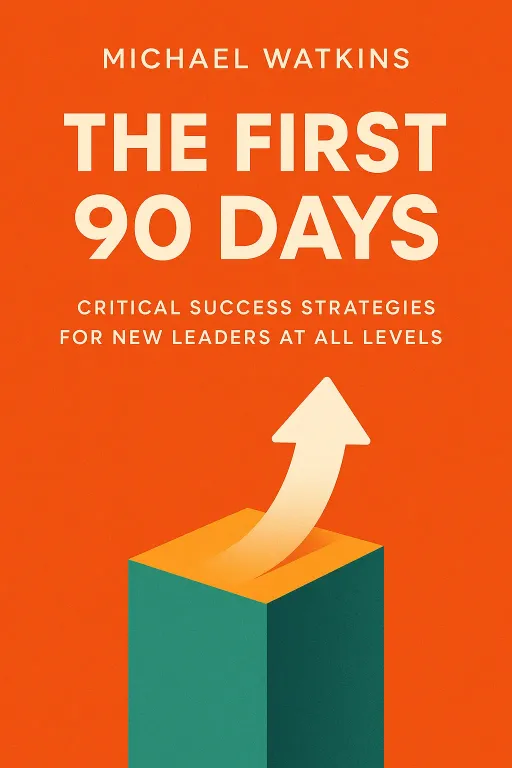
Nova: Precisely. Marty Cagan, in "Inspired," emphasizes ruthless prioritization and focusing on core value. For Agent product management, this means identifying the single, most critical problem the Agent solves and building exceptionally well, rather than trying to solve ten problems poorly. It's about understanding the user's true pain point and making the Agent the undisputed champion in alleviating that specific pain.
Atlas: Okay, prioritization sounds obvious in theory, but in reality, every stakeholder thinks their feature is 'core.' How does an Agent architect or engineer push back and implement this 'ruthless prioritization' when the business demands are endless? It feels like you're constantly fighting upstream.
Nova: That's the clash, isn't it? It requires a shift in how we define success. Instead of measuring success by the number of features shipped, we measure it by the of the Agent on the user and the business. Engineers can advocate for simplicity by demonstrating its direct correlation to performance, reliability, and faster user adoption. You present evidence: "This simpler Agent, focused on these two core tasks, has a 90% success rate, while the feature-rich prototype only achieved 50%." You can also frame it in terms of future scalability and maintainability – a simpler Agent is inherently more robust and easier to evolve. It's about finding that minimum viable Agent, or MVA, that delivers profound value.
Atlas: So, it's not just about saying "no" to features, but demonstrating the superior value of strategic "yes, but simplified" or "yes, to this core problem only."
Nova: Exactly. My take is that these insights fundamentally shift your design philosophy from additive complexity to subtractive clarity. It means ensuring your Agent solutions are not just powerful, but also intuitive and user-centric from the very first line of code to the final user interaction. It's about building intelligence that feels effortless.
Synthesis & Takeaways
SECTION
Nova: So, Atlas, we’ve talked about the fallacy of endless features and the wisdom of subtractive clarity from Maeda and Cagan. It's clear that embracing simplicity in Agent design isn't just about aesthetics; it's a strategic imperative for true innovation and creating breakthrough intelligent systems.
Atlas: Absolutely. For our listeners who are full-stack engineers, architects, and value creators, this isn't just theoretical. It directly impacts the performance, stability, and scalability of the Agent systems they're building. It's about moving beyond just coding functionality to architecting genuine intelligence with a clear purpose.
Nova: Precisely. And this leads us to a deep question for all our listeners: Consider your most complex Agent feature. How might you simplify its interaction or underlying logic to deliver the same value with less effort? Think about the principles we discussed – thoughtful reduction, ruthless prioritization. Where can you subtract to amplify?
Atlas: That's a powerful challenge. Because ultimately, the goal isn't just a smart Agent, it's a Agent. One that truly reduces cognitive load and friction for its users, and for the teams building it. That's where we see the fusion of Agent decision logic with human intelligence truly shine.
Nova: When you strip away the unnecessary, what remains is often the most profound. It's about building Agents that are not just intelligent, but elegantly so. That’s where the real breakthroughs happen.
Atlas: This is Aibrary. Congratulations on your growth!