The 'Build Trap' is a Trap: Why You Need Strategic Product-Market Fit
Golden Hook & Introduction
SECTION
Nova: What if I told you that the harder you build, the more features you ship, the you might actually be getting from true, impactful success?
Atlas: Whoa, Nova, that's a bold claim right out of the gate! I mean, for strategists and builders, the mantra is often 'just get it done,' 'ship it fast,' 'deliver, deliver, deliver.' Are you suggesting all that hard work could be... counterproductive?
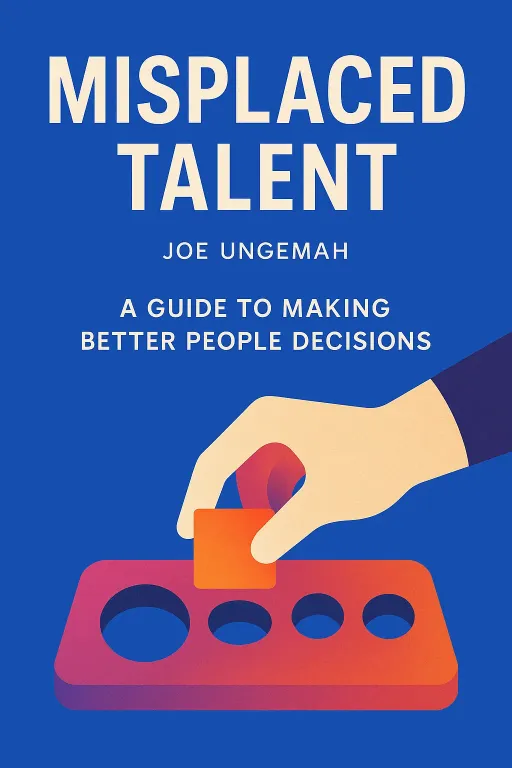
Nova: Precisely, Atlas. And it's a phenomenon many brilliant minds, especially those driven by impact and efficiency, fall into. We're talking about the insidious 'build trap,' a concept that's been gaining significant traction in product circles, drawing powerful insights from foundational thinkers like Marty Cagan and Eric Ries.
Atlas: It sounds like a paradox. We optimize, we build, we push for efficiency, but if we're not careful, we could be optimizing for the wrong thing entirely. For someone who thrives on solving real problems for users, that's a pretty unsettling thought.
Nova: It absolutely is. And today, we're going to unpack why this trap is so prevalent, and more importantly, how to escape it. We’ll dive into this from two crucial perspectives. First, we'll explore the seductive nature of the 'build trap' itself and why even the most brilliant minds fall into it. Then, we'll discuss the powerful frameworks from Marty Cagan and Eric Ries that offer a way out, transforming product development from a gamble into a predictable engine for solving real user problems.
The Build Trap: Why Building Without Purpose is a Road to Nowhere
SECTION
Atlas: So, Nova, let's start with the trap itself. You mentioned it catches even the best. What does the 'build trap' actually look like in the wild? For someone who analyzes numbers and values efficiency, how do you even recognize you're caught in it?
Nova: It's often subtle, Atlas, and it masquerades as productivity. Imagine a team, highly skilled, incredibly dedicated. They're churning out features, hitting every deadline, celebrating every release. From an internal perspective, they're crushing it. But then, the market doesn't respond. User adoption is low. The 'impact' you were aiming for just... isn't there. It's like building the most incredible, technologically advanced bridge, but realizing it connects two places nobody actually wants to go. The engineering is perfect, the efficiency was top-notch, but the was misaligned.
Atlas: Right, like optimizing for the wrong metric. We're so good at the 'how' that we forget to constantly question the 'why' and the 'for whom.' I’ve seen that in so many places – teams that are incredibly busy, but when you zoom out, the needle isn't moving on the big picture goals.
Nova: Exactly. The cold, hard fact is, true impact comes from a deep, iterative understanding of product-market fit. It's about solving real problems, not just shipping code. The 'build trap' occurs when organizations become delivery-focused, prioritizing the execution of a pre-defined roadmap over the continuous discovery of what users truly need. They're building things right, but maybe not building the.
Atlas: That’s a powerful distinction. Building things right versus building the right things. I imagine for a strategist, that’s a constant tension. You have a vision, you want to execute it, but how do you balance that drive to build with the need to constantly re-evaluate if you're even on the right path? It almost feels like it could slow you down.
Nova: It’s not about slowing down, Atlas, it’s about smart acceleration. The trap is seductive because building feels productive. It gives a sense of accomplishment. But the real problem is a fundamental shift in focus. Instead of asking, "What problem are we solving for our users?", teams in the build trap are often asking, "How quickly can we deliver this feature?" The external market validation gets lost in the internal machinery of execution.
Atlas: So, it's less about the velocity of shipping and more about the direction of the ship. If you're sailing in the wrong direction, faster just gets you to the wrong destination sooner.
Nova: A perfect analogy. And this misdirection can lead to significant resource drain, demoralized teams, and ultimately, a failure to achieve the very impact that drives strategists and visionaries. The solution isn't to stop building, but to redefine what 'building' truly means.
From Guesswork to Growth: The Power of Discovery and Validated Learning
SECTION
Nova: But Atlas, the good news is, there's a powerful antidote to this trap, frameworks that shift the entire paradigm. And it comes from those foundational thinkers we mentioned earlier: Marty Cagan and Eric Ries.
Atlas: Excellent. Because identifying the problem is one thing, but having a pragmatic path forward is what truly empowers a builder. So, how do Cagan and Ries guide us out of this 'build trap'?
Nova: Marty Cagan, in particular, emphasizes that product teams must discover what users truly need, not just execute a roadmap. This means continuous discovery, not just delivery. It’s about focusing on outcomes over outputs. Instead of measuring how many features you shipped, you measure the impact those features had on user behavior or business goals. He champions the idea of empowering product teams to solve problems, rather than just build solutions dictated from above.
Atlas: That makes a lot of sense. It sounds like giving teams the 'what' and the 'why,' but letting them figure out the 'how' through constant iteration with the customer. But how do you prevent that from becoming an endless loop of discovery without ever actually building anything substantial? For a pragmatist, that could feel like a lack of progress.
Nova: That's where Eric Ries and "The Lean Startup" come in with the Build-Measure-Learn feedback loop. Ries advocates for validated learning over assumptions. It's about rapid experimentation to find what resonates and what doesn't, quickly. You build the smallest possible thing – an MVP, or Minimum Viable Product – to test a core assumption, measure its impact, and then learn from that data to decide whether to pivot, persevere, or stop. It's a scientific approach to product development.
Atlas: Okay, so it’s not just 'discover endlessly,' it’s 'discover, build a tiny experiment, measure, learn, and then iterate.' That sounds much more like the iterative optimization process a strategist would appreciate. Can you give an example of how this 'tiny, rapid experiment' might work? Because for someone used to large-scale projects, 'tiny' can feel... insignificant.
Nova: Not insignificant at all. Think about a company that believes users want a complex, AI-driven recommendation engine for their e-commerce site. Instead of spending months building it, a 'tiny experiment' might involve manually curating recommendations for a small group of users, or even just showing a mock-up of the AI engine and asking for feedback. You're testing the – do users value personalized recommendations enough to engage with them? – before you commit massive resources.
Atlas: That’s brilliant. It's like a focused laser beam, rather than a shotgun blast. You’re validating the core hypothesis with minimal investment, before you even write a single line of complex code. So, the shift is fundamentally from internal execution to external market validation, ensuring your efforts yield maximum impact.
Nova: Precisely. These insights fundamentally shift the focus from internal execution to external market validation, ensuring your efforts yield maximum impact. It's about getting out of the building, talking to users, running small tests, and letting the market guide your development, rather than just internal opinions or a static roadmap.
Atlas: It’s a powerful idea. It sounds like it cultivates a mindset of humility and constant learning, even for the most visionary leaders. Because your vision needs to be constantly challenged and refined by reality.
Synthesis & Takeaways
SECTION
Nova: Absolutely, Atlas. What we’re really talking about here is moving beyond the illusion of productivity that the 'build trap' creates. It’s a call to action for anyone who leads, builds, or strategizes to ensure their efforts are truly aligned with solving real problems and creating genuine impact. The core insight is that your brilliance isn't measured by how much you build, but by how effectively you solve problems that matter.
Atlas: That’s a profound thought. It resonates deeply with the drive for impact. It's not about being less productive, but being productive. It’s about trusting your instincts, yes, but rigorously validating them with the market. And for our listeners, especially those who analyze numbers and optimize processes, this isn't just theory. It's a pragmatic pathway to better outcomes.
Nova: It is. And the most powerful takeaway is that you don't need to overhaul your entire organization overnight. You can start small.
Atlas: So, if I'm a strategist or builder listening to this, what's one tiny, rapid experiment I can try this week to start escaping the build trap?
Nova: Here’s your tiny step, your immediate call to action: Identify one key product assumption you hold – something you your users want or need. Then, design a tiny, rapid experiment to test it this week. It could be a simple survey, a quick user interview, or even a low-fidelity mock-up. The goal is to get real feedback, fast. Don't just build, learn.
Atlas: That’s an actionable challenge. Identify one assumption, test it rapidly, and learn. That’s how you start moving from guessing to growing. It’s about empowering your team by empowering their learning.
Nova: Exactly. This is Aibrary. Congratulations on your growth!