

Beyond the Metrics: Building Products Users Truly Love.
Golden Hook & Introduction
SECTION
Nova: What if I told you that the very thing product teams obsess over – building more features – is often the precise reason their products fail to truly connect with users?
Atlas: Oh, that's a bold statement, Nova. I imagine a lot of our listeners, especially those deeply committed to building and delivering, might be feeling a bit of cognitive dissonance right now. We're taught to deliver, deliver, deliver.
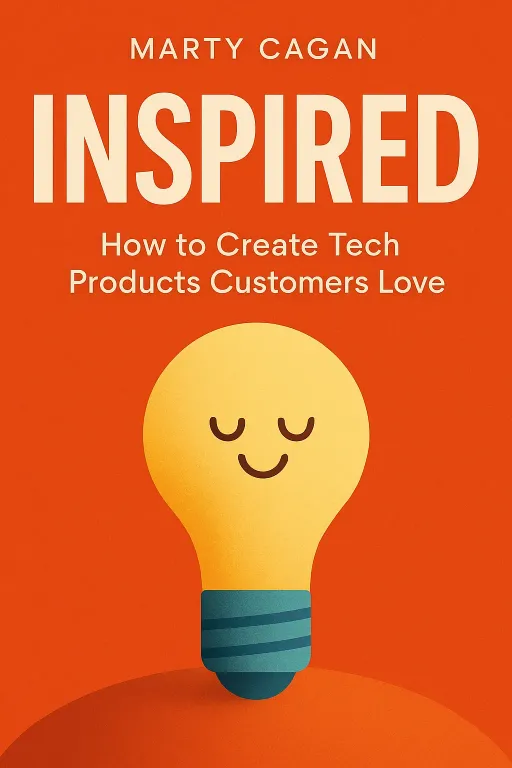
Nova: Exactly. And today we're unpacking a crucial concept, drawing heavily from the wisdom of product visionaries like Marty Cagan, whose work, particularly "Inspired," has fundamentally reshaped how leading tech companies approach product development. His insights are like a compass in the often-chaotic world of product.
Atlas: That’s a great way to put it. So, we're talking about shifting from just building to building.
Nova: Precisely. Today we'll dive deep into this from two perspectives. First, we'll explore "The Feature Fallacy" and why so many products miss the mark despite good intentions, then we'll discuss "The User-Centric Revolution," unpacking powerful methodologies for building products users truly love.
The Feature Fallacy: Why Products Fail to Delight
SECTION
Nova: So, let's kick off with "The Feature Fallacy." It’s this pervasive idea that if we just add more bells and whistles, users will automatically flock to our product and love it.
Atlas: I imagine a lot of product teams, especially those under pressure to show progress, might fall into that trap. You want to see tangible output.
Nova: Right. But the cold fact is, many product teams focus too heavily on features, completely overlooking the core user problems they're meant to solve. It leads to products that are technically sound, beautifully engineered even, but fail to truly delight or retain users. Picture a magnificent, state-of-the-art blender that can do a thousand things, but all the user wants is a simple smoothie maker that’s easy to clean.
Atlas: That’s a perfect example. We’ve all seen those products that are feature-rich but functionally frustrating. It’s like buying a Swiss Army knife when all you needed was a good corkscrew.
Nova: Exactly! And the core reason, as Cagan emphasizes, is a lack of deep customer understanding and rapid validation. Without that, you’re just guessing. You’re building a "feature factory," where the output is measured by the number of features shipped, not by the actual user value created. It's a treadmill of ineffective effort.
Atlas: That's actually really inspiring, because it speaks to the desire for building strong, connected teams, but also the practical application. How do you measure impact if you're not even sure what problem you're solving?
Nova: It’s a huge problem. Consider the story of a well-funded startup, let’s call them ‘SwiftChat.’ They built an incredibly robust messaging platform, packed with every conceivable feature: group chats, file sharing, video calls, custom emojis, even an AI assistant for scheduling meetings. Their engineering team was top-notch, delivering features at a dizzying pace. The CEO was thrilled with the velocity.
Atlas: Sounds impressive on paper. High velocity, lots of features… what went wrong?
Nova: Well, they launched with great fanfare, but user adoption plateaued almost immediately. Retention was dismal. When they finally started talking to their users – talking – they discovered something profound. Their target audience, small business owners, didn't need another feature-laden messaging app. They were overwhelmed by existing tools. What they needed was a simple, reliable way to coordinate with their team members for quick, actionable tasks, something specifically designed for micro-communication, not an all-encompassing office suite.
Atlas: Oh, I see. So SwiftChat built a beautiful castle, but their users were looking for a cozy, efficient cottage. They solved a technical problem, but not the user's actual pain point. That's going to resonate with anyone who struggles with ensuring their team is building the thing.
The User-Centric Revolution: Discovery, Validation, and True Value
SECTION
Nova: Precisely. And that naturally leads us to the second key idea we need to talk about: "The User-Centric Revolution." It’s the antidote to the feature factory. This is where product success comes from deeply understanding user pain points and continuously validating solutions with real-world feedback.
Atlas: So how do you actually make that shift? Because "deeply understanding" sounds great, but in practice, for our listeners who are managing high-pressure teams, that might feel impossible to implement, especially when deadlines are looming.
Nova: That’s where frameworks like product discovery, championed by Cagan, and Eric Ries’s Build-Measure-Learn feedback loop from "The Lean Startup" come into play. Cagan advocates for product discovery just feature delivery. It means spending significant time upfront, and continuously, understanding customer needs, validating assumptions, and rapidly prototyping solutions you commit to building a full-blown feature.
Atlas: Okay, so it’s like, instead of building the whole house and then seeing if anyone wants to live in it, you build a small model, show it to potential residents, get their feedback, and adapt before laying the first brick.
Nova: Exactly! And Ries’s Build-Measure-Learn loop complements this perfectly. You build a minimal viable product – an MVP – then you measure its impact on users, and then you learn from that data to iterate. It’s about learning as fast as possible what works and what doesn't.
Atlas: That’s a great way to put it. So, it's not just about asking users what they want. It's about observing their behavior and seeing how they react to actual solutions. What’s an example of this in action?
Nova: Let’s look at a company, we’ll call them ‘Connectify,’ that wanted to help local businesses manage their online presence. Initially, their instinct was to build a comprehensive dashboard with analytics, social media scheduling, email marketing — everything. But instead, they embraced discovery. Their product team spent weeks interviewing small business owners, observing their daily routines, even shadowing them.
Atlas: I can definitely relate to the value of active listening. What did they find?
Nova: They discovered that these business owners weren't lacking tools; they were drowning in them. Their biggest pain point was simply keeping their business hours, phone numbers, and holiday closures updated across Google, Yelp, and social media without manually logging into five different platforms.
Atlas: So, not a lack of features, but a lack of and.
Nova: Precisely. Connectify’s MVP wasn’t a comprehensive dashboard. It was a single, simple interface where businesses could update their core information once, and it would automatically push those updates to all major platforms. They built it, measured its usage, and learned that it was an absolute lifesaver for their users. They then gradually added more features, always validating each step with real user feedback.
Atlas: That’s a perfect example of how truly understanding the user’s pain points, rather than just building what you they need, leads to sustainable growth and, ultimately, a product users truly love. It's about empathy and practical application.
Synthesis & Takeaways
SECTION
Nova: So, what we’re really talking about today is a profound shift in mindset. It's moving away from being a "feature factory" to being a "problem solver." It’s about building products that are not just technically excellent, but deeply empathetic. The "tiny step" for any team, before designing your next feature, is to clearly articulate the specific user problem it solves and how you will measure its impact.
Atlas: That tiny step feels incredibly powerful, especially for those of us who prioritize building strong, connected teams and sustainable growth. It transforms the conversation from 'what are we building?' to 'who are we serving, and how are we making their lives better?' It forces that critical reflection.
Nova: Absolutely. It’s about embracing the discomfort of difficult conversations, as our user profile suggests, and asking those tough questions about we’re building something, not just. It's about practicing active listening, not just with your team, but with your users.
Atlas: That gives me chills, because it ties directly into understanding and delighting your users, and transforming disagreements into strengths by focusing on that shared purpose. It's about building with intention.
Nova: Indeed. And the lasting impact of this approach is that you build loyalty, trust, and products that genuinely integrate into users' lives because they solve real, felt needs. It’s the difference between a fleeting attraction and a lasting relationship.
Atlas: That's a great analogy. For anyone listening who wants to build products that truly matter, start by asking: what problem are we solving?
Nova: This is Aibrary. Congratulations on your growth!









