The Hugging Algorithm: Decoding Radical Customer Loyalty
Golden Hook & Introduction
SECTION
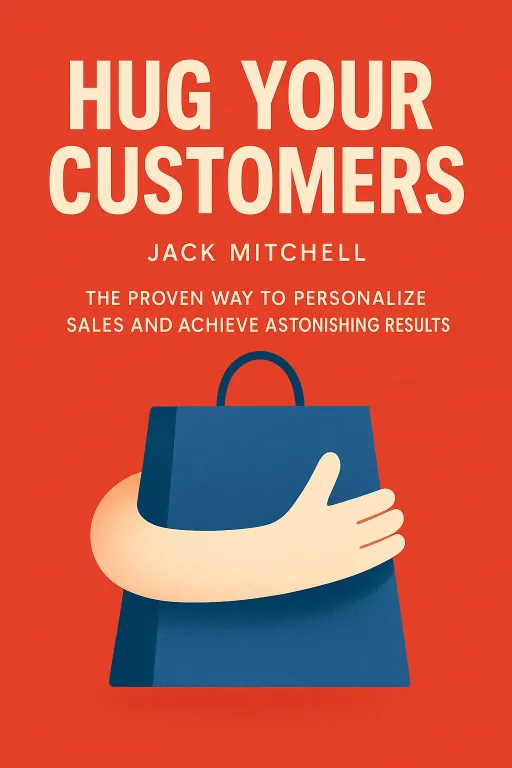
Nova: Jez, I want to start with a wild question. If a top client called you in a panic, needing something you didn't have, would you give them the literal coat off your back? It sounds absurd, but for Jack Mitchell, author of 'Hug Your Customers,' the answer was an immediate 'yes.' He argues that this level of commitment, this 'hugging' mindset, is the most powerful, un-automatable advantage in business today, especially in our tech-driven world.
Jez: The coat off your back… that's a high bar. You know, it immediately shifts the conversation from 'customer service,' which feels like a process or a department, to something much more personal and intense. My first thought is, that's a great story, but how is that even possible as a sustainable business model? It feels like a one-off, not a strategy.
Nova: That's the perfect question, because it gets to the heart of the book. It’s not about one-offs. It's about a fundamental shift in mindset. And that's what we're exploring today, using his incredible book as our guide. We'll dive deep into this from two perspectives. First, we'll explore the 'hugging' mindset as a form of extreme leadership. Then, we'll discuss how to systematize that empathy, using data to power genuine, personal connections that build unshakable loyalty.
Jez: Okay, I'm in. Extreme leadership and systematized empathy. That's a combination I'm very interested to unpack.
Deep Dive into Core Topic 1: The Hugging Mindset: Leadership Beyond the Transaction
SECTION
Nova: Exactly! It's about a mindset, not a department. And nothing illustrates this better than the story that I think inspired my opening question. It’s called The Navy Blue Cashmere Topcoat Escapade.
Jez: That already sounds like a movie title.
Nova: It really does! So, picture this: it's a freezing cold day in early February in Connecticut. A manager at a nearby corporation, a huge client of the Mitchells' clothing store, calls in a total panic. He has a career-making acquisition meeting in New York City the very next day, and he has nothing to wear. His college-age sons have apparently raided his closet and taken all his good coats back to school.
Jez: A classic, relatable problem, but with very high stakes.
Nova: Extremely high. He desperately needs a navy blue cashmere topcoat, a specific size. The store checks. They're completely sold out of his size in navy. So, what does Jack Mitchell, the CEO, do? He doesn't just say, 'Sorry, we're out of stock.' He alerts his master tailor, a man named Domenic, and they start brainstorming. Jack calls his suppliers in other cities to try and get a coat overnighted. But that won't solve the immediate problem for the meeting tomorrow.
Jez: Right, the clock is ticking. The logistics are the enemy here.
Nova: Precisely. So Jack and Domenic decide to drive to the client's office themselves. And they bring the only thing they have in his size—a light gray topcoat. They know it's not what he wants, but it's something. They get there, and the client is, understandably, annoyed. He's stressed, his career is on the line, and they brought him the wrong color coat. You can just feel the tension in the room.
Jez: I can imagine. This is the moment where most businesses would just apologize and retreat. The 'we did our best' moment.
Nova: But this is where the 'hug' happens. Jack is standing there, watching this client's frustration, and he has this sudden realization. He looks down at what he, Jack Mitchell, is wearing. A navy blue cashmere topcoat. And it's in the client's exact size.
Jez: No. You're kidding.
Nova: I am not. Without missing a beat, Jack takes off his own coat and says, 'Look, forget it. Just lease my coat for a day or two. Wear it to your meeting.'
Jez: Wow. Okay, so he literally did it. He gave him the coat off his back. What did the client do?
Nova: He was completely floored. Stunned. He takes the coat, goes to his meeting in New York, and apparently, the deal goes great. Two days later, Mitchells delivers the brand new navy coat they had ordered for him. That client, as you can imagine, became a customer for life. They built a legend with that one act.
Jez: That's an incredible story. But my analytical brain immediately goes to the leadership challenge. That's the CEO making that call. He has total authority. How do you build a culture where a sales associate, or the tailor Domenic, feels that same level of ownership and is empowered to come up with a solution that creative or that personal? Is it just about hiring empathetic people, or is there a system that creates that culture?
Nova: That is the million-dollar question, and Mitchell's answer is that it has to be baked into the culture, from top to bottom. Everyone has to be empowered. He tells another story about a man named Ray Rizzo, whose dad was visiting for Christmas. It was 4 PM on Christmas Eve, and his dad, who was a very difficult size to fit, had nothing to wear for their family dinner at 6 PM. They rushed to the store, and the tailors, not the CEO, worked a miracle. They basically rebuilt a jacket and pants in an hour. It proves the culture is real, not just a CEO's pet project.
Jez: So the topcoat story is the myth, the legend that sets the standard. And the Christmas Eve story is the proof that the culture is alive on the floor. The leader's job isn't just to perform the hug, but to create the conditions where anyone in the organization can. That's a powerful leadership insight.
Deep Dive into Core Topic 2: Systematizing Empathy: The Human-Centric Use of Data
SECTION
Nova: And that culture isn't just built on these grand, heroic gestures. You can't have a topcoat emergency every day, right? The real magic, and this is where I think it will really speak to your interest in tech and systems, Jez, is how they scale the of being hugged. They do it with data.
Jez: Ah, now we're talking. This is where the human touch meets the system. I'm curious how they do it without it feeling… creepy.
Nova: It's a fine line, and their motto is 'Probe, Don’t Pry.' They maintain a database with profiles of over 400,000 customers. But it's not just their purchase history and sizes. It includes their birthdays, their anniversaries, their hobbies, their kids' names, where they work, even their golf handicaps. It's information gathered organically over years of conversation.
Jez: So it's a relationship management tool in the truest sense of the word. The data serves the relationship, not the other way around.
Nova: Exactly. Which brings us to a much smaller, but maybe even more powerful story: The Carole Dog. It’s so simple. Every Saturday in the summer, the store gives out free hot dogs to customers. A nice little perk. They noticed a loyal customer, a woman named Carole, always came in but never, ever took a hot dog.
Jez: Okay, a small detail. Most would ignore it.
Nova: Right. But a sales associate just asked her one day. And they learned that Carole had high cholesterol and couldn't eat regular hot dogs. So, what happened the next Saturday? When Carole came in, they quietly had a turkey dog waiting, just for her. They started getting one every single Saturday, and they even started calling it 'the Carole Dog.' The book says she was so touched she gave Jack Mitchell a huge kiss on the cheek.
Jez: That's it. That's the connection. That is the 'hugging algorithm.' It's taking a single, human data point—'high cholesterol'—and translating it into a specific, empathetic action. It's exactly what people like Jeff Bezos preach with 'customer obsession.' It's not about big data aggregates or market segments; it's about the 'n of 1.' You're not treating her as part of a 'health-conscious demographic'; you're treating her as.
Nova: Yes! The technology—the database where they'd note this preference—isn't the point. It's just the tool that enables the human connection. It serves as the company's collective memory, so anyone on the team can deliver that personal touch. It democratizes the hug.
Jez: And it creates a massive competitive moat. You can copy a product, you can match a price, but you cannot copy hundreds of thousands of 'Carole Dog' moments. That's the real, defensible asset. It’s the accumulated trust and personal connection, enabled by a system. It’s brilliant.
Synthesis & Takeaways
SECTION
Nova: So, when we put it all together, it's this incredible blend of a top-down leadership mindset that encourages heroic acts, and a bottom-up, data-enabled system that empowers small, daily acts of empathy.
Jez: Right. It's both the grand gesture and the consistent detail. You need both. You need the topcoat story, and you need the turkey dog story. One builds the legend and sets the cultural aspiration, the other builds the day-to-day relationship and proves the culture is real. It's a powerful lesson in leadership—that your job is to create the conditions for empathy to flourish, both culturally and systematically.
Nova: I love that framing. The topcoat and the turkey dog. So, for everyone listening, inspired by Jez's insight here, what's the takeaway?
Jez: I think it's this: Don't just think about your customers, or your colleagues, or even people in your personal life in terms of transactions or tasks. Think about their 'turkey dog.'
Nova: What's their turkey dog?
Jez: What's the one small, specific, personalized thing you already know, or could learn, about them that would allow you to do something that shows you see them as an individual? It could be remembering they love a certain kind of coffee, or asking about a project they mentioned weeks ago. It's that little thing that shows you're not just transacting, you're connecting. In a world of noise, that specific, personal 'hug' might be the most valuable thing you do all week.