

Stop Overwhelm, Start Strategic Delegation: The Guide to Empowered Growth.
Golden Hook & Introduction
SECTION
Nova: What if the very thing you think makes you indispensable—that incredible capacity to do everything yourself—is actually holding you hostage?
Atlas: Oh, I know that feeling. It’s like a badge of honor, isn’t it? Being the one who gets it all done, the bottleneck everyone secretly relies on. But honestly, it’s exhausting.
Nova: Exactly! That’s the cold fact our visionary listeners face every single day. Juggling multiple ventures, being the integrator, the harmonizer, the grower… it often leads straight to overwhelm. And what we’re talking about today isn't just about offloading tasks. It’s a fundamental shift, a strategic move that empowers your team, frees up your valuable time, and ultimately allows you to step into that true visionary role you’re meant for.
Atlas: That makes sense, but how do we even begin to untangle that? It sounds like a dream for someone who’s constantly spinning plates. Where do these insights come from?
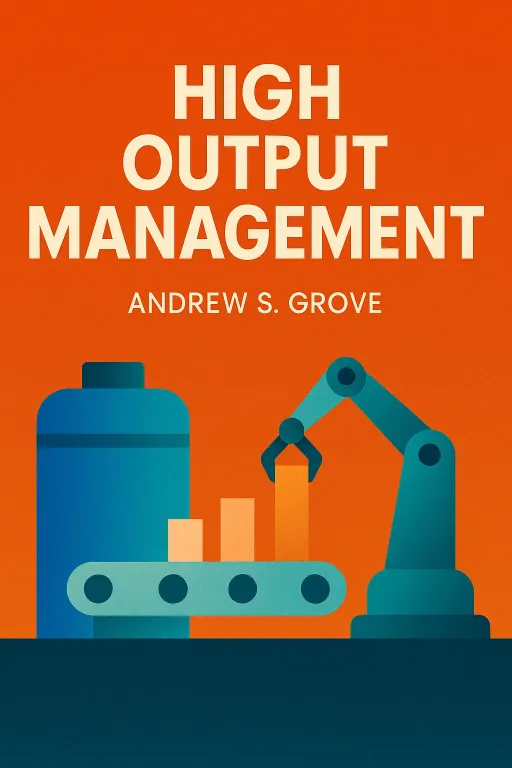
Nova: Well, these powerful insights are drawn from the wisdom of titans like Andrew S. Grove, the legendary co-founder of Intel, whose work on "High Output Management" reshaped how we think about productivity and leverage. And we’ll also delve into Michael E. Gerber’s transformative "E-Myth Revisited," a book that has guided countless entrepreneurs to build businesses that thrive without them being chained to every single operation. These are practical, system-oriented approaches designed for real-world impact.
Deep Dive into The "High Output Management" Mindset Shift
SECTION
Nova: So, let's start with Grove. He brilliantly framed management as a leverage activity. He said, and it's profound, that your output isn't just output. It’s the sum of your team’s output your own. Think about that for a moment.
Atlas: Wow. That’s a powerful reframing. I always thought my output was just… what I did. So, you’re saying effective delegation isn't about pushing tasks away, but about strategically choosing where to invest my energy to get the biggest return through others?
Nova: Precisely! It's about identifying those tasks where your involvement, even if it’s just through clear instructions and training, can multiply the output of your entire team. It’s not about doing less, it’s about doing more others.
Atlas: Okay, but for someone like our "Versatile Visionary" listener, juggling multiple ventures and feeling the pressure to be hands-on, isn't it often faster to just do it myself? How do I choose what has "high leverage" when everything feels urgent and important?
Nova: That’s the classic trap. Let's use an analogy. Imagine a world-class chef. They could, theoretically, chop every vegetable, stir every pot, plate every dish. They'd be incredibly busy, doing everything the kitchen. But their true leverage comes when they design the menu, train a team of line cooks, implement precise recipes, and then oversee the quality. Their output is no longer just the single dish they create; it's the hundreds of perfectly executed dishes their team produces each night. Their impact multiplies exponentially.
Atlas: That makes perfect sense. The chef’s impact isn’t measured by how many carrots they personally dice, but by the overall dining experience and the success of the restaurant. So, for a visionary, it’s about designing the "menu" of the business, setting the standards, and empowering the "cooks" to execute, rather than trying to cook every single meal yourself. That’s truly multiplying impact.
Nova: Exactly! It’s about moving from being the chef on the line to being the culinary director. You're still involved, but at a higher, more impactful level. And that shift is what begins to free up your time for the truly visionary work that only can do. The strategic thinking, the relationship building, the future planning.
Deep Dive into "The E-Myth Revisited" - System Architect Role
SECTION
Nova: And that brings us perfectly to Michael E. Gerber and "The E-Myth Revisited." Grove’s ideas about leverage flow naturally into Gerber’s core distinction: the difference between working your business and working it.
Atlas: Oh, I’ve heard about that. It’s a bit like the chef analogy, right? Working the kitchen versus working the restaurant concept?
Nova: You got it! Gerber highlights that most entrepreneurs, especially those starting multiple ventures, are brilliant technicians. They’re amazing at the part – whether it’s coding, selling, creating, or organizing. But they often get stuck in that technician role, working the business, doing all the tasks, and becoming completely indispensable.
Atlas: That sounds rough, but it also sounds familiar for many of our listeners. The "Versatile Visionary" thrives on creation and doing, so stepping away from that can feel… counterintuitive. So, how does Gerber frame delegation in this context?
Nova: He frames delegation as building repeatable systems. It's not just about giving a task to someone else; it’s about creating a documented process, a system, so that anyone competent can perform that task consistently and effectively. This allows the entrepreneur to step out of the technician role and into the visionary role, the true entrepreneur who works the business.
Atlas: Okay, so it’s not just about giving tasks away, but building around those tasks? That sounds like work upfront. How does that help someone desperate for balance right now, especially when they’re already overwhelmed? It feels like adding another layer of complexity.
Nova: I hear you, and that’s a very common initial reaction. It’s like the difference between constantly pushing a cart uphill versus taking the time to build a self-sustaining machine that can roll itself. The upfront investment in designing the machine – documenting processes, training your team – that’s the "more work." But once that machine is built, once those systems are in place, your business can run you being the bottleneck.
Atlas: Ah, I see. It's an investment in future freedom. That makes sense. If I build the system once, it multiplies my time in the long run. And that’s where the "holistic well-being" comes in, isn't it? If the business runs itself more efficiently, there's more time for family, for faith integration, for personal growth, for all those things that get squeezed out when you’re constantly working the business.
Nova: Absolutely! That’s the ultimate payoff. Strategic delegation isn't just about business growth; it's about life design. It's about reclaiming your time, your energy, and your presence for all dimensions of your life. It’s about scaling your impact without sacrificing your soul. It’s empowering your team to thrive, and empowering yourself to live a more balanced, purposeful life.
Synthesis, Tiny Step & Call to Action
SECTION
Nova: So, to synthesize, strategic delegation is about designing your role and your business for maximum impact and ultimate freedom. It’s about transforming from the tireless doer into the insightful system architect. It's trust, not abdication.
Atlas: That’s a great way to put it: trust, not abdication. And for our listeners who are feeling that overwhelm right now, who want to start building those systems and reclaiming their time, what’s one tiny step they can take? Not a massive overhaul, but just one actionable thing.
Nova: The tiny step is incredibly simple, yet profoundly powerful. Identify one recurring task you perform weekly that someone else could do with clear instructions. Just one. Then, for a focused 15 minutes, document the process for that task. That’s it. Don’t try to delegate it yet, just document.
Atlas: Oh, I like that. Just 15 minutes. That feels completely achievable, even when you're overwhelmed. It’s like creating the first tiny cog for that self-sustaining machine you talked about. And the beauty of it is, that 15 minutes is an investment in freeing up future hours, days, weeks. It’s an investment in your personal time, your family, your faith.
Nova: Precisely. It’s an act of grace for yourself, trusting your instincts that there’s a better way, and taking that first concrete action towards protecting your non-negotiable personal time. This isn't just business strategy; it's a pathway to a richer, more balanced life.
Atlas: That’s actually really inspiring. It reframes the whole concept from "giving up control" to "gaining freedom."
Nova: And that freedom is the ultimate growth.
Nova: This is Aibrary. Congratulations on your growth!









