Scaling Culture: How to Build a Resilient Team Without Losing Your Soul
Golden Hook & Introduction
SECTION
Nova: Forget what you think you know about building a strong company culture. It's not about beanbag chairs or free kombucha. In fact, chasing those might be exactly why your team is losing its soul as you scale.
Atlas: Oh man, that’s a bold statement right out of the gate! But isn't it about those things? I mean, perks are a sign of a good culture, right? What's the real problem when a team starts to grow quickly?
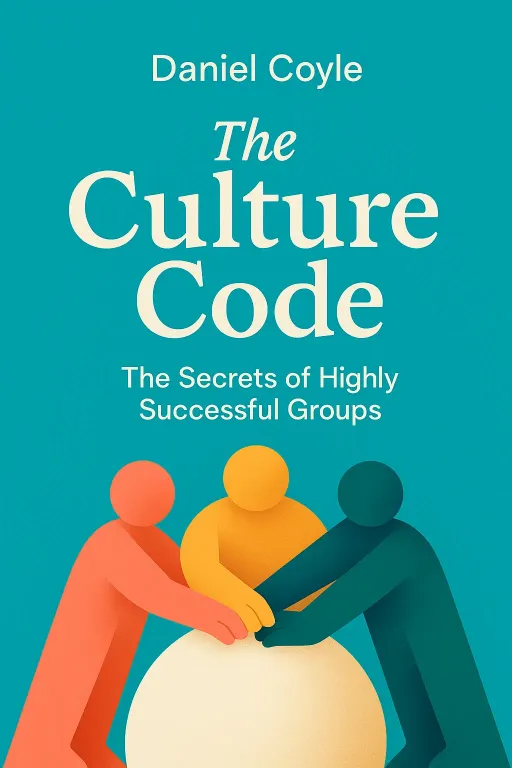
Nova: The real problem, Atlas, is cultural dilution. It’s that cold, hard fact that as you expand, that vibrant, early-stage energy, those unspoken understandings, they just… evaporate. And if you’re not deliberate, you end up with a team that’s disengaged and losing momentum. Today, we're diving into how to actively combat that, drawing insights from a powerful guide called "Scaling Culture: How to Build a Resilient Team Without Losing Your Soul." We'll be looking at the foundational work of Daniel Coyle’s "The Culture Code" and Andrew S. Grove’s "High Output Management."
Atlas: Okay, so we're talking about intentionally building and maintaining that spirit, not just hoping it survives. I can definitely see how that's a challenge for any leader trying to grow something meaningful.
Nova: Absolutely. Coyle, a brilliant journalist, has this knack for dissecting human dynamics in high-performing groups, showing us what truly makes them tick. Grove, on the other hand, was a co-founder and CEO of Intel, a titan who brought an almost engineering precision to management. Their combined wisdom offers a profound roadmap.
Atlas: That makes me wonder, how do we even begin to define 'culture' in a way that we can actually it, not just feel it fading away as the team gets bigger?
The Intangible Architecture of Culture: Safety, Vulnerability, and Purpose
SECTION
Nova: That’s the million-dollar question, Atlas. And Coyle gives us a truly illuminating answer. He argues that strong cultures aren't built on grand, abstract visions alone. They're forged in the crucible of small, consistent signals. Signals of safety, signals of vulnerability, and signals of shared purpose.
Atlas: So, it’s not the mission statement framed on the wall, it’s the whisper in the hallway?
Nova: Precisely. Think about the Navy SEALs, a group renowned for their cohesion and performance under extreme pressure. Coyle observed their debriefing process. After a mission, regardless of success or failure, they’d sit down, and the most senior officer would speak first, but not to command or critique. They’d start by admitting their own mistakes, their own vulnerabilities during the mission.
Atlas: Hold on, 'vulnerability loops'? For a leader trying to grow a venture, especially in a competitive environment, that sounds incredibly risky. How do you convince a team that's under pressure to be 'vulnerable' without looking weak or opening the door to chaos?
Nova: That's a fantastic point, and it's where Coyle's insights are so powerful. It’s not about emotional free-for-alls. It’s about as the catalyst. When the leader admits a mistake, even a small one, it sends a profound signal of psychological safety to the entire team. It says, "It's okay to make mistakes here. It's okay to learn. We’re in this together." This isn't weakness; it's a profound act of trust-building. It reduces the perceived risk for everyone else to then share their own learnings and insights.
Atlas: So, it's less about a grand mission statement and more about the micro-interactions, the daily habits, the leader setting the tone by going first? That’s a real shift for many 'visionary' leaders who often focus on the big picture and projecting an image of unwavering strength.
Nova: Exactly. Coyle, through his journalistic lens, uncovered these patterns across incredibly diverse, high-performing groups – from successful tech companies to sports teams. He makes it clear that these aren't just "soft skills" or touchy-feely concepts; they're fundamental human needs for connection and belonging that, when met, unlock extraordinary performance. It's the intangible architecture that supports everything else. The psychological safety allows people to take risks, innovate, and connect deeply, which is crucial for any builder trying to create something impactful.
High Output Management: Engineering Culture Through Structure and Training
SECTION
Nova: And once you have that foundation of trust and safety, Atlas, how do you actually it? How do you ensure those values don't just exist in a mission statement, but are embedded into the very fabric of how work gets done, especially as you scale? This is where Andrew Grove’s "High Output Management" comes into play – a more pragmatic, almost engineering-focused approach to culture.
Atlas: Okay, so Coyle gives us the heart, and Grove gives us the skeleton. I like that. What’s Grove’s big idea here?
Nova: Grove's central tenet is deceptively simple: a manager's output is the output of their team. He wasn't talking about being a benevolent leader; he was talking about multiplying your impact through systematic efficiency. He provides this incredibly practical framework for structuring work, conducting effective meetings, and using training as a key lever for multiplying team performance and, crucially, for reinforcing cultural norms.
Atlas: So, less about the emotional connection and more about the mechanics of how the team functions? But what happens when you're a 'doer,' trying to implement these systems, and they feel rigid or stifle the very 'vulnerability' Coyle talks about? How do you balance the 'soft' signals with the 'hard' structures? That sounds like a potential conflict for a strategist trying to build a resilient venture.
Nova: That’s a brilliant question, Atlas, and it's precisely where the two ideas converge. Grove’s structured environment, when designed thoughtfully, actually the predictability and clear expectations that allow psychological safety to flourish. Think about it: if a team knows exactly what’s expected, how decisions are made, and how feedback is delivered, that clarity itself reduces anxiety and fosters a sense of security. It’s not about spontaneous good vibes; it’s about intentional design.
Atlas: So, the structured meetings, the clear training protocols, these aren't just about efficiency; they're about embedding the culture, making it part of the operating system? Like, if a value is 'transparency,' then Grove would say you need a meeting structure that transparent reporting?
Nova: Exactly! Grove would argue that if you want a culture of accountability, you don't just talk about it; you build systems – like rigorous performance reviews, clear decision-making processes, and structured training – that make accountability a daily practice. His insights, despite being decades old, remain incredibly relevant for modern scaling companies because they address fundamental human organizational needs. They provide the rails on which Coyle's insights can actually run. It's about building a system where the culture can and thrive, rather than just hoping it survives. That’s a powerful idea for any 'builder' looking to create a lasting legacy.
Synthesis & Takeaways
SECTION
Nova: So, bringing it all together, Atlas, Coyle gives us the human-centric understanding of makes culture stick – those subtle signals of safety, vulnerability, and purpose. And Grove provides the operational blueprint for to build and scale it intentionally, embedding those values into daily rituals and structured processes. It's the deliberate embedding of values into daily rituals and structured processes.
Atlas: What's the single most impactful thing a leader, a builder, a visionary, can do this week to start bridging that gap between aspirational culture and lived reality? I mean, where do you even start with something this big?
Nova: The smallest possible step, Atlas. Identify one small, daily ritual you can implement to reinforce a core team value this week. It could be starting every meeting with a quick "win of the week" share, or ending with a "what did I learn today" moment. It’s about making the intangible tangible.
Atlas: That’s brilliant. It's about making the intangible tangible, one step at a time. It’s not just about what you say, but about what you consistently, and how you design the systems around those actions.
Nova: Exactly. Because scaling culture isn't magic; it's deliberate design and consistent action. It's how you build a resilient team without losing your soul, or anyone else's.
Atlas: Powerful stuff.
Nova: This is Aibrary. Congratulations on your growth!