

Mastering Team Dynamics and Management
Golden Hook & Introduction
SECTION
Nova: Forget "team building" happy hours. The secret to a truly high-performing team isn't about trust falls; it's about something far more fundamental, and often, much harder to achieve.
Atlas: Oh, I like that. You're already challenging my assumptions, Nova. Because honestly, for anyone building systems or driving growth, 'team building' often feels like an optional extra, not the core engine. What's the real secret then?
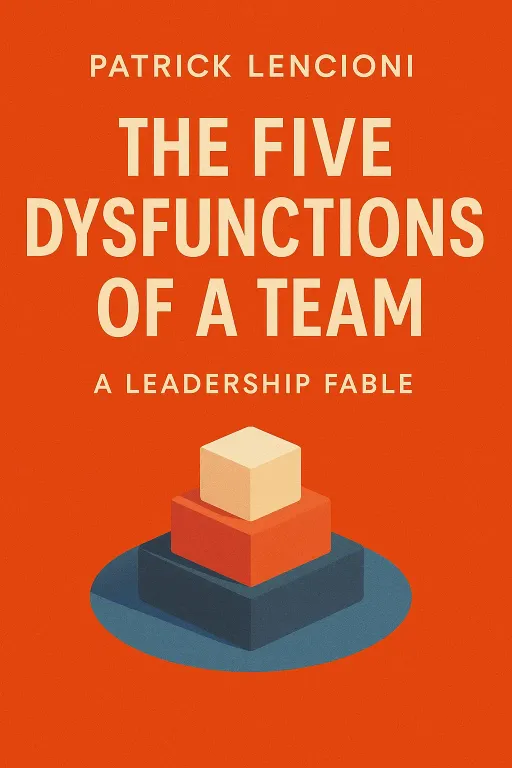
Nova: Well, today we’re diving into two foundational texts that, when combined, offer a powerful blueprint for building those resilient organizations our listeners crave. First, we’ll unpack Patrick Lencioni’s seminal work, “The Five Dysfunctions of a Team.” Lencioni’s model, deceptively simple, has become a cornerstone in corporate training globally for its practical, clear-eyed look at team health.
Atlas: Right, I know that one. It’s often touted as guide for understanding team dynamics.
Nova: Exactly. And then, we’ll pair that with Andrew Grove’s “High Output Management.” Grove, as a co-founder of Intel, literally engineered one of the most successful tech companies in history. His insights aren't theoretical; they're forged in the crucible of high-stakes operational success. Together, these two authors show us how to build the foundation and then, critically, how to its power.
Atlas: So basically, we’re talking about the invisible architecture and then the high-octane fuel for any team. I’m curious to see how these two seemingly different perspectives converge for sustainable growth.
The Foundational Role of Trust in Team Dynamics
SECTION
Nova: Let’s start with Lencioni. He outlines a pyramid, and at its very base, the bedrock, is something he calls the “Absence of Trust.” This isn’t about predicting if someone will do their job; it’s about what he calls "vulnerability-based trust."
Atlas: What exactly do you mean by vulnerability-based trust? For a strategist, trust is often about reliability, knowing someone will deliver. That sounds different.
Nova: It’s profoundly different. Vulnerability-based trust is the confidence among team members that their peers' intentions are good, and that there's no reason to be protective or careful around the group. It’s the willingness to be imperfect, to admit mistakes, to show weaknesses, to ask for help, and to offer help without fear of judgment or reprisal.
Atlas: Wow, that’s actually really inspiring. I imagine a lot of our listeners, especially those building scalable systems, might find that incredibly challenging. In high-pressure, analytical environments, the focus is often on appearing competent, on being the expert. Isn't it risky to show weakness when you're trying to drive growth?
Nova: It feels risky, but Lencioni argues it’s the only way to build true resilience. Think of a software development team I once observed. They were brilliant individuals, top talent. But the project was constantly behind schedule, riddled with bugs, and morale was abysmal.
Atlas: So how did the lack of vulnerability-based trust manifest there?
Nova: The cause was simple: everyone was afraid to admit when they were stuck, or when they’d made a mistake. If a junior developer encountered a complex bug, they’d spend days silently wrestling with it, rather than asking a senior engineer for help, fearing they’d look incompetent. Senior engineers, in turn, were reluctant to offer unsolicited advice, not wanting to step on toes or be seen as micromanaging.
Atlas: Right, like an unspoken code of self-reliance, but it’s actually self-sabotage.
Nova: Exactly! The process was a vicious cycle: hidden problems festered, small errors became massive reworks, and individual stress levels skyrocketed. The outcome? Missed deadlines, buggy code, and a team that, despite its talent, was dramatically underperforming. They had all the pieces, but no glue.
Atlas: That makes perfect sense. So, if trust is the bedrock, what happens if it's missing?
Nova: Lencioni says everything else crumbles. Without trust, teams fear conflict, leading to artificial harmony. Without healthy conflict, there’s no genuine commitment to decisions. Without commitment, there’s an avoidance of accountability. And without accountability, you get inattention to results. It’s a cascading failure that directly impacts the scalable success and efficient systems our listeners are striving for.
Atlas: So it's not just about feeling good; it’s about the tangible output. The lack of trust isn't just a "soft skill" problem; it's a hard business problem that directly hits the bottom line. It’s a systemic flaw.
Nova: Precisely. It’s the invisible tax on performance.
Optimizing Team Output through Managerial Leverage
SECTION
Nova: Once you have that trust, once your team feels safe enough to be vulnerable and engage in healthy conflict, how do you actually that foundation to multiply your team's output? This is where Andrew Grove’s concept of “Managerial Leverage” becomes incredibly powerful.
Atlas: I’m curious. For someone who’s always optimizing operations and building efficient systems, ‘leverage’ sounds like a key concept. But how does Grove define it beyond just delegation?
Nova: Grove defines managerial leverage as the measure of the output generated by a manager’s activities. It’s not about how much do, but how much does as a result of your actions. High-leverage activities are those that significantly increase the output of a larger unit, while low-leverage activities yield minimal impact or even negative impact.
Atlas: Okay, so for someone building efficient systems, this sounds appealing. But what are some high-leverage activities that aren't just delegation? How do you know what to prioritize when everything feels urgent?
Nova: That’s the critical question, and it’s where Grove’s engineering mindset shines. Think of two different project managers. One manager, let’s call her Sarah, is constantly drowning in individual tasks. A small bug pops up on a critical project, and she spends hours personally debugging it, because she’s the most experienced.
Atlas: That sounds like a hero, right? The person who jumps in and fixes things.
Nova: Exactly, but it’s a low-leverage activity. She solves problem. Now, imagine another manager, David. When a similar bug arises, instead of fixing it himself, he spends that same amount of time training two junior engineers on how to diagnose and fix of bug. He also dedicates time to refining the team’s code review process to prevent similar bugs in the future.
Atlas: I see. The cause is the manager's choice of activity. Sarah’s process is direct problem-solving, while David’s process is systemic improvement and capability building.
Nova: And the outcome difference is profound. Sarah fixes one bug, and the team remains dependent on her for similar issues. David, through his high-leverage activities, not only gets that bug fixed, but he his team’s capacity to handle future bugs independently. He essentially scales his expertise. This directly impacts the scalability and efficiency our user profile emphasizes.
Atlas: That’s a perfect example. So it’s about investing in activities that have a ripple effect. It’s not just about working smarter, but about enabling everyone else to work smarter, too. What other examples of high-leverage activities does Grove highlight?
Nova: Grove emphasizes activities like training and coaching, process improvement, clear goal setting and communication, and establishing effective decision-making frameworks. He also talks about the power of meetings – not just having them, but making them incredibly efficient and focused on producing decisions and clarity. A well-run meeting, he argues, can be an incredibly high-leverage activity, while a poorly run one is a black hole of productivity.
Atlas: That’s going to resonate with anyone who struggles with endless, unproductive meetings. So, for a visionary driven by growth, prioritizing these high-leverage activities means constantly asking, "How can I make my team more self-sufficient and more impactful, rather than just doing more myself?"
Nova: Precisely. It’s about shifting from being the bottleneck to being the accelerator.
Synthesis & Takeaways
SECTION
Nova: So, bringing Lencioni and Grove together, we see that trust isn't just a nice-to-have; it's the fertile ground where high-leverage activities can actually take root and flourish. You can train your team all you want, but if they don't trust each other enough to admit they need help or to engage in honest debate, that training won't yield its full potential.
Atlas: That’s it. It’s about intentionality in leadership. You can't just slap a "high-performance" label on a team; you have to cultivate the environment first, and then strategically amplify their efforts. So, for our listeners who are ready to build resilient organizations and fuel sustainable growth, what's one immediate, actionable thing they can do with these insights, beyond just thinking about them?
Nova: I love that you’re pushing for action. Here’s a simple, powerful audit they can start with this week: Identify just team activity you’re involved in – maybe it’s a weekly check-in meeting, a project review, or even a one-on-one. Now, ask yourself two questions: "Is this activity actively building vulnerability-based trust within my team?" and "Is this activity a high-leverage action that amplifies my team's collective output, or is it just me doing individual work?"
Atlas: I can see how that would be a powerful reflection. If the answer to either is a hesitant "no," then it’s an opportunity to rethink and redesign. It's about being a conscious architect of both culture and output.
Nova: Exactly. It's about understanding that the true power of a team isn't just the sum of its parts, but how those parts interact, and how intelligently their efforts are channeled. That’s how you build something truly resilient and scalable.
Atlas: That’s actually really inspiring. This isn't just about managing better; it’s about leading for profound and sustainable impact.
Nova: Absolutely.
Nova: This is Aibrary. Congratulations on your growth!









