

Navigating Institutional Complexity
Golden Hook & Introduction
SECTION
Nova: You’d think the biggest challenge for innovation is coming up with new ideas. But what if the real problem isn't generating brilliance, it's it within the very structures designed for success?
Atlas: Wow. That's a gut punch right out of the gate. So you're saying our own success can be the biggest barrier to future success? That feels incredibly counterintuitive, Nova.
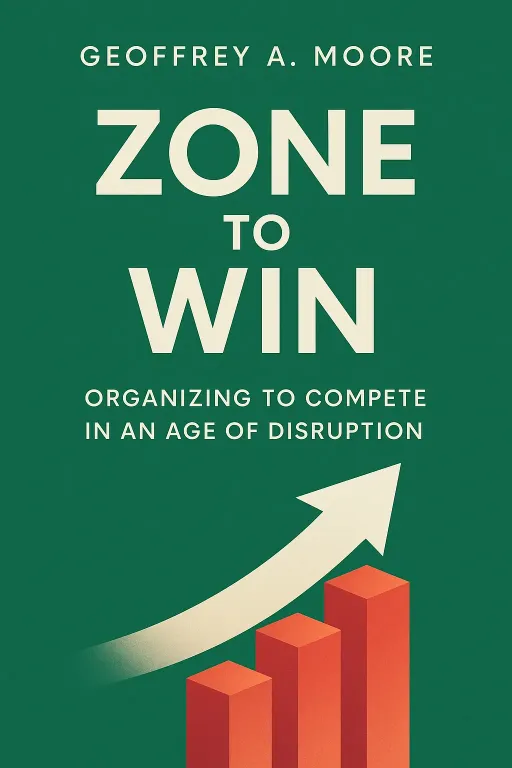
Nova: It absolutely does, Atlas. And it’s a core tension that Geoffrey A. Moore tackles brilliantly in his highly influential book,. Moore, a celebrated advisor to tech leaders, is known for his clear, actionable frameworks that help established companies navigate the often-perilous waters of disruptive innovation.
Atlas: Okay, a celebrated advisor to tech leaders. That sounds like it could be all high-level strategy, far removed from the daily grind. But I imagine many of our listeners, the pragmatic learners and focused achievers among us, are constantly trying to balance their core responsibilities with those "big ideas" they have simmering on the back burner.
Nova: That’s precisely the point. And to ensure those big ideas don't just simmer but actually boil over into meaningful progress, we're also going to lean on the practical wisdom from the. This guide is part of a widely respected series known for distilling complex business concepts into actionable advice. It’s about ensuring every innovative step you take is genuinely aligned with a long-term vision.
Atlas: So, it's not just about having the idea, or even the space for the idea, but making sure that idea actually in the grand scheme. That resonates with anyone who’s ever felt busy but not productive.
Nova: Exactly. It’s about making your time count, not just filling it. And that brings us directly to Moore’s insightful framework.
Deep Dive into Core Topic 1: Managing Disruptive Innovation
SECTION
Nova: Moore's introduces a powerful concept: that every established organization, whether it's a massive tech company or even just your own personal "institution" of habits and projects, operates across four distinct zones. There’s the Performance Zone, the Productivity Zone, the Incubation Zone, and crucially, the Transformation Zone.
Atlas: Okay, "zones." That sounds very corporate. Can you give me a more down-to-earth picture? What’s the biggest challenge these zones are trying to solve?
Nova: Think of it this way: the Performance Zone is your cash cow. It’s where you generate your current revenue, where your current excellence lies. For a company, it’s their flagship product. For you, it might be your core job responsibilities, the tasks you excel at daily. The Productivity Zone is all about making that cash cow run more efficiently – optimizing processes, cutting costs.
Atlas: So far, so good. That's the bread and butter. But where does the disruption come in?
Nova: That’s where the Incubation and Transformation Zones enter. The Incubation Zone is where new ideas are born, where you experiment, like a startup within a company. But the real game-changer is the Transformation Zone. This is where truly disruptive innovations are nurtured, innovations that, if successful, will eventually the Performance Zone as the new cash cow.
Atlas: Ah, so it’s not just tweaking the old thing; it’s building the old thing. But here's where my skepticism kicks in. How does an organization, particularly a successful one, manage this without its current "cash cow" operations crushing the fragile "next big thing"?
Nova: That's the core conflict Moore addresses. Imagine a highly successful, bustling Michelin-starred restaurant. Their Performance Zone is packed every night, delivering exquisite meals with incredible efficiency. Their chefs are masters. Now, imagine the owner decides they need to stay ahead of the curve, so they launch a small, experimental food truck on the side, serving entirely new, avant-garde cuisine – that's their Transformation Zone project.
Atlas: Okay, I can picture that. The food truck is trying to do something completely different.
Nova: Precisely. The challenge is, the restaurant's entire system – its procurement, its staffing, its marketing, even its mindset – is geared towards traditional fine dining. If the food truck needs a rare ingredient, the restaurant's purchasing department might scoff because it's not volume-efficient. If the food truck's chef needs a unique marketing push, the restaurant's PR team might prioritize the main establishment.
Atlas: So the Performance Zone, by its very nature, tries to assimilate or even suffocate the Transformation Zone because the new thing doesn't fit its established rules for success. It's like the immune system attacking a new, beneficial organ.
Nova: Exactly! Moore argues that you need to the Transformation Zone. It needs its own budget, its own leadership, its own metrics, and its own rules of engagement. The leader of the Performance Zone shouldn't be judging the Transformation Zone by the same profit margins or efficiency metrics because it's designed to be disruptive, not immediately profitable.
Atlas: Hold on, so you're saying big companies need to build separate "innovation playgrounds" and then protect them from the very success that fuels the company? That sounds like a recipe for internal chaos, or at least, a lot of confused middle managers.
Nova: It requires incredibly disciplined leadership, Atlas. The CEO or top leadership has to act as the "air traffic controller" between these zones. They must explicitly define which projects belong in the Transformation Zone, allocate resources, and, most importantly, protect them from the "immune system" of the Performance Zone. It's about accepting that these projects will lose money initially and operate under different rules.
Atlas: What about us, the individuals or small teams trying to innovate? How does this apply to my own "personal institution" – my career, my habits, my side projects? I’m not running a Michelin-starred restaurant.
Nova: That's a great question. You can apply this by consciously identifying your own "Performance Zone" – your day job, your established routine. Then, acknowledge your "Transformation Zone" – that big, ambitious project that could fundamentally change your career path or lifestyle. The key is to dedicate separate, protected time and resources to that Transformation Zone project. Don't let the urgent demands of your Performance Zone constantly hijack its development. It’s about creating a mental and schedule-based quarantine.
Atlas: That makes me think of the "time is scarce" challenge. We often let the urgent crowd out the important.
Deep Dive into Core Topic 2: Strategic Alignment
SECTION
Nova: That brings us to the crucial question, Atlas. How do you make sure that innovative food truck, or any new idea in your personal Transformation Zone, isn't just a fun experiment, but truly aligns with your long-term vision? That's where the becomes indispensable.
Atlas: "Strategic alignment" sounds like corporate speak. Break it down for our listeners who are just trying to get their daily tasks done while also aiming for something bigger.
Nova: At its heart, strategic thinking is about making conscious, deliberate choices about your future. It's identifying your long-term goals – truly long-term, not just next quarter – and then aligning to achieve a competitive advantage. It's about being intentional.
Atlas: So it's about being brutally honest about whether what you're doing today actually serves your future self or your future company. Not just busy work, but meaningful work.
Nova: Exactly. Let's take another relatable analogy: a personal fitness goal. Your long-term strategic goal might be sustained health, energy, and mental clarity into old age. Your "competitive advantage" is that you can pursue your passions without physical limitations. Now, your daily actions: going to the gym, eating healthy, getting enough sleep. These are aligned.
Atlas: But what if you decide to "innovate" by trying every new fad diet or spending hours researching obscure supplements?
Nova: That's where strategic alignment becomes critical. If you spend all your time on a new, experimental dessert recipe, it might be fun, but is it strategically aligned with your health goal? The HBR guide emphasizes that strategy isn't just a document you write once a year; it's a constant, active process of questioning, prioritizing, and re-aligning. It's about making choices, and crucially, doing certain things.
Atlas: So it’s about saying no to good ideas that aren't ideas for specific long-term vision. That sounds like a direct challenge to the "focused achiever" who just wants to tick boxes. It's saying, maybe you're ticking the boxes, or at least, boxes that aren't moving you toward your ultimate goal.
Nova: Precisely. It challenges the assumption that more effort automatically equals more progress. The HBR approach pushes you to define your unique value proposition, understand your environment, and then make difficult trade-offs. It's not about being busy; it's about being.
Atlas: That makes a lot of sense. So, Moore gives us the structure to protect our innovations, and HBR gives us the compass to ensure those innovations are actually pointing in the right direction. Because an innovative food truck is great, but if it's selling hot dogs when your long-term vision is a vegan empire, you might have a problem.
Nova: That’s a perfect way to put it, Atlas. It's the difference between innovation for innovation's sake and innovation with purpose.
Synthesis & Takeaways
SECTION
Nova: So, if Geoffrey Moore's provides the organizational architecture for to innovate without destroying your core business, the offers the navigational tools for and to ensure those innovations are actually leading somewhere meaningful. Together, they form a powerful toolkit for anyone, from a CEO to an individual, trying to grow and evolve.
Atlas: And the tiny step from our reading today was incredibly specific, Nova. It was about identifying just one "Transformation Zone" project in your research that could disrupt your current workflow and dedicating 30 minutes this week to its strategic alignment.
Nova: I love that tiny step because it embraces the "embrace imperfection" mindset. You don't need to overhaul your entire life or company. It's about picking one small, potentially disruptive idea you have – maybe it's a new way to manage your emails, a different approach to a common task, or even a personal learning project – and truly asking: "How does this align with my long-term vision? Is this a strategic move, or just a distraction?"
Atlas: That’s a powerful call to action for anyone who feels stuck between their daily grind and their big aspirations. It’s about being intentional with that scarce time. Thirty minutes isn't a lot, but if it's 30 minutes focused on a transformation, that’s where real impact begins to accumulate.
Nova: Absolutely. It’s about making your time count, not just filling it. And that focused 30 minutes, dedicated to a project that could truly disrupt your status quo for the better, is an act of profound strategic intelligence. It’s not just about doing more; it’s about doing what matters most, in a way that builds towards a more impactful future.
Atlas: It makes me think of that powerful idea that strategy is often about what you do. Prioritizing that 30 minutes for a truly disruptive, strategically aligned project is a powerful "don't" to all the other distractions vying for our attention. It’s choosing long-term impact over short-term busyness.
Nova: Exactly. It’s a deliberate choice to invest in your future self or your future organization. That’s the essence of navigating complexity with purpose.
Atlas: This is Aibrary. Congratulations on your growth!









