

The Culture Code: Unlocking Trust and Collaboration
Golden Hook & Introduction
SECTION
Nova: Everyone talks about "culture" in the workplace like it's free snacks or a foosball table. But what if I told you that's not just wrong, it's actively distracting us from what truly builds an unstoppable team?
Atlas: Wait, are you saying all those "best places to work" lists are just... misdirection? Because that sounds like a bold claim, especially for anyone trying to foster a good environment.
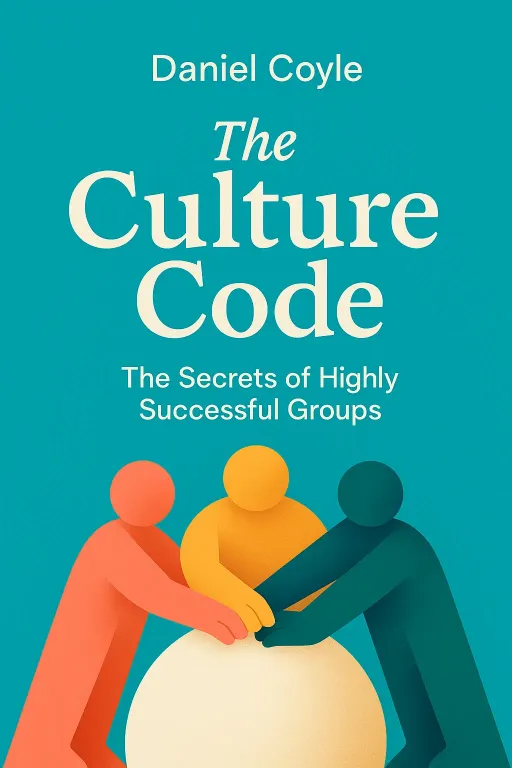
Nova: Absolutely, Atlas. Today, we're tearing down those myths with insights from The Culture Code: The Secrets of Highly Successful Groups by Daniel Coyle. Coyle, a former Moscow correspondent and author of multiple New York Times bestsellers, spent years embedded with elite military units, innovative tech companies, and even a notorious jewel thief gang, not just to observe, but to decode the hidden mechanisms that make groups click. He's not just a theorist; he's seen culture in action, for better or worse.
Atlas: That's a fascinating background. It really grounds the book in real-world observation, rather than just abstract theory.
Nova: Exactly. And what he found was that building a strong culture isn't about perks; it's about intentional human connection, specifically three core skills that are entirely teachable.
The Three Pillars of High-Performing Culture: Safety, Vulnerability, and Purpose
SECTION
Nova: Coyle identifies these three core skills for building strong, cohesive groups: building safety, sharing vulnerability, and establishing purpose. These aren't abstract ideas, but tangible practices that transform team dynamics.
Atlas: Okay, "psychological safety" gets thrown around a lot. What does it really look like in practice, beyond just not getting yelled at during a meeting?
Nova: It's far more subtle and profound than that. Think about Google's Project Aristotle. They spent years trying to figure out what made their best teams tick—was it brilliant individual performers? Shared hobbies? No, surprisingly. The number one predictor of team success was psychological safety. It meant team members felt safe taking risks, admitting mistakes, and speaking up without fear of judgment. One famous example from their research was a team where a manager openly admitted a mistake and asked for help from the group, which created an immediate ripple effect of trust and open communication.
Atlas: So it’s not about being "nice," but about creating an environment where people can actually be themselves, warts and all? For our listeners managing high-pressure teams, how do you even begin to foster that kind of safety when deadlines are looming and stakes are high?
Nova: Exactly. It's about signaling belonging and security, consistently. Simple things: making eye contact, showing energy, ensuring everyone gets a turn to speak in conversation, active listening, asking 'How can I help?' And when done consistently, that leads directly to the second pillar: sharing vulnerability. It’s the engine of trust. When leaders, especially, show their fallibility, it creates a bond that strengthens the entire team. It’s what Coyle calls the 'vulnerability loop' – one person takes a risk, and it invites others to do the same, building trust exponentially within the group.
Atlas: That sounds almost counterintuitive in some corporate environments where vulnerability is seen as weakness. Like, 'Don't let them see you sweat.' Isn't there a risk of losing authority if you're too open about your struggles?
Nova: It's a very common misconception, Atlas, but Coyle found the opposite to be true. Leaders who admit mistakes aren't seen as weaker; they're seen as more human, more trustworthy. It signals that it's safe for everyone to be less than perfect. Think of special forces teams – their lives depend on absolute trust, and they cultivate it through intense, shared vulnerability during training. It's not about emotional oversharing, but about admitting 'I don't know' or 'I need help' when it's genuine.
Atlas: Right, so it's about authentic human connection, not just a performative display.
Nova: Precisely. And finally, purpose. It's not just about a mission statement on a wall that no one remembers. It's about continually crafting and communicating shared goals and values, translating them into daily actions. It's the story the group tells itself about why it exists and what it's striving for, and ensuring every member understands their role in that story.
Culture as Strategy: Getting the Right People on the Bus and Defining the Destination
SECTION
Atlas: That makes me wonder, though, if you have all this safety and vulnerability and purpose, but the wrong people are in the room, does any of it really matter? Like, can you build a great culture with a team that just isn't... 'great' to begin with?
Nova: That's a brilliant segue, Atlas, because it brings us directly to another foundational text in leadership: Jim Collins's Good to Great. Collins highlights that great companies first get the right people on the bus, and the wrong people off the bus, then figure out where to drive it. Culture is about who you are with, even before what you do. Coyle gives us the 'how' to build that connection, and Collins gives us the 'who' and the strategic importance of the 'destination.'
Atlas: So, 'getting the right people on the bus' isn't just about hiring the most skilled individuals, is it? Is it about cultural fit, or something deeper? And in today's tight labor market, how do you even 'get the wrong people off' humanely?
Nova: It's absolutely about more than just skill. It's about character, values, and alignment with the team's purpose and the cultural pillars we just discussed. Collins found that good-to-great companies were ruthless in their hiring and talent management, not because they were mean, but because they understood that the right people want to be part of a great culture and contribute to a meaningful purpose. The 'wrong people' often self-select out when the culture is strong and clear, or they're respectfully transitioned if they genuinely don't fit the values or can't adapt to the intentional practices.
Atlas: That makes sense. A strong culture acts as its own filter.
Nova: It really does. Think about the US Women's National Soccer Team. Their phenomenal success isn't just about individual talent; it's about a fiercely cultivated culture of shared purpose – winning, yes, but also advocating for equality, pushing boundaries. Their vulnerability comes from shared struggle and intense training; their safety from a deep trust in each other's commitment. And their clarity of purpose drives every decision, from tactics to off-field activism. They got the right people on the bus, and they all knew exactly where they were driving it, and why it mattered beyond the game itself.
Atlas: That's a powerful example. But in a more traditional corporate setting, where 'purpose' can feel like a buzzword and 'vulnerability' is still seen as a weakness, how do leaders actually make this shift? It sounds like a lot of organizations are struggling with unspoken rules and a lack of psychological safety, hindering their ability to innovate and grow together effectively.
Nova: That's precisely Nova's Take here: intentional practices around safety and shared purpose are the bedrock of high-performing teams, proving that culture is a strategic asset, not a soft skill. It's about leaders consciously designing these interactions, not just hoping they emerge. It starts with small, consistent actions that signal 'You belong here, you are safe, and we are working towards something meaningful together.' It's a continuous process, not a one-time fix.
Synthesis & Takeaways
SECTION
Nova: Ultimately, what Coyle and Collins reveal is that culture isn't some mystical, intangible force that just happens. It's a meticulously built engine of human connection, fueled by safety, vulnerability, and a crystal-clear purpose. It's the difference between a group of individuals going through the motions and a truly cohesive unit capable of extraordinary achievements. The companies and teams that thrive understand that their greatest competitive advantage isn't their product or their patent; it's the invisible bonds that hold their people together, allowing them to innovate, adapt, and overcome challenges.
Atlas: That's a really profound reframe. So, if listeners want to start building this, what's one tiny step they could take tomorrow to observe or foster more of that intentional connection, especially if their team feels a bit stuck?
Nova: Great question. Here's a tiny step, a sort of micro-experiment: observe a recent team interaction you were part of. Did you see moments of shared vulnerability—someone admitting a mistake, asking for help, or even just sharing a personal insight? Or was there clear purpose—everyone aligned on the 'why' behind the task, not just the 'what'? Reflect on how you, personally, might foster just one more of those moments tomorrow. It could be as simple as asking a question that invites a different perspective or openly acknowledging a challenge you're facing. It starts small, but the ripple effect is immense.
Atlas: That's a powerful and actionable challenge. We'd love to hear from you – what's one small intentional practice you've seen make a huge difference in your team's culture? Share your thoughts with us.
Nova: This is Aibrary. Congratulations on your growth!









