

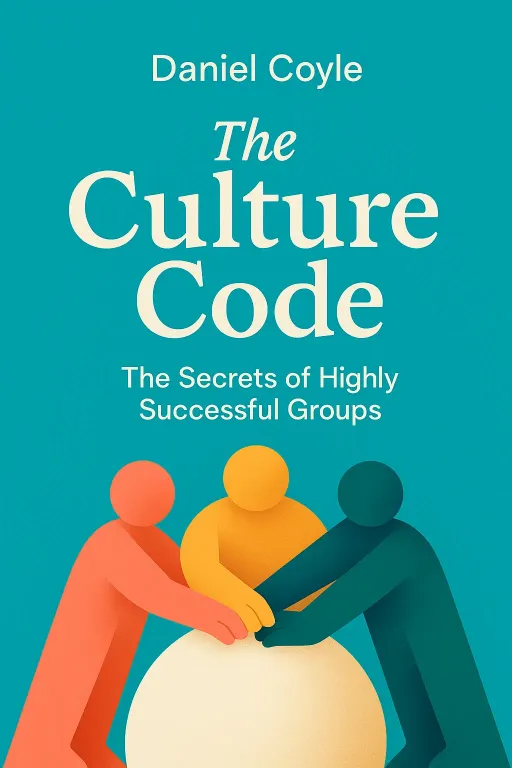
The Culture Code: How to Build a Strong, Cohesive Team
Golden Hook & Introduction
SECTION
Nova: Atlas, five words. Describe the culture of the last truly great team you were on.
Atlas: Oh, that's a good one. Supportive, challenging, connected, ambitious, fun.
Nova: Okay, I like that. Now, five words for the worst team culture you've ever encountered.
Atlas: Ugh. Toxic, isolated, blame-filled, stagnant, miserable. Honestly, that sounds like my Monday mornings sometimes.
Nova: Exactly! That stark contrast, Atlas, is what we're dissecting today. The difference between those two experiences usually comes down to one invisible, yet incredibly powerful force: culture.
Atlas: Right? It's the air you breathe, the unspoken rules, the feeling you get when you walk into a room. So, which illuminating text are we cracking open to demystify this today?
Nova: We are diving deep into "The Culture Code: The Secrets of Highly Successful Groups" by Daniel Coyle. What's fascinating about Coyle is his background. He wasn't some corporate consultant; he was a sports writer, famously known for "The Talent Code." He spent years embedded, almost like an anthropologist, with some of the world's most successful organizations—from Pixar to the US Navy SEALs—to literally reverse-engineer the invisible forces that bind them and make them thrive.
Atlas: Oh, I love that. So he's not just theorizing; he's seen it in action. He's uncovering the 'how' behind the 'what.'
Nova: Precisely. He's asking: what makes some groups exceptional, truly greater than the sum of their parts, while others, despite having all the talent in the world, just… falter? It's not magic, Atlas. It's a learnable code.
The Three Core Skills of Culture Building: Safety, Vulnerability, and Purpose
SECTION
Nova: And Coyle breaks this code down into three core skills: building safety, sharing vulnerability, and establishing purpose. And the critical insight here is that these aren't just 'soft skills.' They are the bedrock, the hard, foundational elements of any high-performing group.
Atlas: Okay, so building safety. I can see the appeal, especially for our curious learners who are always looking to explore new knowledge. You want to feel safe enough to ask the 'dumb' questions or propose a wild idea. But what does that look like in practice? How do you actually safety?
Nova: Let's look at Pixar. They deliberately design their physical spaces and, crucially, their meeting structures to ensure every voice feels safe to contribute, even the quietest ones. They have these legendary "Braintrust" meetings—radical candor sessions where everyone, from junior animators to seasoned directors, can critique each other's work with brutal honesty. But the underlying message, the in the room, is always, "we're all in this together."
Atlas: So it's not just about being nice; it's about being direct, but with an absolute foundation of trust.
Nova: Exactly. There's a "no rank" rule in those sessions. A junior animator can tell a veteran director their scene isn't working, and it's heard. That environment fosters deep psychological safety. It's not about being soft; it's about creating a space where the truth can emerge because people aren't afraid of repercussions.
Atlas: Hold on. Psychological safety sounds fantastic in a creative powerhouse like Pixar, but what about a truly high-stakes, high-pressure environment, say, like a surgical team or a financial trading floor? Isn't there a risk of becoming too 'soft' or losing that critical edge if everyone feels safe?
Nova: That’s a sharp question, Atlas. Safety isn't about comfort; it's about trust. And it's trust that enables the second skill: sharing vulnerability. This is where many teams falter. People equate vulnerability with weakness. But Coyle's research shows it's actually the opposite.
Atlas: I can see how that would be a tough sell. I imagine a lot of our listeners in competitive fields might hear 'vulnerability' and immediately think 'weakness.'
Nova: But consider the US Navy SEALs. These are elite military units, the epitome of toughness. Yet, after every mission, they conduct what they call "after-action reviews." And in these reviews, even the commanders openly admit their mistakes, their weaknesses, what they could have done better.
Atlas: Wow. That's incredibly counterintuitive for an elite military unit.
Nova: It is! This radical transparency, this willingness to show their cracks, models vulnerability from the top. It creates a culture where admitting error isn't seen as a weakness, but as a strength—a crucial step for continuous improvement. It builds deep trust because everyone knows that everyone else is committed to learning and growing, not just protecting their ego.
Atlas: So it's not about emotional oversharing, it's about admitting imperfection and opening the door for others to help, which builds profound trust.
Nova: Precisely. And that trust, built through safety and vulnerability, then enables the third skill: establishing purpose. This isn't just a mission statement on a poster. It’s about creating a shared identity, a deeply felt sense of 'why we do what we do.'
Atlas: Okay, so how do you move from a cool slogan to genuinely feeling that shared identity?
Nova: Look at the San Antonio Spurs basketball team under Coach Gregg Popovich. He doesn't just focus on winning games; he cultivates a culture where players understand their roles within a larger system, rooted in shared values beyond just the scoreboard. They discuss social justice issues, they read diverse books together, they connect as human beings first, not just athletes.
Atlas: So it's not just about a mission statement, but about truly the purpose?
The 'Right People, Right Seats' Philosophy and Disciplined Culture
SECTION
Nova: That's a perfect question, Atlas, because it brings us to another foundational work, "Good to Great" by Jim Collins, which complements Coyle's insights beautifully. Collins shows us that building that cohesive purpose starts even you define the purpose: it begins with you invite onto the bus.
Atlas: The "first who, then what" principle, right? I've heard that phrase tossed around a lot, but what does it really mean in the context of building a great culture?
Nova: It means your first priority isn't strategy, it's people. Get the right people on the bus, the wrong people off, and the right people in the right seats. Collins's research showed that character and discipline often outweigh raw talent for sustained greatness.
Atlas: So you're saying that even if you have the most brilliant strategist, if they're the wrong for the culture, they're a liability? That certainly challenges the whole 'superstar' mentality we often see in various industries.
Nova: Absolutely. Collins recounts the story of Fannie Mae under David Maxwell. When Maxwell took over, the company was hemorrhaging a million dollars a day. His first priority wasn't a new business plan; it was systematically upgrading the executive team. He replaced half of his top 20 managers within three years, focusing on people who were disciplined, humble, and driven by results, not ego. Only once he had the right people did he start on the "what."
Atlas: That makes me wonder, how do you even identify the 'right people' beyond just their resume? What qualities are they looking for?
Nova: Collins found that the 'right people' are those who don't need to be tightly managed. They are disciplined in their thought and action, they embrace responsibility, and they put the team and the organization's purpose before their own ego. It’s about building a "culture of discipline"—not command-and-control, but rather disciplined who act consistently with the organization's values and purpose.
Atlas: That sounds like it fosters a kind of intellectual humility, where everyone is constantly trying to improve.
Nova: Exactly. Think about Nucor, the steel company. They cultivated a culture of extreme discipline, but also extreme freedom and responsibility. They gave frontline workers immense autonomy and incentive, but within a very clear, disciplined framework of cost consciousness and continuous improvement. It wasn't about micromanagement; it was about disciplined thought and action from everyone, everywhere.
Atlas: That's a powerful distinction. It's not about imposing discipline from the top down, but cultivating it from the inside out. But how does this disciplined freedom translate into practical steps for a team that's currently struggling with misalignment?
From Mission Statements to Intentional Practices: The Nova Take
SECTION
Nova: That's the million-dollar question, Atlas. Because both Coyle and Collins highlight that culture isn't something you; it's something you. It's built through intentional practices, not just inspiring words on a wall.
Atlas: Right, like many organizations have inspiring mission statements, but their culture still suffers.
Nova: It’s true. True cultural strength emerges from intentional practices that foster psychological safety and shared identity, moving beyond mere mission statements. It's about 'how' you do things, not just 'what' you say you believe.
Atlas: So, where do you even begin to implement these intentional practices? What's a tiny step someone could take, say, tomorrow?
Nova: Here's a tiny step, straight from the book's insights: tomorrow, start one meeting by asking everyone to share a small personal win or challenge from their week. It sounds almost too simple, doesn't it?
Atlas: Honestly, that sounds like my Monday mornings, but I can see how that would foster connection.
Nova: It does. This seemingly small act, done consistently, begins to weave those invisible threads. It builds psychological safety because everyone is seen as human, not just a role. It encourages vulnerability by sharing a challenge, and it reinforces shared identity because everyone is listening and connecting. It's a micro-habit that creates macro-cultural shifts.
Atlas: So it's about making the invisible visible through consistent, small actions. I imagine a lot of our listeners, who are always looking for tangible ways to apply deep thinking, would find that immensely valuable. It’s like a daily ritual that reinforces the 'code' without ever having to say, 'Let's build culture now!'
Nova: Precisely. Culture lives in those micro-interactions: in the greetings, the feedback, the way conflicts are resolved, the small celebrations. It’s in how you show up for each other, day in and day out.
Synthesis & Takeaways
SECTION
Nova: So, to synthesize what we’ve discussed, Atlas, culture isn't accidental; it's engineered. It's built through the deliberate cultivation of safety, vulnerability, and purpose, and it's populated by disciplined individuals who are the right fit for the collective journey. It’s a continuous process of intentional practices, not a one-time declaration.
Atlas: It really boils down to this: talent gets you in the door, but culture keeps you on the path to greatness. And it's not about grand gestures, it's about the daily micro-actions that build trust and shared identity. The invisible threads of culture truly are the most powerful.
Nova: Absolutely. And for our curious learners out there, those who crave unique insights and enjoy challenging conventional thinking, what's one immediate step they can take tomorrow to start weaving a stronger culture within their own teams or even their families?
Atlas: Well, you gave us a great one. Start one meeting tomorrow by asking everyone to share a small personal win or challenge from their week.
Nova: Yes, and observe the shift. Notice the subtle connections that emerge. That’s where the code begins to write itself, where the true strength of a cohesive team starts to build. Because building a strong, cohesive team isn't just about what you achieve, but how you achieve it together.
Atlas: Fantastic. A powerful reminder that culture isn't a buzzword, it's the operating system of success.
Nova: This is Aibrary. Congratulations on your growth!









